mushroom and shrooms
Mushroom Grow Kit: A Beginner’s Guide to Growing Mushrooms at Home
May
Mushroom grow kits have become increasingly popular across the United States as more people explore sustainable food cultivation, home gardening, and edible mushroom education. A mushroom grow kit offers beginners a simple way to learn how mushrooms develop while growing fresh culinary mushrooms indoors. Educational resources such as https://psychedelicsandshrooms.com/ continue to help readers understand mushroom science, cultivation basics, and the important differences between edible mushrooms and psychedelic fungi.
Unlike traditional gardening, mushroom cultivation does not require large outdoor spaces or advanced farming experience. Many modern mushroom grow kits are designed for kitchens, apartments, classrooms, and small indoor environments, making them accessible to beginners interested in learning about fungi and sustainable food production.
Edible mushrooms such as oyster mushrooms, shiitake mushrooms, lion’s mane mushrooms, and white button mushrooms are commonly grown using beginner-friendly kits. These mushrooms are valued for their flavor, texture, and nutritional content, while also providing an educational introduction to fungal biology and food cultivation.
What Is a Mushroom Grow Kit?
A mushroom grow kit is a pre-prepared cultivation package that contains the materials needed to grow mushrooms at home. Most kits include a growing substrate already inoculated with mushroom mycelium, which is the root-like network responsible for mushroom growth.
The substrate may contain materials such as sawdust, straw, wood chips, or agricultural byproducts that provide nutrients for the mushrooms. Once exposed to proper humidity, fresh air, and light conditions, the kit begins producing mushroom fruiting bodies that can be harvested within days or weeks depending on the species.
Many beginners prefer grow kits because they eliminate the more technical aspects of mushroom cultivation, such as sterilization and inoculation. This allows users to focus on learning the mushroom growth cycle in a controlled and beginner-friendly environment.
Educational information about fungi and mushroom cultivation has expanded significantly in recent years as interest in sustainable foods and functional mushrooms continues to grow in the United States.
Why Mushroom Grow Kits Are Becoming Popular
The increasing popularity of mushroom grow kits is connected to several modern trends, including home gardening, healthy eating, environmental sustainability, and curiosity about fungi. During recent years, many Americans began exploring indoor gardening projects that support food awareness and self-sufficiency.
Mushrooms are especially appealing because they require relatively little space compared to traditional crops. Some species can grow successfully on recycled agricultural materials, making mushroom cultivation an environmentally friendly educational activity.
Many people also enjoy the hands-on learning experience that comes with observing mycelium growth and mushroom development. Families, schools, and hobby gardeners often use mushroom grow kits as educational tools to better understand biology, ecosystems, and food production.
According to agricultural and food sustainability research, mushrooms are increasingly recognized for their role in environmentally efficient food systems because they can grow using organic waste materials while requiring relatively low water usage compared to certain conventional crops.
Types of Mushrooms Commonly Grown in Kits
Several edible mushroom species are commonly sold in beginner mushroom grow kits because they adapt well to indoor conditions and produce reliable harvests.
Oyster mushrooms are among the easiest mushrooms for beginners because they grow quickly and tolerate a variety of environmental conditions. Their delicate texture and mild flavor make them popular in soups, stir-fries, and plant-based dishes.
Lion’s mane mushrooms have gained attention due to their unique appearance and culinary popularity. Many people are interested in lion’s mane because of ongoing scientific research involving functional mushrooms and cognitive wellness.
Shiitake mushrooms are another widely cultivated species known for their savory flavor and long history in culinary traditions. Shiitake cultivation has been practiced for centuries and remains one of the most commercially important mushroom varieties worldwide.
Button mushrooms and portobello mushrooms are also familiar to many consumers because they are commonly available in grocery stores throughout the United States.
Readers interested in educational mushroom resources and fungi-related articles can explore https://psychedelicsandshrooms.com/guides/ for additional information about mushroom species and cultivation topics.
How Mushroom Grow Kits Work
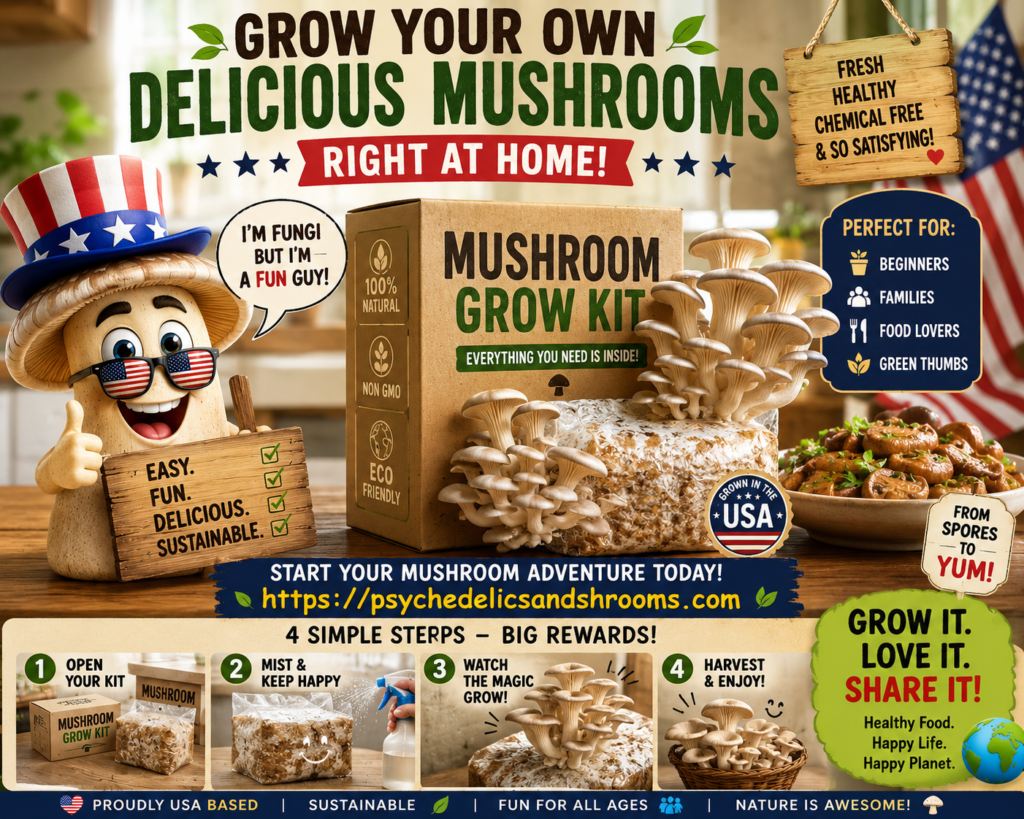
Most mushroom grow kits are designed to simplify the growing process for beginners. The kit typically arrives fully colonized with mushroom mycelium and only requires proper environmental conditions to begin fruiting.
Humidity is one of the most important factors in mushroom cultivation. Many kits require regular misting with clean water to maintain moisture levels around the growing surface. Fresh air circulation is also important because mushrooms need oxygen during the fruiting stage.
Indirect light is generally sufficient for most edible mushroom kits. Unlike green plants, mushrooms do not rely on photosynthesis, but light can still help guide healthy mushroom formation.
Temperature requirements vary depending on the mushroom species. Oyster mushrooms often prefer cooler indoor conditions, while other species may require slightly warmer environments.
Most beginner kits produce mushrooms within one to three weeks after activation. Some kits may continue producing multiple harvests over time if maintained properly.
Nutritional Benefits of Edible Mushrooms
One reason mushroom grow kits continue gaining popularity is the growing awareness of mushroom nutrition. Edible mushrooms are naturally low in calories while containing vitamins, minerals, fiber, and antioxidants.
Mushrooms contain nutrients such as selenium, potassium, copper, and several B vitamins. Certain varieties exposed to ultraviolet light may also provide vitamin D, which supports bone health and immune function.
Research continues exploring the role of mushrooms in healthy diets and sustainable nutrition. Functional mushroom research has also contributed to increased public interest in fungi and mushroom science.
Educational discussions about mushrooms often include the distinction between edible culinary mushrooms and psychedelic mushrooms. Responsible educational websites like Psychedelics and Shrooms aim to provide balanced information about fungi while emphasizing safe and informed learning.
Are Mushroom Grow Kits Safe?
For most healthy adults, edible mushroom grow kits sold by reputable educational or gardening suppliers are generally intended for safe home cultivation of culinary mushrooms. However, proper hygiene and manufacturer instructions should always be followed during the growing process.
It is important to avoid consuming unidentified wild mushrooms because some species can be toxic. Educational cultivation kits help reduce this risk by clearly identifying the mushroom species being grown.
Mushroom cultivation environments should remain clean to reduce contamination from mold or bacteria. Washing hands before handling grow kits and maintaining proper humidity levels can help support successful growth conditions.
Consumers should also understand that edible mushroom kits differ significantly from discussions surrounding psychedelic mushrooms, which contain psychoactive compounds and may be regulated differently depending on local laws.
The Educational Value of Mushroom Cultivation
One of the most interesting aspects of mushroom grow kits is their educational value. Growing mushrooms at home allows people to observe fungal biology in real time while learning about ecosystems, decomposition, and sustainable agriculture.
Mycelium networks play an important role in nature by breaking down organic matter and supporting nutrient cycling in forests and ecosystems. Learning about fungi can help people better understand biodiversity and environmental sustainability.
Interest in mushrooms has expanded beyond cooking into broader scientific discussions involving nutrition, ecology, biotechnology, and medicinal research. Educational resources help promote informed conversations about fungi while encouraging responsible curiosity and scientific literacy.
Final Thoughts on Mushroom Grow Kits
Mushroom grow kits provide an accessible introduction to mushroom cultivation, sustainable food systems, and fungal education. Whether someone is interested in growing oyster mushrooms for cooking or learning more about fungi and mushroom biology, grow kits offer a beginner-friendly way to explore the fascinating world of mushrooms.
As public interest in edible mushrooms, nutrition, and fungi research continues to grow, educational content remains important for helping readers distinguish between culinary mushrooms, medicinal mushrooms, and psychedelic fungi responsibly.
For more educational mushroom articles, fungi guides, and wellness-related resources, visit https://psychedelicsandshrooms.com/.
FAQs
What is a mushroom grow kit?
A mushroom grow kit is a pre-prepared cultivation package that allows beginners to grow edible mushrooms indoors using a substrate already colonized with mushroom mycelium. Learn more at https://psychedelicsandshrooms.com/.
Are mushroom grow kits beginner-friendly?
Yes, many mushroom grow kits are designed specifically for beginners and require minimal equipment or gardening experience. Educational mushroom guides are available at https://psychedelicsandshrooms.com/guides/.
Which mushrooms are easiest to grow at home?
Oyster mushrooms are often considered one of the easiest mushroom varieties for beginners because they grow quickly and adapt well to indoor environments.
How long does a mushroom grow kit take to produce mushrooms?
Most mushroom grow kits begin producing mushrooms within one to three weeks depending on the species and environmental conditions.
Are edible mushroom grow kits legal in the United States?
Edible mushroom grow kits intended for culinary mushrooms are generally legal in the United States, though regulations can vary depending on mushroom species and local laws.
Why are people interested in mushroom cultivation?
Many people enjoy mushroom cultivation because it supports sustainable food education, indoor gardening, nutritional awareness, and scientific curiosity about fungi. More mushroom education resources can be found on https://psychedelicsandshrooms.com/.
