
mushroom and shrooms
Turkey Tail Mushrooms: Benefits, Nutrition, Uses, and Research
Jun
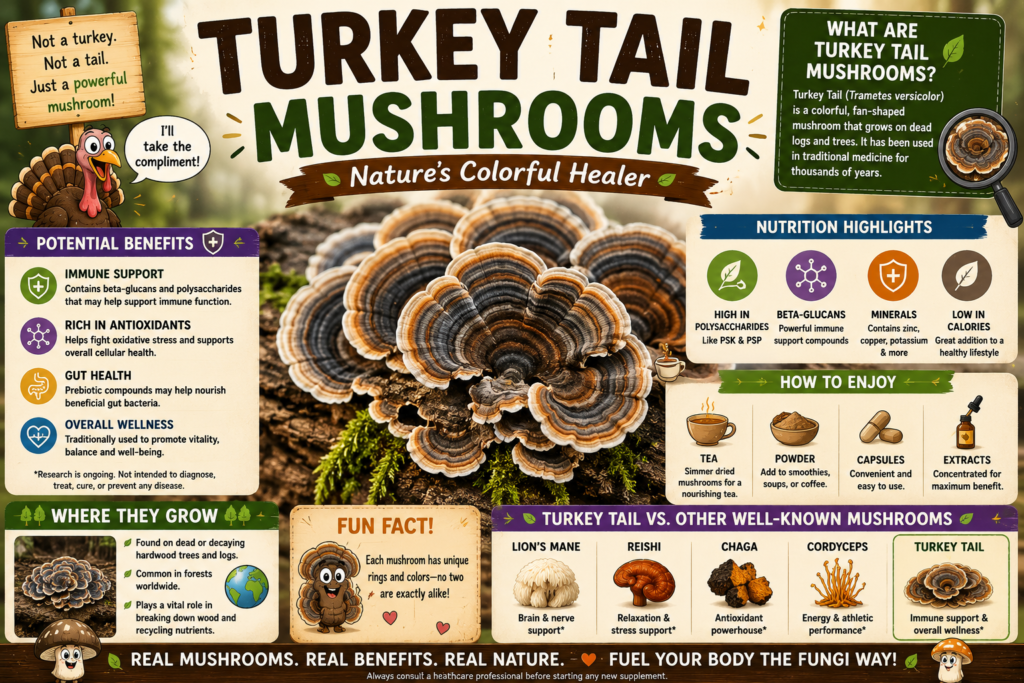
Turkey Tail mushrooms are among the most researched functional mushrooms in the world. Known for their colorful fan-shaped appearance and long history in traditional wellness practices, these mushrooms have gained attention from researchers, nutrition experts, and health-conscious consumers alike. As interest in functional fungi continues to grow across the United States, Turkey Tail mushrooms have become one of the most discussed species in the wellness and mushroom communities.
Scientifically known as Trametes versicolor, Turkey Tail mushrooms grow naturally on dead logs, tree stumps, and decaying wood throughout North America, Europe, and Asia. Their name comes from their resemblance to the colorful tail feathers of a wild turkey. The mushroom displays beautiful bands of brown, tan, gray, white, orange, and blue colors, making it one of the easiest mushrooms to recognize in nature.
Unlike psychedelic mushrooms, Turkey Tail mushrooms do not contain psychoactive compounds. Instead, researchers study them for their nutritional composition, naturally occurring polysaccharides, antioxidants, and potential role in supporting overall wellness.
What Are Turkey Tail Mushrooms?
Turkey Tail mushrooms belong to a group of fungi known as polypores. These mushrooms grow on wood and release spores through tiny pores located underneath their caps rather than through traditional gills.
The species plays an important ecological role in forests because it helps break down dead wood and recycle nutrients back into the environment. Without fungi like Turkey Tail, forests would struggle to efficiently decompose organic matter and maintain healthy ecosystems.
Because of their abundance and distinctive appearance, Turkey Tail mushrooms have become one of the most studied fungal species worldwide. Their unique combination of ecological importance and wellness-related research continues to attract scientific interest.
The History of Turkey Tail Mushrooms
Turkey Tail mushrooms have a long history of use in traditional practices throughout Asia. Historical records show that various cultures valued these mushrooms for their connection to wellness and longevity.
For centuries, people prepared Turkey Tail mushrooms as teas, broths, and extracts. Although modern researchers use scientific methods to study the mushroom, interest in its traditional history continues to influence contemporary research.
Today, Turkey Tail mushrooms are available in numerous forms, including dried mushrooms, powders, capsules, extracts, and tea blends. This growing popularity reflects broader interest in functional foods and mushroom-based nutrition.
Nutritional Profile of Turkey Tail Mushrooms
Turkey Tail mushrooms contain a variety of naturally occurring compounds that researchers continue to investigate. Like many functional mushrooms, they are low in calories while containing beneficial nutrients and bioactive compounds.
The mushroom contains dietary fiber, antioxidants, polysaccharides, and beta-glucans. These compounds contribute to ongoing scientific discussions about mushroom nutrition and wellness.
Turkey Tail mushrooms also contain small amounts of minerals and phytonutrients that support their reputation as a nutrient-dense food source. While people do not typically consume them like common culinary mushrooms due to their tough texture, extracts and teas remain popular preparation methods.
Understanding the nutritional composition of Turkey Tail mushrooms helps explain why researchers continue to study them within the broader field of functional fungi.
Why Researchers Study Turkey Tail Mushrooms
One of the main reasons scientists study Turkey Tail mushrooms is their unique polysaccharides. Researchers have spent decades examining compounds such as polysaccharide-K (PSK) and polysaccharopeptide (PSP), which naturally occur within the mushroom.
These compounds have attracted attention because of their interaction with biological systems and their potential role in supporting normal immune function. Scientists continue exploring these relationships through laboratory studies and clinical research.
The growing field of mushroom science has expanded significantly in recent years, leading to increased interest in how fungi interact with human health and nutrition.
Educational resources such as https://psychedelicsandshrooms.com/ help readers stay informed about mushroom research, fungi education, and developments within the broader field of mycology.
Turkey Tail Mushrooms and Immune System Research
Much of the scientific attention surrounding Turkey Tail mushrooms focuses on immune system research. Beta-glucans and polysaccharides found in the mushroom continue to be investigated for their interaction with immune-related processes.
Researchers emphasize that immune health depends on many factors, including nutrition, sleep, exercise, stress management, and overall lifestyle. No single food or supplement can replace these foundations of wellness.
However, ongoing studies continue exploring how mushroom-derived compounds may contribute to broader scientific understanding of immune function and nutritional support.
As research advances, scientists hope to gain deeper insights into the biological mechanisms associated with functional mushrooms.
Antioxidants in Turkey Tail Mushrooms
Turkey Tail mushrooms contain naturally occurring antioxidants that help protect cells from oxidative stress. Oxidative stress occurs when unstable molecules known as free radicals accumulate within the body.
Antioxidants help neutralize these molecules and support cellular health. Many fruits, vegetables, and mushrooms contain antioxidant compounds that contribute to balanced nutrition.
Researchers continue studying the antioxidant profile of Turkey Tail mushrooms as part of broader investigations into functional foods and healthy dietary patterns.
This growing body of research has helped increase public awareness of mushrooms as more than just culinary ingredients.
Turkey Tail Mushrooms vs Other Functional Mushrooms
Turkey Tail mushrooms often appear alongside other well-known functional mushrooms such as Lion’s Mane, Reishi, Chaga, Cordyceps, and Maitake.
Each mushroom contains different compounds and attracts scientific attention for different reasons. While Lion’s Mane is frequently associated with cognitive health research, Turkey Tail mushrooms are more commonly linked to studies involving polysaccharides and immune-related topics.
Understanding these distinctions helps consumers appreciate the diversity of functional mushrooms and the unique characteristics that make each species valuable to researchers.
Readers interested in learning more about mushroom species and fungal education can explore additional resources at https://psychedelicsandshrooms.com/guides/.
Are Turkey Tail Mushrooms Safe?
Turkey Tail mushrooms have a long history of traditional use and are generally recognized as non-psychoactive fungi. However, individuals should always consult qualified healthcare professionals before introducing new supplements into their routines.
Product quality can vary among manufacturers, making it important to choose reputable sources. Consumers should also understand that research remains ongoing and that scientific findings continue to evolve.
Responsible education encourages balanced expectations and informed decision-making when exploring functional mushroom products.
Why Turkey Tail Mushrooms Continue to Grow in Popularity
The increasing popularity of Turkey Tail mushrooms reflects a larger trend toward natural wellness, functional foods, and mushroom science. As more people learn about fungi and their ecological importance, interest in mushroom-based products continues expanding.
Documentaries, books, podcasts, and scientific studies have all contributed to increased awareness of Turkey Tail mushrooms. Their colorful appearance, rich history, and ongoing research make them particularly appealing to consumers interested in natural wellness topics.
Educational content plays an important role in helping readers understand both the opportunities and limitations of current research.
Final Thoughts on Turkey Tail Mushrooms
Turkey Tail mushrooms remain one of the most fascinating and extensively studied functional fungi. Their colorful appearance, ecological significance, historical use, and growing body of scientific research continue to attract attention worldwide.
Although researchers are still exploring many aspects of Turkey Tail mushrooms, their role within the broader field of mushroom science remains significant. As interest in fungi continues to grow, Turkey Tail mushrooms will likely remain an important subject of research and education.
For more educational articles about mushrooms, wellness, mycology, and fungal science, visit https://psychedelicsandshrooms.com/.
FAQs
What are Turkey Tail mushrooms?
Turkey Tail mushrooms are colorful wood-growing fungi scientifically known as Trametes versicolor. They are widely studied for their unique polysaccharides and historical use in wellness traditions.
Why are they called Turkey Tail mushrooms?
The mushroom gets its name from its colorful bands that resemble the feathers of a wild turkey’s tail.
Are Turkey Tail mushrooms psychedelic?
No. Turkey Tail mushrooms do not contain psychoactive compounds and are not considered psychedelic mushrooms.
Why do researchers study Turkey Tail mushrooms?
Scientists study Turkey Tail mushrooms because of their unique polysaccharides, antioxidants, and potential role in supporting normal biological processes.
Where do Turkey Tail mushrooms grow?
Turkey Tail mushrooms commonly grow on dead logs, stumps, and decaying hardwood throughout forests around the world.
Where can I learn more about Turkey Tail mushrooms?
You can explore educational mushroom guides and fungal science resources at https://psychedelicsandshrooms.com/ and https://psychedelicsandshrooms.com/guides/.
