
mushroom and shrooms
Natural Remedies for Depression: Evidence-Based Ways to Support Emotional Well-Being
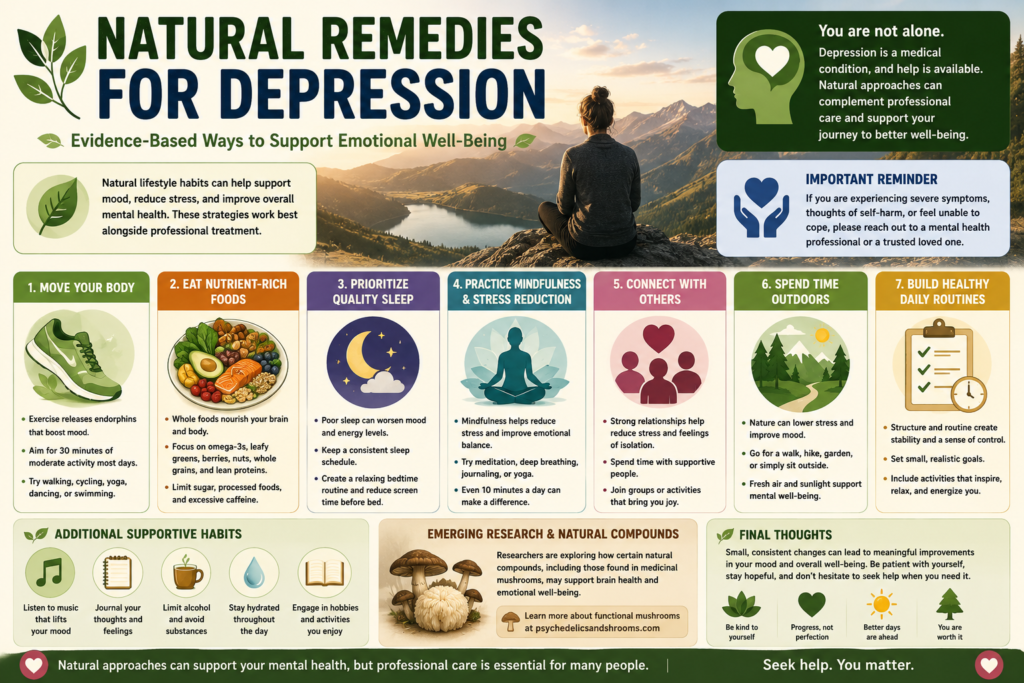
Jun
Depression affects millions of people worldwide and remains one of the most common mental health challenges today. While professional treatment plays a critical role in managing depression, many people also explore natural approaches that may support emotional well-being and overall mental health. Understanding these options can help individuals make informed decisions while maintaining realistic expectations about their effectiveness.
Natural remedies for depression often focus on lifestyle habits, nutrition, physical activity, stress management, sleep quality, and social connection. Researchers continue to study how these factors influence mood, resilience, and psychological health. Educational resources such as https://psychedelicsandshrooms.com/ help readers stay informed about mental wellness, emerging research, and evidence-based discussions surrounding emotional health.
It is important to recognize that depression is a complex medical condition. Natural approaches may complement professional treatment, but they should not replace guidance from qualified healthcare providers, particularly when symptoms are severe or persistent.
Understanding Depression
Depression involves more than occasional sadness or temporary emotional distress. It can affect mood, motivation, sleep patterns, energy levels, concentration, appetite, and daily functioning.
Researchers believe depression results from a combination of biological, psychological, social, and environmental factors. Because every individual’s experience is different, treatment approaches often vary depending on personal circumstances and symptom severity.
Learning about natural wellness strategies can help individuals support their mental health while working with healthcare professionals to develop comprehensive treatment plans.
The Role of Regular Physical Activity
Exercise remains one of the most studied natural approaches associated with mental well-being. Physical activity helps stimulate the release of endorphins and other brain chemicals that contribute to positive mood and emotional balance.
Research suggests that consistent exercise may support mental health by reducing stress, improving sleep quality, increasing energy levels, and promoting overall wellness. Activities such as walking, jogging, swimming, cycling, yoga, and strength training can all contribute to a healthier lifestyle.
The goal is not perfection but consistency. Even moderate physical activity performed regularly may provide meaningful benefits for emotional well-being.
Nutrition and Mental Health
Diet plays an important role in overall health, including brain function and emotional wellness. Researchers continue investigating the relationship between nutrition and mental health outcomes.
A balanced diet rich in fruits, vegetables, whole grains, lean proteins, healthy fats, and nutrient-dense foods may help support overall wellness. Foods containing omega-3 fatty acids, antioxidants, vitamins, and minerals have attracted particular interest within mental health research.
Functional foods such as mushrooms are also being studied for their nutritional properties. Educational discussions about nutrition and wellness can be found at https://psychedelicsandshrooms.com/guides/.
While no single food can cure depression, maintaining healthy dietary habits contributes to a strong foundation for overall physical and mental health.
Prioritizing Quality Sleep
Sleep and mental health share a strong connection. Poor sleep can negatively affect mood, concentration, stress levels, and emotional regulation.
Many experts recommend maintaining a consistent sleep schedule, limiting screen exposure before bedtime, and creating a comfortable sleep environment. Developing healthy sleep habits may help support emotional resilience and daily functioning.
Researchers continue exploring how sleep quality influences brain health and psychological well-being. Improving sleep often represents one of the most accessible lifestyle changes individuals can make.
Mindfulness and Stress Reduction
Mindfulness practices have become increasingly popular as tools for managing stress and promoting emotional awareness. Mindfulness encourages individuals to focus on the present moment without judgment.
Activities such as meditation, deep breathing exercises, yoga, and guided relaxation may help reduce stress and improve emotional regulation. Research suggests these practices can contribute to overall mental wellness when incorporated consistently.
Mindfulness does not eliminate life’s challenges, but it may help individuals respond to stressors more effectively.
The Importance of Social Connection
Human connection plays a significant role in emotional health. Strong relationships with family, friends, community groups, and support networks can help reduce feelings of isolation and loneliness.
Research consistently shows that social support contributes to psychological resilience and overall well-being. Spending time with supportive people, participating in community activities, or seeking peer support may positively influence mental health.
Even small efforts to strengthen social connections can make a meaningful difference over time.
Spending Time Outdoors
Nature exposure has become another area of growing research interest. Spending time outdoors may help reduce stress, encourage physical activity, and improve mood.
Activities such as walking in parks, gardening, hiking, or simply spending time in natural environments may support mental wellness. Researchers continue studying how exposure to green spaces affects emotional health and cognitive functioning.
Combining outdoor activity with regular exercise can provide multiple wellness benefits simultaneously.
Building Healthy Daily Routines
Daily routines help create structure and predictability, which can be valuable during periods of emotional difficulty. Simple habits such as maintaining consistent wake times, preparing nutritious meals, exercising regularly, and scheduling enjoyable activities may support emotional stability.
Healthy routines can also help individuals regain a sense of control and purpose. Over time, these habits contribute to broader lifestyle improvements that support overall well-being.
Small, sustainable changes often produce better long-term results than dramatic lifestyle overhauls.
Emerging Research and New Areas of Interest
Researchers continue exploring new approaches to mental health and emotional well-being. Areas of investigation include nutrition, gut health, exercise science, mindfulness practices, social support systems, and psychedelic research.
Educational platforms like https://psychedelicsandshrooms.com/ provide information about emerging wellness topics while encouraging responsible, science-based learning.
Although research continues evolving, experts emphasize the importance of combining promising discoveries with established evidence-based care.
When Professional Help Is Important
Natural approaches can support emotional wellness, but professional help remains essential for many individuals experiencing depression. Mental health professionals can provide diagnosis, therapy, treatment planning, and ongoing support tailored to individual needs.
Anyone experiencing severe symptoms, thoughts of self-harm, significant changes in functioning, or prolonged emotional distress should seek professional assistance promptly.
Combining professional care with healthy lifestyle habits often provides the strongest foundation for long-term well-being.
Final Thoughts
Natural remedies for depression can play a valuable role in supporting emotional wellness when used alongside appropriate professional care. Exercise, balanced nutrition, quality sleep, mindfulness, social connection, and healthy routines all contribute to a stronger foundation for mental health.
While no single strategy works for everyone, consistent lifestyle habits can help support resilience and overall well-being. Understanding the science behind these approaches empowers individuals to make informed decisions about their health.
For more educational articles about wellness, mental health research, mushroom science, and emerging health topics, visit https://psychedelicsandshrooms.com/.
FAQs
What are natural remedies for depression?
Natural remedies often include exercise, balanced nutrition, quality sleep, mindfulness practices, social support, and healthy lifestyle habits that may support emotional well-being.
Can exercise help improve mood?
Research suggests regular physical activity may support mood, reduce stress, improve sleep quality, and contribute to overall mental wellness.
Why is sleep important for mental health?
Sleep affects mood regulation, concentration, stress response, and emotional resilience. Poor sleep may worsen symptoms associated with emotional distress.
Are mushrooms being studied for mental wellness?
Researchers continue investigating various mushrooms and their potential role in nutrition and wellness.
Can natural remedies replace professional treatment?
Natural approaches may complement professional care, but they should not replace qualified medical or mental health treatment when needed.
Where can I learn more about wellness and mental health topics?
You can explore educational guides and wellness resources at https://psychedelicsandshrooms.com/ and https://psychedelicsandshrooms.com/guides/.
