
mushroom and shrooms
What Are the Psychoactive Drugs? Understanding How They Affect the Brain
Jun
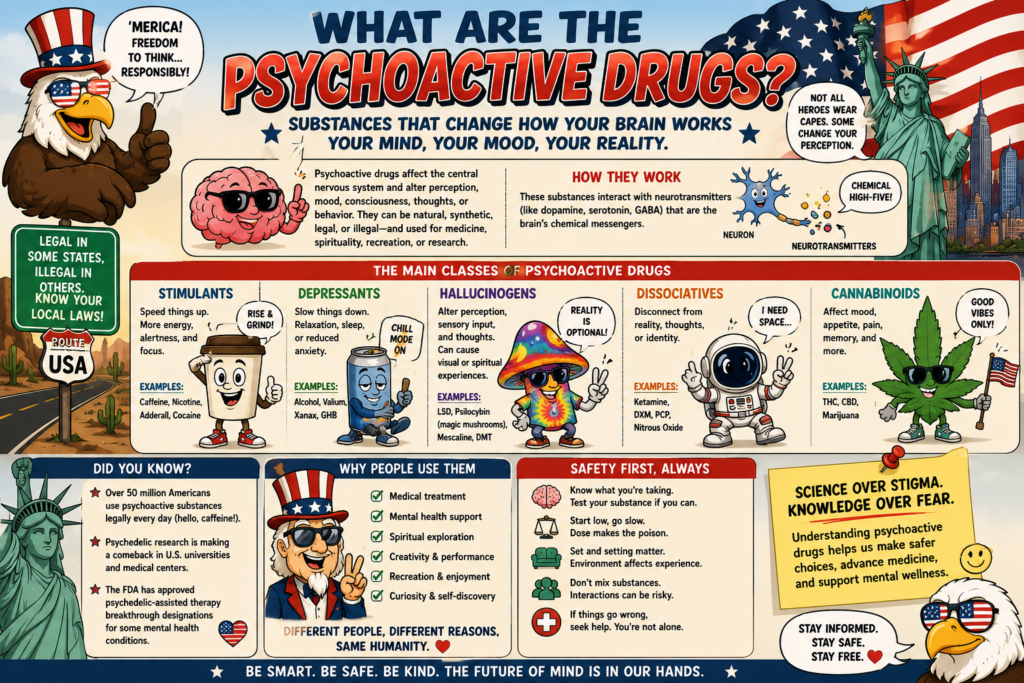
Psychoactive drugs are substances that affect the brain and alter mental processes such as mood, perception, awareness, thinking, emotions, and behavior. Throughout history, humans have used psychoactive substances for medical, cultural, religious, recreational, and scientific purposes. Today, researchers continue studying these compounds to better understand the brain, mental health, and human consciousness.
As public interest in neuroscience and mental health grows, more people are asking what psychoactive drugs are and how they work. Understanding the science behind these substances helps promote informed discussions while reducing misinformation. Educational platforms such as https://psychedelicsandshrooms.com/ provide science-based information about psychedelics, mushrooms, mental wellness, and emerging research.
Psychoactive substances vary significantly in their effects, risks, legal status, and medical applications. Some are widely used medications, while others remain subjects of ongoing scientific investigation.
What Are Psychoactive Drugs?
A psychoactive drug is any substance that influences the central nervous system and changes how the brain processes information. These substances affect communication between neurons by interacting with neurotransmitters, which are chemical messengers responsible for transmitting signals throughout the brain and body.
Depending on the substance, psychoactive drugs may influence mood, alertness, memory, perception, attention, emotions, or behavior. The effects can range from mild changes in focus and energy to significant alterations in sensory perception and consciousness.
Researchers study psychoactive substances because they provide valuable insights into how the brain functions and how different neurological systems interact.
How Do These Substances Affect the Brain?
The brain relies on neurotransmitters such as serotonin, dopamine, norepinephrine, GABA, and acetylcholine to regulate various functions. Psychoactive substances influence one or more of these systems by increasing, decreasing, blocking, or modifying neurotransmitter activity.
For example, some substances primarily affect dopamine pathways involved in reward and motivation, while others influence serotonin systems associated with mood and perception.
Scientists continue investigating how these interactions contribute to both the short-term and long-term effects associated with different psychoactive compounds.
Understanding these mechanisms has helped advance research in neuroscience, psychiatry, and psychology.
Major Categories of Psychoactive Drugs
Researchers generally classify psychoactive drugs into several broad categories based on their primary effects on the central nervous system.
Stimulants
Stimulants increase activity within the nervous system and often enhance alertness, attention, and energy levels. Common examples include caffeine, nicotine, and certain prescription medications used to treat attention-related conditions.
Caffeine remains one of the most widely consumed psychoactive substances in the world. Found in coffee, tea, energy drinks, and chocolate, it influences alertness by affecting adenosine receptors in the brain.
Researchers continue studying stimulants because of their effects on cognition, motivation, and behavior.
Depressants
Depressants slow activity within the central nervous system. They may promote relaxation, reduce anxiety, or cause sedation depending on the substance and dosage.
Examples include alcohol and certain prescription medications used for anxiety, sleep disorders, and seizure management.
Although the term “depressant” refers to nervous system activity rather than emotional state, these substances can significantly affect mood, coordination, and cognitive performance.
Hallucinogens
Hallucinogens alter perception, sensory experiences, and thought processes. Researchers study these substances because they can produce profound changes in consciousness and subjective experience.
Examples include psilocybin, LSD, mescaline, and DMT. Scientists continue investigating how hallucinogens interact with serotonin receptors and influence brain networks involved in perception and cognition.
Public interest in psychedelic science has grown considerably in recent years as researchers explore potential therapeutic applications and neurological mechanisms.
Educational resources related to psychedelic science can be found at https://psychedelicsandshrooms.com/guides/.
Dissociatives
Dissociative substances can alter perception, awareness, and the sense of connection between thoughts, emotions, and surroundings.
Researchers study dissociatives to better understand consciousness, sensory processing, and certain neurological mechanisms. These substances affect different receptor systems than many classic psychedelics.
Scientific interest in dissociatives continues to contribute to broader discussions about mental health and neuroscience.
Cannabis and Cannabinoids
Cannabis contains compounds known as cannabinoids that interact with the body’s endocannabinoid system. The most widely known cannabinoid is THC, which is responsible for many of the psychoactive effects associated with cannabis.
Researchers continue studying cannabinoids because of their influence on mood, memory, appetite, pain perception, and other physiological processes.
Growing interest in cannabinoid science has led to increased research into the endocannabinoid system and its role in human health.
Psychoactive Drugs in Medicine
Not all psychoactive substances are used recreationally. Many medications prescribed by healthcare professionals produce psychoactive effects while treating specific medical conditions.
Examples include medications used for depression, anxiety disorders, ADHD, sleep disorders, epilepsy, and chronic pain. These treatments undergo extensive research and regulatory review before receiving approval for medical use.
Medical applications of psychoactive substances remain an important area of pharmaceutical and clinical research.
Why Researchers Study Psychoactive Substances
Scientists investigate psychoactive compounds because they provide valuable opportunities to understand the brain and nervous system. Research involving these substances has contributed to important discoveries in psychology, psychiatry, neurology, and cognitive science.
Areas of ongoing investigation include:
- Brain function
- Consciousness
- Perception
- Emotional processing
- Memory
- Mental health
- Neuroplasticity
As neuroscience continues advancing, researchers hope to develop a deeper understanding of how psychoactive compounds influence human behavior and cognition.
Safety and Responsible Education
Because psychoactive substances affect the brain, it is important to approach discussions about them responsibly. Effects vary depending on the substance, individual biology, dosage, environment, and numerous other factors.
Educational content should focus on accurate scientific information rather than myths or sensationalized claims. Understanding both the potential risks and the scientific significance of psychoactive substances promotes informed decision-making and public awareness.
At Psychedelics and Shrooms, educational resources help readers explore topics involving psychedelics, mushrooms, neuroscience, and mental wellness through evidence-based discussions.
The Future of Psychoactive Drug Research
Interest in psychoactive substances continues growing as researchers investigate new approaches to mental health, neuroscience, and consciousness studies. Advances in brain imaging technologies and clinical research methods are providing valuable insights into how these compounds affect the human brain.
Scientists remain optimistic that future discoveries may improve understanding of mental health conditions, neurological disorders, and cognitive processes.
As research expands, public education will remain essential for helping people understand the science behind psychoactive substances and their role in modern medicine and neuroscience.
Final Thoughts
Psychoactive drugs are substances that affect the brain and influence mental processes such as mood, perception, awareness, and behavior. They include stimulants, depressants, hallucinogens, dissociatives, cannabinoids, and numerous prescription medications.
Understanding how these substances work helps improve scientific literacy and encourages informed discussions about mental health, neuroscience, and human consciousness. As research continues evolving, psychoactive compounds will likely remain important subjects within medicine, psychology, and brain science.
FAQs
What are psychoactive drugs?
Psychoactive drugs are substances that affect the brain and alter mental processes such as mood, perception, thinking, awareness, and behavior.
What is the most common psychoactive substance?
Caffeine is considered one of the most widely consumed psychoactive substances worldwide because it affects alertness and energy levels.
Are all psychoactive drugs illegal?
No. Many psychoactive substances are legal and commonly prescribed by healthcare professionals for medical conditions such as depression, anxiety, ADHD, and sleep disorders.
What are the main categories of psychoactive drugs?
Major categories include stimulants, depressants, hallucinogens, dissociatives, cannabinoids, and certain prescription medications.
Why do scientists study psychoactive substances?
Researchers study them to better understand brain function, consciousness, mental health, perception, and neurological processes.
Where can I learn more about psychoactive substances and psychedelic science?
You can explore educational guides and research-based articles at https://psychedelicsandshrooms.com/ and https://psychedelicsandshrooms.com/guides/.
