
mushroom and shrooms
Shiitake Mushroom Health Benefits: Why This Popular Mushroom Deserves a Place in a Healthy Diet
Jun
Shiitake mushrooms are among the most widely consumed edible mushrooms in the world. Known for their rich, savory flavor and impressive nutritional profile, they have been enjoyed for centuries across Asia and are now a staple ingredient in kitchens throughout the United States. Beyond their culinary appeal, researchers continue to study Shiitake mushrooms for their potential role in supporting overall health and wellness.
As interest in functional foods continues to grow, many people are searching for reliable information about Shiitake mushroom health benefits. Scientific research has identified numerous naturally occurring compounds within these mushrooms, making them one of the most studied edible fungi available today.
Unlike psychedelic mushrooms, Shiitake mushrooms are non-psychoactive edible fungi commonly used in cooking and nutritional research. Educational resources available at https://psychedelicsandshrooms.com/ help readers better understand edible mushrooms, functional fungi, and evidence-based wellness information.
What Are Shiitake Mushrooms?
Shiitake mushrooms (Lentinula edodes) are edible fungi native to East Asia. They naturally grow on hardwood trees and have been cultivated for centuries because of their excellent flavor and nutritional value.
Today, Shiitake mushrooms are grown commercially around the world and are commonly found fresh, dried, powdered, and in supplement formulations.
Their meaty texture and rich umami flavor make them one of the most popular mushrooms used in soups, stir-fries, pasta dishes, rice bowls, and vegetable recipes.
In addition to their culinary uses, Shiitake mushrooms continue attracting scientific interest because of their naturally occurring bioactive compounds.
Rich in Essential Nutrients
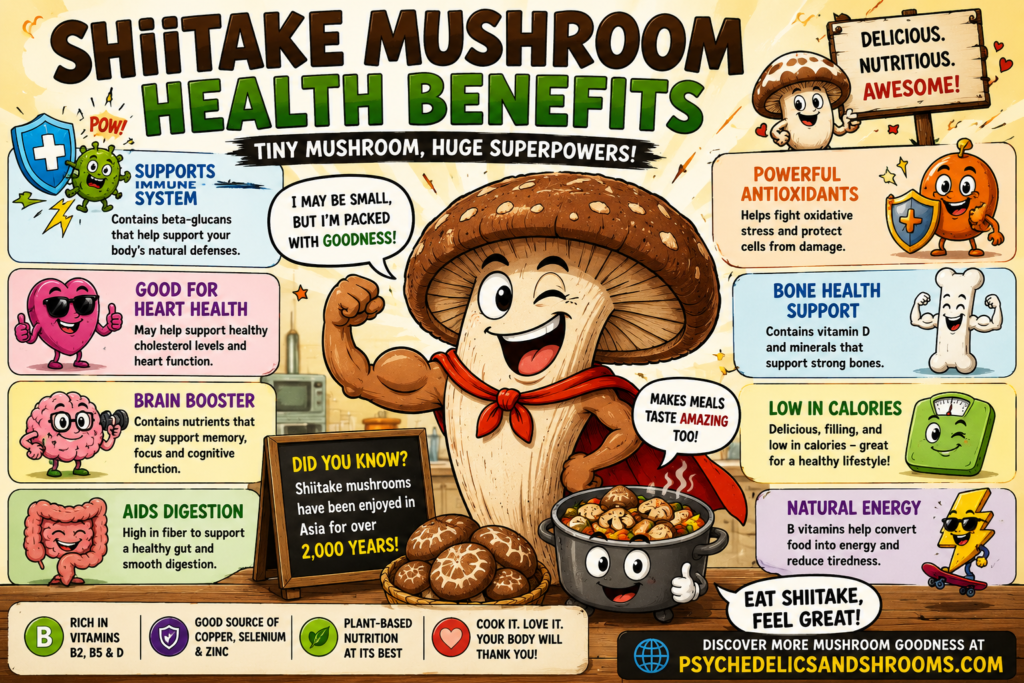
One of the greatest advantages of Shiitake mushrooms is their impressive nutritional profile.
They naturally provide:
- Dietary fiber
- B vitamins
- Copper
- Selenium
- Zinc
- Potassium
- Vitamin D (when exposed to ultraviolet light)
- Protein
- Antioxidants
Shiitake mushrooms are also relatively low in calories and contain very little fat, making them an excellent addition to balanced eating patterns.
Including nutrient-dense foods like Shiitake mushrooms may help support overall dietary quality.
Supports Immune System Research
Scientists have spent decades studying the natural compounds found in Shiitake mushrooms.
Among the most researched are beta-glucans and polysaccharides, which continue to attract attention for their interaction with immune-related biological processes.
Researchers are investigating how these naturally occurring compounds contribute to normal immune function and overall wellness.
Although research continues evolving, experts agree that maintaining a healthy immune system depends on multiple factors, including balanced nutrition, physical activity, quality sleep, stress management, and preventive healthcare.
No single food or supplement can replace a healthy lifestyle.
Provides Antioxidant Protection
Shiitake mushrooms contain naturally occurring antioxidants that help protect cells from oxidative stress.
Oxidative stress develops when free radicals accumulate faster than the body’s antioxidant defenses can neutralize them. Long-term oxidative stress has been associated with normal aging and various health conditions.
Antioxidants found in vegetables, fruits, herbs, and mushrooms help support healthy cellular function.
Researchers continue studying the antioxidant profile of Shiitake mushrooms as part of broader investigations into nutrition and healthy aging.
May Support Heart Health
Several naturally occurring compounds found in Shiitake mushrooms have attracted attention in cardiovascular nutrition research.
Scientists continue studying how dietary patterns that include mushrooms may contribute to overall heart health when combined with healthy lifestyle habits.
Shiitake mushrooms also provide potassium, a mineral that helps support normal cardiovascular function as part of a balanced diet.
Maintaining heart health involves multiple lifestyle factors, including nutritious eating patterns, regular exercise, healthy body weight, and avoiding tobacco use.
Supports Healthy Digestion
Shiitake mushrooms contain dietary fiber that contributes to digestive health.
Fiber plays an important role in supporting regular digestion while also contributing to a healthy gut microbiome.
Researchers continue exploring how mushrooms and other fiber-rich foods influence beneficial gut bacteria and digestive wellness.
Including fiber-rich foods in daily meals supports overall nutritional balance.
Naturally Low in Calories
People looking to maintain a balanced diet often appreciate Shiitake mushrooms because they provide rich flavor without adding many calories.
Their satisfying texture makes them an excellent substitute for higher-calorie ingredients in many recipes.
Adding mushrooms to soups, salads, stir-fries, pasta dishes, sandwiches, and grain bowls allows people to enjoy flavorful meals while increasing vegetable intake.
This versatility has helped make Shiitake mushrooms increasingly popular among nutrition-conscious consumers.
Easy to Add to Everyday Meals
One reason Shiitake mushrooms continue growing in popularity is their versatility in the kitchen.
They work well in:
- Stir-fries
- Soups
- Risottos
- Pasta dishes
- Rice bowls
- Omelets
- Vegetable dishes
- Pizza
- Asian cuisine
Fresh and dried Shiitake mushrooms both offer excellent flavor and can easily become part of healthy meal planning.
Why Researchers Continue Studying Shiitake
Shiitake mushrooms remain one of the most researched edible fungi because they contain numerous biologically active compounds.
Scientists continue investigating:
- Beta-glucans
- Polysaccharides
- Antioxidants
- Dietary fiber
- Micronutrients
- Functional food applications
As nutritional science advances, mushrooms continue gaining recognition as important components of healthy dietary patterns.
The growing interest in functional foods has further increased public awareness of edible fungi.
Final Thoughts
Shiitake mushrooms are much more than a flavorful cooking ingredient. Their impressive nutritional profile, naturally occurring antioxidants, dietary fiber, and extensively studied bioactive compounds continue making them one of the world’s most respected edible mushrooms.
Including Shiitake mushrooms as part of a balanced diet can contribute to healthy eating patterns while providing valuable nutrients. As research continues expanding, scientists will likely discover even more about the important role mushrooms play in nutrition and wellness.
For more educational articles about edible mushrooms, functional fungi, nutrition, and mushroom science, visit https://psychedelicsandshrooms.com/.
FAQs
What are Shiitake mushrooms?
Shiitake mushrooms are edible fungi scientifically known as Lentinula edodes. They are widely used in cooking and nutritional research.
Are Shiitake mushrooms healthy?
They provide dietary fiber, vitamins, minerals, antioxidants, and naturally occurring compounds that contribute to a balanced diet.
Do Shiitake mushrooms support immune health?
Researchers continue studying the mushroom’s beta-glucans and polysaccharides for their interaction with normal immune-related biological processes.
Can Shiitake mushrooms be eaten every day?
Many people include Shiitake mushrooms as part of a balanced diet. Individuals with dietary concerns should consult qualified healthcare professionals.
Are Shiitake mushrooms psychedelic?
No. Shiitake mushrooms are edible culinary mushrooms and do not contain psychedelic compounds.
Where can I learn more about edible mushrooms?
You can explore educational mushroom guides and nutrition resources at https://psychedelicsandshrooms.com/ and https://psychedelicsandshrooms.com/guides/.
