mushroom and shrooms
Psilocybin for Depression: What Current Research Says
Jul
Depression is one of the most common mental health conditions worldwide, affecting millions of people every year. Although many individuals benefit from psychotherapy, lifestyle changes, and prescribed medications, some continue to experience symptoms despite receiving standard treatment. This challenge has encouraged researchers to explore new therapeutic approaches, including psilocybin-assisted therapy.
Over the past decade, universities, hospitals, and medical research centers have published a growing number of clinical studies investigating psilocybin for depression. While early findings have generated significant scientific interest, researchers emphasize that psilocybin-assisted therapy remains an evolving field and should only be administered within approved clinical settings or legally authorized therapeutic programs where available.
Educational resources at https://psychedelicsandshrooms.com/ provide evidence-based information about mushrooms, neuroscience, mental wellness, and psychedelic research while helping readers distinguish scientific findings from misinformation.
What Is Psilocybin?
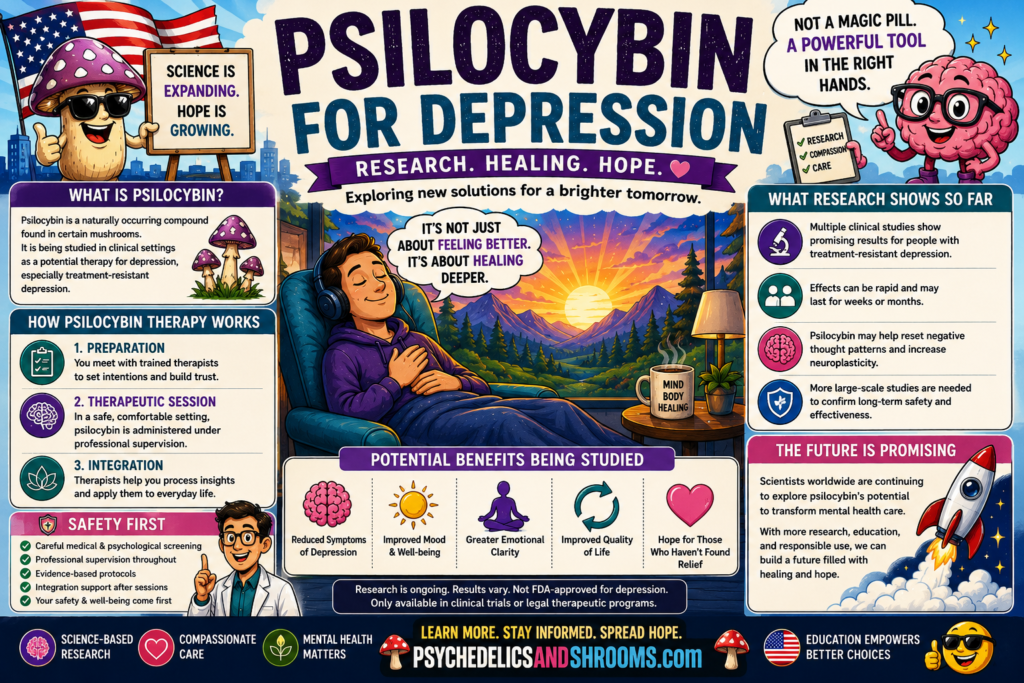
Psilocybin is a naturally occurring psychedelic compound found in certain mushroom species. After ingestion, the body converts psilocybin into psilocin, which interacts primarily with serotonin receptors in the brain, especially the 5-HT2A receptor.
Researchers believe these interactions temporarily influence communication between brain regions involved in mood, emotion, learning, and self-awareness. Scientists continue investigating exactly how these neurological changes may contribute to therapeutic outcomes.
Psilocybin therapy differs significantly from recreational use because treatment includes medical screening, professional supervision, structured psychotherapy, and follow-up integration sessions.
Why Researchers Are Studying Psilocybin for Depression
Traditional depression treatments are effective for many people, but not everyone experiences adequate symptom relief. This has led researchers to investigate additional treatment options.
Clinical studies are exploring whether psilocybin-assisted therapy may help certain individuals with treatment-resistant depression or major depressive disorder when delivered under carefully controlled conditions.
Researchers are studying several important questions, including:
- How long benefits may last
- Which patients respond best
- Optimal treatment protocols
- Long-term safety
- Brain mechanisms involved in recovery
Although results are encouraging, larger clinical trials continue before broader conclusions can be made.
How Psilocybin-Assisted Therapy Works
Unlike taking a medication at home, psilocybin-assisted therapy follows a carefully structured clinical process.
Preparation
Before treatment, participants meet with trained therapists to discuss their medical history, treatment goals, and expectations. Comprehensive screening helps determine whether participation is appropriate.
Therapeutic Session
Treatment occurs in a comfortable clinical environment under continuous supervision by trained professionals. Participants are monitored throughout the experience to ensure safety and provide psychological support when needed.
Integration
After the therapeutic session, follow-up appointments help participants reflect on their experiences and integrate insights into everyday life.
Researchers consider this integration process an important part of the overall therapeutic approach.
What Current Research Shows
Clinical studies published in peer-reviewed medical journals have reported promising early findings for some participants with depression.
Researchers have observed improvements in depressive symptoms in certain carefully selected participants following professionally supervised psilocybin-assisted therapy. However, scientists emphasize that additional research is necessary to better understand:
- Long-term outcomes
- Safety
- Individual differences
- Appropriate dosing
- Patient selection
Current evidence continues to evolve as larger clinical trials are completed.
Brain Imaging and Neuroscience
Modern brain imaging techniques have helped researchers better understand how psilocybin may influence brain function.
Studies suggest temporary changes in communication between large-scale brain networks involved in mood regulation, emotional processing, and cognitive flexibility.
Researchers are also investigating neuroplasticity, the brain’s ability to adapt and reorganize, to determine whether it may contribute to observed therapeutic effects.
Although these findings are encouraging, many scientific questions remain under investigation.
Safety Considerations
Participant safety remains the highest priority in clinical research.
Before receiving psilocybin-assisted therapy, individuals typically undergo:
- Medical evaluation
- Psychological assessment
- Medication review
- Family psychiatric history review
- Ongoing professional monitoring
Researchers consistently advise against self-treatment or attempting psychedelic therapy outside regulated clinical settings.
Professional supervision helps reduce risks while providing appropriate psychological support throughout treatment.
Legal Status
The legal status of psilocybin varies depending on the country, state, and local regulations.
Some jurisdictions allow limited therapeutic use within regulated programs, while many areas continue restricting access outside approved clinical research.
Individuals should consult qualified healthcare professionals and follow applicable local laws before considering participation in any treatment program.
Educational information should not be interpreted as legal or medical advice.
The Future of Psilocybin Research
Psilocybin remains one of the fastest-growing areas of psychiatric and neuroscience research.
Future investigations are expected to focus on:
- Long-term effectiveness
- Personalized treatment approaches
- Brain network changes
- Neuroplasticity
- Safety optimization
- Clinical guidelines
- Expanded mental health applications
As research continues, scientists hope to determine which patients may benefit most while maintaining the highest standards of safety and ethical care.
Why Evidence-Based Education Matters
Public interest in psychedelic medicine has increased rapidly, making reliable education more important than ever.
Understanding how clinical research differs from recreational use helps readers make informed decisions based on scientific evidence rather than online speculation.
Responsible education supports public awareness while encouraging safe, evidence-based discussions about mental health and emerging therapies.
Final Thoughts
Research into psilocybin for depression has opened an exciting new area of scientific investigation. Early clinical studies suggest that psilocybin-assisted therapy may have potential for some individuals when delivered within carefully supervised medical settings. However, research is still evolving, and additional large-scale studies are needed to better understand long-term safety and effectiveness.
As neuroscience and psychiatry continue advancing, evidence-based research will help shape the future of mental health care. Accurate education remains essential for understanding both the promise and the current limitations of psilocybin-assisted therapy.
For more educational articles about mushrooms, psychedelic science, neuroscience, and mental wellness, visit https://psychedelicsandshrooms.com/.
FAQs
What is psilocybin?
Psilocybin is a naturally occurring psychedelic compound found in certain mushroom species and is being studied in regulated clinical research.
Why are researchers studying psilocybin for depression?
Scientists are investigating whether psilocybin-assisted therapy may help some individuals with depression when administered under carefully supervised clinical conditions.
Is psilocybin therapy the same as recreational use?
No. Clinical therapy includes professional screening, supervised treatment sessions, psychotherapy, and follow-up integration, making it very different from unsupervised use.
Is psilocybin approved for treating depression everywhere?
No. Regulations vary by jurisdiction, and many treatments remain available only through clinical research or legally authorized programs.
Is psilocybin therapy considered safe?
Clinical studies prioritize participant safety through comprehensive medical screening, professional supervision, and carefully controlled treatment environments.
Where can I learn more about psychedelic research?
Visit https://psychedelicsandshrooms.com/ and https://psychedelicsandshrooms.com/guides/ for educational resources about mushroom science, neuroscience, and current research.
