mushroom and shrooms
Mushroom Pills: A Complete Guide to Functional Mushroom Supplements
Jul
Mushroom pills have become one of the fastest-growing categories in the dietary supplement industry. As interest in functional mushrooms continues to expand across the United States, many consumers are looking for convenient ways to include mushroom-derived ingredients in their daily wellness routines. Mushroom pills offer a simple and portable option, but understanding their ingredients, quality standards, and intended use is essential before choosing a product.
Not all mushroom supplements are the same. Some products contain extracts from a single mushroom species, while others combine several functional mushrooms into one formula. Learning how these supplements are made and how to evaluate quality can help consumers make informed decisions based on science rather than marketing claims.
Educational resources available at https://psychedelicsandshrooms.com/ provide evidence-based information about mushroom biology, functional fungi, nutrition, and the important differences between edible, functional, and psychedelic mushrooms.
What Are Mushroom Pills?
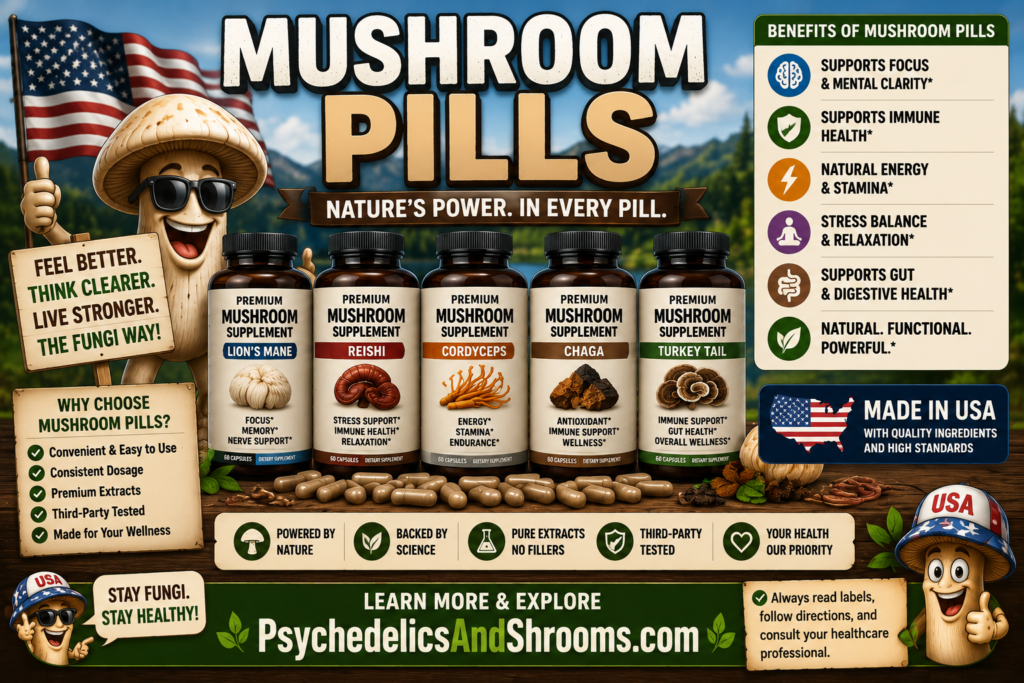
Mushroom pills are dietary supplements made from mushroom-derived ingredients. They are typically available as capsules or tablets containing powdered mushrooms, concentrated extracts, or blends of multiple functional mushroom species.
Many people choose mushroom pills because they are convenient, easy to transport, and provide consistent serving sizes.
Manufacturers may produce supplements using fruiting bodies, mycelium, or standardized mushroom extracts depending on the product formulation.
Common Functional Mushrooms Used in Mushroom Pills
Many mushroom supplements contain one or more well-known functional mushroom species.
Popular examples include:
- Lion’s Mane (Hericium erinaceus)
- Reishi (Ganoderma lucidum)
- Turkey Tail (Trametes versicolor)
- Cordyceps
- Chaga
- Shiitake
- Maitake
- Tremella
Each species contains naturally occurring compounds that continue to be studied in nutrition and wellness research.
Why People Choose Mushroom Pills
Consumers often prefer mushroom pills because they provide a convenient supplement format that fits easily into everyday routines.
Potential reasons people choose mushroom supplements include:
- Convenient daily use
- Measured serving sizes
- Easy portability
- Long shelf life
- Availability of single-species or blended formulas
Individual wellness goals vary, so selecting the right product depends on personal preferences and advice from qualified healthcare professionals.
Fruiting Body vs. Mycelium
One of the most discussed topics in mushroom supplements is whether products contain fruiting bodies, mycelium, or a combination of both.
The fruiting body is the visible mushroom, while mycelium is the underground network of fungal threads.
Some manufacturers focus on fruiting body extracts, while others use mycelium-based ingredients. Reading the ingredient label carefully helps consumers understand exactly what is included in the supplement.
Extraction Methods
Many functional mushroom compounds are obtained using specialized extraction techniques.
Common extraction methods include:
- Hot water extraction
- Dual extraction
- Alcohol extraction
Quality manufacturers often explain their extraction methods and provide details about ingredient standardization.
What to Look for in Quality Mushroom Pills
Choosing a reputable supplement involves evaluating several factors.
Look for products that provide:
- Clearly identified mushroom species
- Transparent ingredient labels
- Supplement Facts panel
- Manufacturing information
- Third-party testing when available
- Good Manufacturing Practices (GMP)
These factors help consumers compare products and make more informed decisions.
Safety Considerations
Although mushroom supplements are widely available, they may not be suitable for everyone.
Individuals who are pregnant, breastfeeding, have mushroom allergies, take prescription medications, or have underlying medical conditions should consult a qualified healthcare professional before using any dietary supplement.
Consumers should always follow the manufacturer’s serving recommendations and purchase products from reputable retailers.
Functional Mushrooms vs. Psychedelic Mushrooms
Functional mushrooms such as Lion’s Mane, Reishi, Turkey Tail, Cordyceps, Chaga, Shiitake, and Maitake are commonly used in dietary supplements and wellness products.
Psilocybin-containing mushrooms are a separate category that is currently being studied in regulated clinical research involving neuroscience and mental health.
Understanding this distinction helps reduce confusion and promotes accurate public education.
Readers interested in learning more about mushroom science and functional fungi can explore additional educational guides at https://psychedelicsandshrooms.com/guides/.
The Importance of Consumer Education
As the mushroom supplement market continues to grow, reliable education becomes increasingly important.
Consumers benefit from understanding:
- Mushroom species
- Ingredient quality
- Manufacturing standards
- Supplement labeling
- Responsible product selection
Evidence-based information helps people make confident purchasing decisions while avoiding misleading marketing claims.
Final Thoughts
Mushroom pills provide a convenient way to explore functional mushroom supplements. Choosing a quality product involves more than selecting a popular brand. Ingredient transparency, clearly identified mushroom species, quality manufacturing, and independent testing are all valuable indicators of a reputable supplement.
By focusing on education and evidence-based information, consumers can better understand functional mushrooms and choose products that align with their individual wellness goals.
For more educational articles about mushrooms, functional fungi, mushroom nutrition, and mycology, visit https://psychedelicsandshrooms.com/.
FAQs
What are mushroom pills?
Mushroom pills are dietary supplements containing mushroom-derived ingredients such as powders or concentrated extracts from functional mushroom species.
Which mushrooms are commonly used in mushroom pills?
Popular species include Lion’s Mane, Reishi, Turkey Tail, Cordyceps, Chaga, Shiitake, Maitake, and Tremella.
How do I choose a quality mushroom supplement?
Look for transparent ingredient labels, clearly identified mushroom species, quality extraction methods, third-party testing, and GMP manufacturing.
Are mushroom pills the same as edible mushrooms?
No. Mushroom pills are concentrated dietary supplements, while edible mushrooms are consumed as whole foods.
Can everyone take mushroom pills?
Not necessarily. Individuals with medical conditions, allergies, or those taking medications should consult a qualified healthcare professional before using supplements.
Where can I learn more about mushroom science?
Visit https://psychedelicsandshrooms.com/ and https://psychedelicsandshrooms.com/guides/ for educational resources about mushrooms, mycology, and functional fungi.
