mushroom and shrooms
Medicinal Mushrooms: A Complete Guide to Their Benefits, Research, and Traditional Uses
Jul
Medicinal mushrooms have been used for centuries in traditional wellness practices and continue to attract scientific interest today. Researchers are studying a wide variety of mushroom species for their naturally occurring compounds, nutritional value, and potential role in supporting overall health. As public interest in functional foods continues to grow across the United States, many people are searching for reliable, evidence-based information about medicinal mushrooms.
Unlike culinary mushrooms that are primarily valued for flavor, medicinal mushrooms are often researched for their bioactive compounds, including beta-glucans, polysaccharides, antioxidants, and other naturally occurring substances. While research continues to expand, experts recommend viewing medicinal mushrooms as part of a healthy lifestyle rather than as substitutes for professional medical care or prescribed treatments.
Educational resources available at https://psychedelicsandshrooms.com/ help readers explore mushroom science, fungal biology, nutrition, and the important differences between edible, functional, medicinal, and psychedelic mushrooms.
What Are Medicinal Mushrooms?
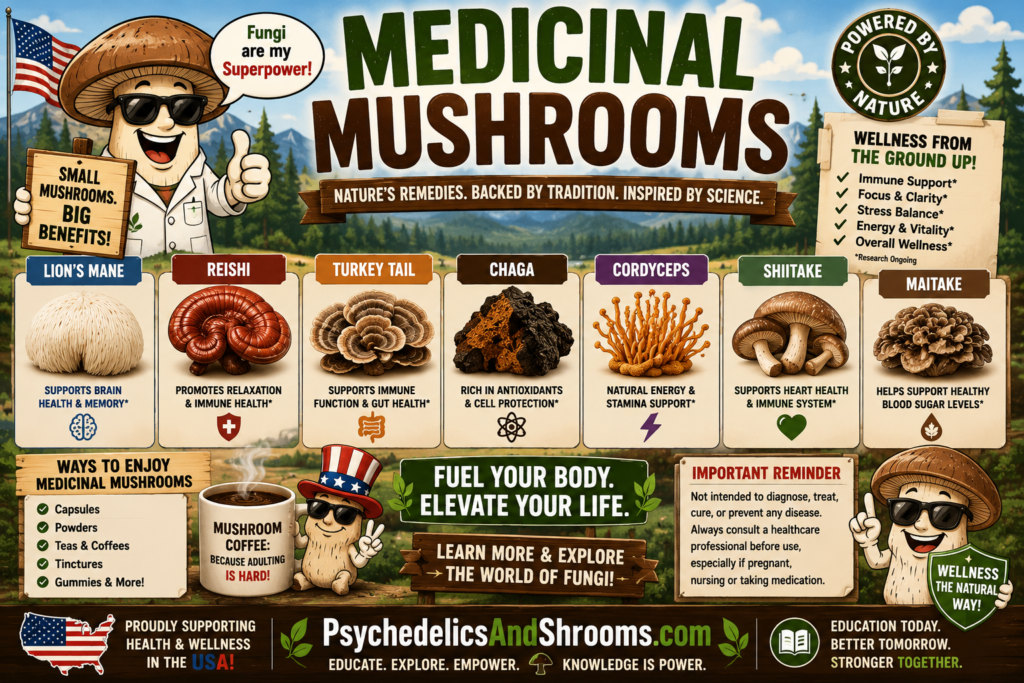
Medicinal mushrooms are fungi traditionally used in wellness practices and increasingly studied in modern scientific research for their naturally occurring compounds. These mushrooms are commonly available as foods, powders, capsules, teas, tinctures, and extracts.
Although many medicinal mushrooms have long histories of traditional use, scientists continue evaluating their properties through laboratory studies and clinical research.
Popular Medicinal Mushroom Species
Several mushroom species are widely recognized in nutritional and scientific research.
Lion’s Mane (Hericium erinaceus)
Lion’s Mane is one of the most researched functional mushrooms and is being studied for its naturally occurring compounds and potential role in supporting cognitive health.
Reishi (Ganoderma lucidum)
Reishi has been used in traditional wellness practices for centuries and continues to be investigated for its polysaccharides and triterpenes.
Turkey Tail (Trametes versicolor)
Turkey Tail contains unique polysaccharides that have made it an important subject of scientific research involving immune system function.
Chaga (Inonotus obliquus)
Chaga is valued for its naturally occurring antioxidant compounds and continues to attract attention in nutrition research.
Cordyceps
Cordyceps species are studied for their bioactive compounds and their potential influence on energy metabolism and exercise performance.
Shiitake and Maitake
These edible mushrooms also provide valuable nutrients and are widely studied for their nutritional and functional properties.
Nutritional Value of Medicinal Mushrooms
Many medicinal mushrooms naturally contain:
- Beta-glucans
- Dietary fiber
- B vitamins
- Selenium
- Potassium
- Copper
- Ergothioneine
- Polyphenols
These nutrients contribute to a balanced diet and support normal body functions.
Current Scientific Research
Scientists continue studying medicinal mushrooms in several areas, including:
- Nutrition
- Immune system research
- Cognitive health
- Healthy aging
- Gut microbiome
- Antioxidant activity
Although results are promising in some areas, additional large-scale clinical studies are needed to better understand long-term effects and appropriate use.
Common Forms of Medicinal Mushrooms
Medicinal mushrooms are available in several convenient forms:
- Whole mushrooms
- Capsules
- Powders
- Liquid extracts
- Teas
- Gummies
The best choice depends on personal preference, product quality, and advice from a qualified healthcare professional.
Choosing Quality Products
When evaluating medicinal mushroom supplements, consider:
- Clearly identified mushroom species
- Transparent ingredient labels
- Standardized extracts when appropriate
- Third-party testing if available
- Good Manufacturing Practices (GMP)
- Reputable manufacturers
Carefully reading product labels helps consumers make informed decisions.
Safety Considerations
Medicinal mushrooms are not appropriate for everyone.
Individuals who are pregnant, breastfeeding, have mushroom allergies, take prescription medications, or have existing medical conditions should consult a qualified healthcare professional before using mushroom supplements.
Following the manufacturer’s instructions and purchasing products from reputable sources helps support safe use.
Medicinal vs. Psychedelic Mushrooms
Medicinal mushrooms differ from mushrooms that naturally contain psilocybin.
Functional and medicinal mushrooms such as Lion’s Mane, Reishi, Turkey Tail, Chaga, Cordyceps, Shiitake, and Maitake are commonly used in foods and dietary supplements.
Psilocybin-containing mushrooms belong to a separate category that is currently being studied in carefully regulated clinical research involving neuroscience and mental health.
Understanding this distinction helps promote accurate public education.
Readers interested in mushroom science and fungal biology can explore additional educational resources at https://psychedelicsandshrooms.com/guides/.
Why Mushroom Education Matters
Reliable information helps consumers distinguish scientific evidence from marketing claims. As research continues, understanding mushroom biology, nutrition, and responsible supplement selection becomes increasingly important for making informed decisions.
Final Thoughts
Medicinal mushrooms represent one of the fastest-growing areas of nutrition and functional food research. From Lion’s Mane and Reishi to Turkey Tail and Chaga, these remarkable fungi continue to attract attention for their naturally occurring compounds and nutritional value.
By relying on evidence-based education and choosing quality products responsibly, consumers can better appreciate the role medicinal mushrooms may play within a balanced lifestyle.
For more educational articles about mushroom science, functional fungi, nutrition, and mycology, visit https://psychedelicsandshrooms.com/.
FAQs
What are medicinal mushrooms?
Medicinal mushrooms are fungi traditionally used in wellness practices and studied for their naturally occurring bioactive compounds.
Which medicinal mushrooms are the most popular?
Popular species include Lion’s Mane, Reishi, Turkey Tail, Chaga, Cordyceps, Shiitake, and Maitake.
Are medicinal mushrooms the same as psychedelic mushrooms?
No. Medicinal mushrooms commonly used in foods and supplements are different from psilocybin-containing mushroom species.
What nutrients do medicinal mushrooms provide?
Many contain beta-glucans, dietary fiber, B vitamins, selenium, copper, potassium, and antioxidants.
How should I choose a medicinal mushroom supplement?
Look for transparent labeling, clearly identified species, quality manufacturing, and third-party testing when available.
Where can I learn more about mushroom science?
Visit https://psychedelicsandshrooms.com/ and https://psychedelicsandshrooms.com/guides/ for educational resources about mushrooms, nutrition, and fungal biology.
