mushroom and shrooms
Mushroom Allergy Symptoms: Causes, Signs, Treatment, and Prevention
Aug
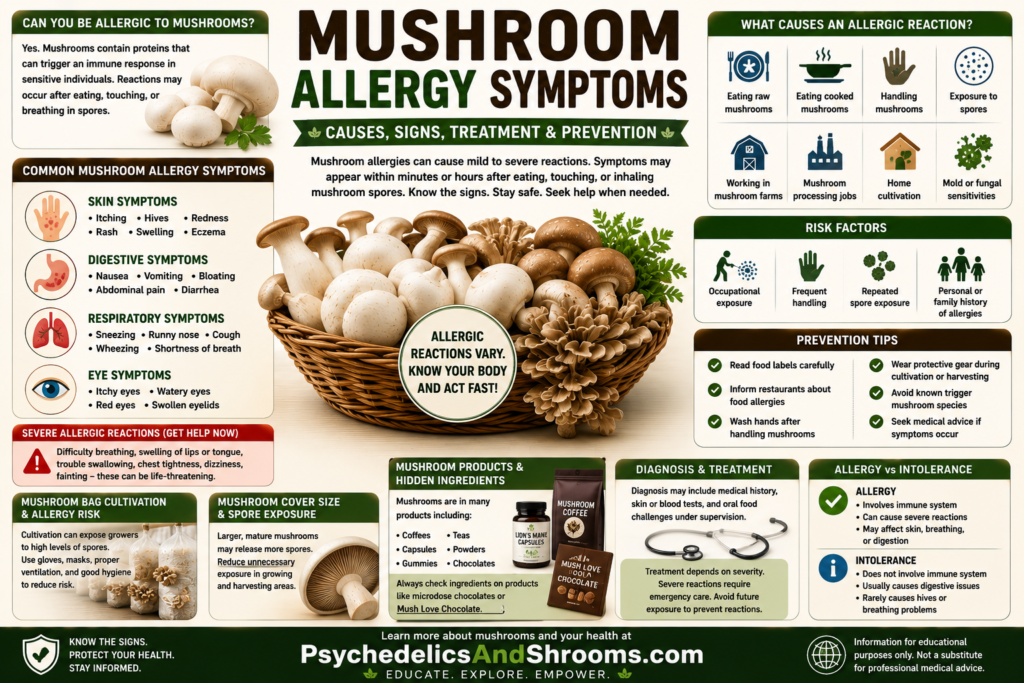
Mushroom allergy symptoms can range from mild itching or digestive discomfort to severe allergic reactions that require immediate medical attention. Although mushroom allergies are less common than allergies to foods like peanuts, shellfish, or milk, they can still affect children and adults. Understanding the signs of a mushroom allergy, knowing when to seek medical care, and learning how to reduce exposure are essential for protecting your health.
Many people ask, can you be allergic to mushrooms? The answer is yes. Allergic reactions may occur after eating mushrooms, inhaling mushroom spores, or handling mushrooms during cultivation, harvesting, or food preparation. The severity of symptoms varies depending on the individual, the mushroom species, and the level of exposure.
At https://psychedelicsandshrooms.com/, readers can explore evidence-based educational resources covering mushroom biology, edible mushrooms, functional fungi, medicinal mushrooms, and current scientific research related to mushrooms and mycology.
Can You Be Allergic to Mushrooms?
Yes. Can you be allergic to mushrooms? This is one of the most frequently asked questions among mushroom consumers.
Mushrooms contain proteins that may trigger an immune response in susceptible individuals. During an allergic reaction, the immune system mistakenly identifies these proteins as harmful and releases chemicals such as histamine. This response produces the symptoms associated with mushroom allergies.
Some people react only after eating mushrooms, while others experience symptoms after touching mushrooms or breathing airborne spores.
What Causes an Allergic Reaction to Mushrooms?
An allergic reaction to mushrooms occurs when the immune system responds to mushroom proteins.
Common triggers include:
- Eating raw mushrooms
- Eating cooked mushrooms
- Handling fresh mushrooms
- Exposure to mushroom spores
- Working in mushroom farms
- Mushroom processing facilities
- Home mushroom cultivation
People with mold allergies or other fungal allergies may have a higher chance of reacting to mushrooms, although the two conditions are not always related.
Common Mushroom Allergy Symptoms
Symptoms can appear within minutes or several hours after exposure.
Skin Symptoms
Many allergic reactions first affect the skin.
Possible symptoms include:
- Itching
- Hives
- Redness
- Rash
- Swelling
- Eczema flare-ups
These symptoms often develop shortly after eating or touching mushrooms.
Digestive Symptoms
Some people primarily experience gastrointestinal symptoms, including:
- Nausea
- Vomiting
- Abdominal pain
- Stomach cramps
- Diarrhea
- Bloating
Digestive symptoms can sometimes resemble food intolerance rather than a true allergy, making medical evaluation important.
Respiratory Symptoms
Airborne mushroom spores may trigger respiratory symptoms, particularly in sensitive individuals.
Possible symptoms include:
- Sneezing
- Runny nose
- Nasal congestion
- Coughing
- Wheezing
- Shortness of breath
These symptoms are more likely among people who work around large quantities of mushrooms.
Eye Symptoms
Eye irritation may include:
- Itchy eyes
- Watery eyes
- Red eyes
- Swollen eyelids
Severe Allergic Reactions
Although uncommon, severe allergic reactions may occur.
Emergency symptoms include:
- Difficulty breathing
- Swelling of the lips or tongue
- Difficulty swallowing
- Chest tightness
- Severe wheezing
- Dizziness
- Fainting
These symptoms require immediate emergency medical care because they may indicate anaphylaxis.
Risk Factors
Certain factors may increase the likelihood of developing mushroom allergies.
These include:
- Personal history of allergies
- Family history of allergies
- Occupational exposure
- Frequent handling of mushrooms
- Repeated exposure to mushroom spores
Workers involved in agriculture and mushroom production may have greater exposure than the general public.
Mushroom Bag Cultivation and Allergy Risk
One of your supporting keywords, mushroom bag cultivation, is relevant because cultivation environments may expose growers to higher concentrations of fungal spores.
People who work with:
- Mushroom bag cultivation
- Indoor growing systems
- Commercial mushroom farms
- Spawn production
- Compost preparation
may benefit from wearing gloves, protective clothing, and appropriate respiratory protection when recommended for their work environment.
Maintaining good ventilation and following proper hygiene practices may also help reduce exposure to airborne spores.
Does Mushroom Cover Size Affect Allergies?
Another supporting keyword is mushroom cover size.
While the size of a mushroom cap does not directly determine whether someone will experience an allergic reaction, larger mature mushrooms may release more spores than younger mushrooms. For individuals who are sensitive to airborne fungal spores, reducing unnecessary exposure in cultivation or harvesting settings may be helpful.
Mushroom Products and Hidden Ingredients
Consumers should also pay attention to mushroom-containing products beyond fresh mushrooms.
Examples include:
- Mushroom coffees
- Mushroom teas
- Functional mushroom capsules
- Mushroom powders
- Mushroom gummies
- Culinary mushroom seasonings
Some specialty products may also contain mushroom-derived ingredients.
For example, products marketed as microdose chocolates or novelty products such as mush love chocolate may contain mushroom ingredients or other botanical compounds. Always read ingredient labels carefully, understand the legal status of any product in your location, and avoid consuming products if you have a known mushroom allergy or are uncertain about their contents.
How Mushroom Allergies Are Diagnosed
Healthcare professionals may use several approaches to determine whether mushrooms are responsible for allergic reactions.
Diagnosis may include:
- Medical history
- Symptom review
- Physical examination
- Allergy skin testing
- Blood tests
- Elimination diets when appropriate
- Oral food challenges performed under medical supervision
Self-diagnosis is not recommended because many other conditions can mimic food allergies.
Treatment Options
Treatment depends on the severity of symptoms.
Mild reactions may be managed according to advice from a healthcare professional.
For severe reactions:
- Emergency medical care is required.
- Individuals with known severe allergies may be prescribed emergency medication by their physician.
- Future exposure should be avoided whenever possible.
Prevention Tips
Reducing exposure is often the most effective prevention strategy.
Helpful recommendations include:
- Read food labels carefully.
- Inform restaurants about food allergies.
- Wash hands after handling mushrooms.
- Wear protective equipment when working with mushrooms.
- Avoid known trigger species.
- Seek medical advice if symptoms develop after mushroom exposure.
Mushroom Allergy vs. Mushroom Intolerance
These conditions are different.
Mushroom Allergy
- Involves the immune system.
- May cause skin, respiratory, digestive, or severe systemic symptoms.
Mushroom Intolerance
- Does not involve the immune system.
- Often causes digestive discomfort.
- Usually does not cause hives or breathing problems.
Proper medical evaluation helps distinguish between the two.
Why Evidence-Based Information Matters
Information about mushroom allergies on the internet varies widely in quality. Relying on evidence-based medical guidance helps individuals understand symptoms, recognize emergencies, and avoid misinformation. It also allows consumers to make informed decisions when purchasing fresh mushrooms, supplements, or specialty mushroom products.
Readers interested in mushroom biology, cultivation, functional mushrooms, and current scientific research can explore additional educational resources at https://psychedelicsandshrooms.com/guides/.
Final Thoughts
Understanding mushroom allergy symptoms can help individuals recognize early warning signs and seek appropriate medical care when needed. While mushroom allergies are relatively uncommon, they can range from mild skin irritation to serious allergic reactions. Recognizing potential triggers, reading ingredient labels carefully, practicing safe handling during mushroom cultivation, and consulting healthcare professionals when symptoms occur are the best ways to reduce risk and protect your health.
For more educational resources about mushrooms, mycology, mushroom cultivation, nutrition, and fungal science, visit https://psychedelicsandshrooms.com/.
Frequently Asked Questions
Can you be allergic to mushrooms?
Yes. Some people experience allergic reactions after eating, touching, or inhaling mushroom spores.
What are the most common mushroom allergy symptoms?
Common symptoms include itching, hives, swelling, digestive discomfort, coughing, wheezing, and watery eyes.
What causes an allergic reaction to mushrooms?
The immune system reacts to proteins found in mushrooms, releasing histamine and other chemicals that produce allergy symptoms.
Can mushroom cultivation increase allergy risk?
People involved in mushroom bag cultivation or commercial growing may experience greater exposure to airborne spores, which can increase the risk of respiratory symptoms in sensitive individuals.
Are mushroom allergies the same as mushroom intolerance?
No. Allergies involve the immune system, while intolerances usually affect digestion and do not trigger an immune response.
Should I avoid mushroom-based products if I have a mushroom allergy?
Yes. If you have a diagnosed mushroom allergy, carefully read ingredient labels and consult your healthcare provider before consuming mushroom-containing foods, beverages, or supplements.
