mushroom and shrooms
Healthiest Mushroom: A Complete Guide to the Most Nutritious Mushrooms
Aug
The search for the healthiest mushroom has grown significantly as more people recognize mushrooms as nutrient-dense foods that can complement a balanced diet. From grocery stores to farmers’ markets, mushrooms are appreciated not only for their flavor and versatility but also for their impressive nutritional profile. Whether you’re looking for the most nutritious mushrooms, wondering what are the healthiest mushrooms to eat, or comparing the best mushrooms to eat for health, understanding the unique characteristics of each variety can help you make informed dietary choices.
Mushrooms are technically fungi rather than plants, yet they provide many nutrients commonly associated with vegetables while also containing unique compounds found almost exclusively in fungi. Many edible mushrooms are naturally low in calories, fat-free, cholesterol-free, and rich in vitamins, minerals, dietary fiber, and antioxidants.
Educational resources available at https://psychedelicsandshrooms.com/ help readers explore mushroom biology, nutrition, functional fungi, edible mushrooms, mycology, and current scientific research through evidence-based information.
Why Mushrooms Are Considered Healthy
Mushrooms have been consumed for centuries in cuisines around the world. Today, nutritional research continues to investigate the compounds that make mushrooms valuable additions to healthy eating patterns.
Many edible mushrooms are considered nutrient rich mushrooms because they provide:
- Dietary fiber
- B vitamins
- Selenium
- Copper
- Potassium
- Phosphorus
- Ergothioneine
- Glutathione
- Naturally occurring antioxidants
These nutrients support normal body functions and contribute to a well-balanced diet.
Unlike many processed foods, mushrooms are naturally low in sodium and calories while providing satisfying texture and flavor.
What Makes a Mushroom Nutritious?
When evaluating the healthiest mushroom, nutrition experts often consider several important factors rather than focusing on a single nutrient.
These include:
Vitamin Content
Many edible mushrooms provide B vitamins such as riboflavin, niacin, and pantothenic acid, which help support normal energy metabolism.
Mineral Profile
Several mushroom species are excellent sources of selenium, copper, potassium, and phosphorus.
Antioxidant Compounds
Mushrooms contain naturally occurring antioxidants including ergothioneine and glutathione, compounds that help protect cells from oxidative stress during normal metabolism.
Dietary Fiber
Fiber contributes to digestive health and supports healthy eating patterns.
Low Calorie Density
Most edible mushrooms provide substantial volume and flavor while remaining naturally low in calories.
What Are the Healthiest Mushrooms to Eat?
Many people ask, what are the healthiest mushrooms to eat?
There is no single answer because different mushroom species provide different nutritional advantages. Instead of one “super mushroom,” nutrition experts often recommend enjoying a variety of edible mushrooms as part of a balanced diet.
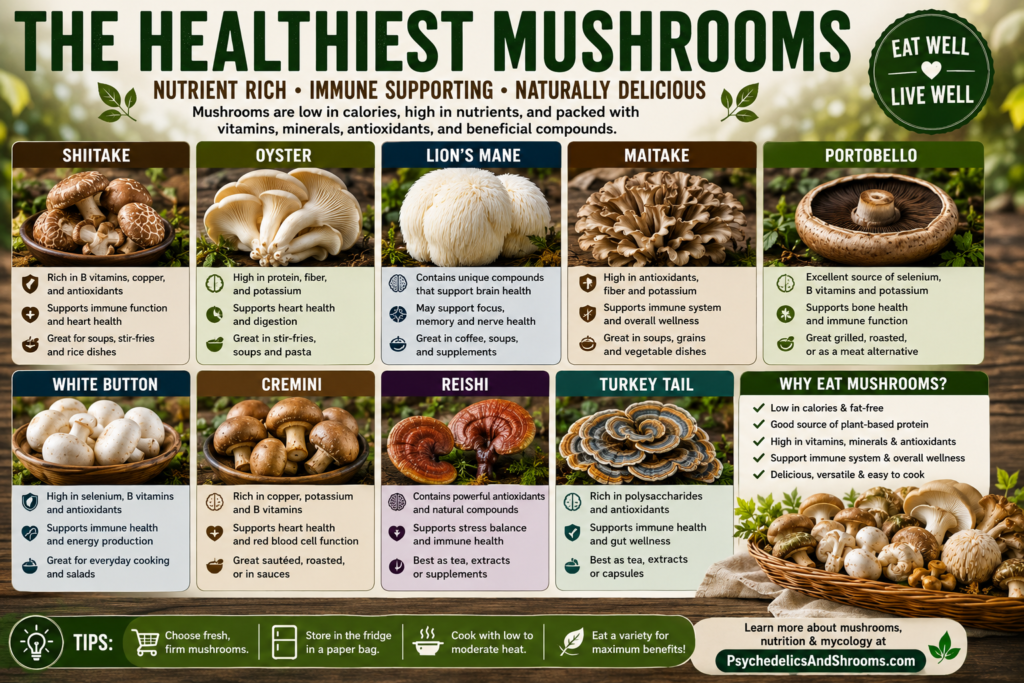
Some of the best healthy mushrooms include:
- White Button Mushrooms
- Shiitake Mushrooms
- Oyster Mushrooms
- Lion’s Mane
- Maitake
- Reishi
- Turkey Tail
- Chanterelles
- Portobello Mushrooms
- Cremini Mushrooms
Each offers a unique nutritional profile.
White Button Mushrooms
White Button Mushrooms (Agaricus bisporus) are among the most widely consumed mushrooms worldwide.
Benefits include:
- Low calorie content
- Dietary fiber
- Selenium
- B vitamins
- Antioxidants
They are also versatile and easy to incorporate into everyday meals.
Shiitake Mushrooms
Shiitake mushrooms are valued for both their rich flavor and nutritional composition.
They naturally contain:
- Copper
- B vitamins
- Dietary fiber
- Polysaccharides
- Antioxidants
Shiitake mushrooms are commonly used in soups, stir-fries, rice dishes, and sauces.
Oyster Mushrooms
Oyster mushrooms are another excellent choice among the best mushrooms to eat for health.
They provide:
- Fiber
- Potassium
- B vitamins
- Antioxidants
- Protein compared with many vegetables
Their delicate texture makes them suitable for many recipes.
Lion’s Mane
Lion’s Mane (Hericium erinaceus) has attracted growing scientific interest because of its naturally occurring compounds.
Current research continues to investigate its nutritional properties and potential role in supporting overall wellness, although additional studies are ongoing.
It is commonly consumed as:
- Fresh mushrooms
- Powder
- Capsules
- Coffee blends
Maitake Mushrooms
Maitake mushrooms are considered among the most nutritious mushrooms because they provide:
- Dietary fiber
- Copper
- Potassium
- Antioxidants
- Naturally occurring polysaccharides
They have long been appreciated in culinary traditions around the world.
Reishi Mushrooms
Unlike many culinary mushrooms, Reishi is typically consumed as:
- Tea
- Powder
- Capsules
- Extracts
Although it has a long history of traditional use, research continues to explore its naturally occurring compounds and nutritional characteristics.
Turkey Tail Mushrooms
Turkey Tail mushrooms contain naturally occurring polysaccharides and are widely studied within mycology and nutritional research.
They are more commonly prepared as teas or dietary supplements rather than eaten as fresh culinary mushrooms.
Portobello and Cremini Mushrooms
Portobello and Cremini mushrooms belong to the same species as White Button mushrooms but represent different stages of maturity.
They provide:
- Fiber
- Potassium
- Selenium
- B vitamins
- Rich umami flavor
Their larger size makes them popular meat alternatives in many recipes.
Nutrient Rich Mushrooms and a Balanced Diet
Although individual mushrooms provide different nutrients, nutrition experts generally recommend eating a variety of edible mushrooms rather than relying on a single species.
Including multiple nutrient rich mushrooms in weekly meals increases dietary diversity and exposes the body to a wider range of naturally occurring vitamins, minerals, antioxidants, and fiber.
Fresh vs. Dried vs. Powdered Mushrooms
One of the most common questions consumers ask is whether fresh, dried, or powdered mushrooms are healthier. The answer depends on how the mushrooms are processed and how you plan to use them.
Fresh Mushrooms
Fresh mushrooms are widely available and remain one of the best choices for everyday meals.
Advantages include:
- Naturally low in calories
- High water content
- Excellent texture
- Easy to cook
- Minimal processing
Fresh mushrooms are ideal for salads, soups, stir-fries, omelets, sandwiches, and roasted vegetable dishes.
Dried Mushrooms
Drying removes moisture while preserving many nutrients and concentrating flavor.
Benefits include:
- Longer shelf life
- Richer flavor
- Convenient storage
- Easy rehydration for cooking
Many chefs prefer dried Shiitake and Porcini mushrooms because of their deep umami flavor.
Mushroom Powders
Mushroom powders are made by drying and grinding mushrooms into a fine consistency.
They are commonly added to:
- Smoothies
- Soups
- Coffee blends
- Protein shakes
- Sauces
- Seasonings
High-quality powders made from edible mushrooms can be a convenient way to include mushrooms in everyday meals.
Which Mushrooms Contain the Most Nutrients?
People searching for the most nutritious mushrooms often want to know which species provide the greatest nutritional value.
Although every edible mushroom offers unique benefits, several consistently stand out because of their nutrient profiles.
| Mushroom | Key Nutrients |
|---|---|
| White Button | Selenium, B Vitamins, Fiber |
| Shiitake | Copper, B Vitamins, Fiber |
| Oyster | Potassium, Antioxidants, Protein |
| Lion’s Mane | Naturally occurring bioactive compounds |
| Maitake | Potassium, Fiber, Antioxidants |
| Portobello | Selenium, Potassium, B Vitamins |
| Cremini | Copper, Fiber, Antioxidants |
Rather than choosing only one variety, combining several mushrooms throughout the week provides a broader range of nutrients.
Best Mushrooms to Eat for Health
When discussing the best mushrooms to eat for health, nutrition experts often emphasize dietary variety over selecting a single “perfect” mushroom.
Some of the most commonly recommended edible mushrooms include:
White Button Mushrooms
An affordable, versatile option suitable for everyday cooking.
Shiitake Mushrooms
Popular for their rich flavor and nutrient density.
Oyster Mushrooms
A delicate mushroom that provides fiber, vitamins, and minerals.
Lion’s Mane
Frequently included in wellness-focused products and culinary recipes.
Maitake
Appreciated for its texture, flavor, and nutritional composition.
Including several mushroom varieties helps create a more balanced nutritional intake.
Cooking Methods That Help Preserve Nutrients
Cooking method can influence the texture, flavor, and nutrient availability of mushrooms.
Healthier preparation methods include:
- Light sautéing
- Roasting
- Grilling
- Steaming
- Baking
Using moderate heat and avoiding excessive oil or heavy breading helps preserve the natural nutritional qualities of mushrooms.
Many mushrooms can also be added to soups near the end of cooking to maintain their texture.
How to Choose Healthy Mushrooms
Selecting fresh, high-quality mushrooms contributes to both flavor and nutrition.
When shopping, look for mushrooms that have:
- Firm texture
- Dry surface
- No sliminess
- No unpleasant odor
- Minimal bruising
- Intact caps
Avoid mushrooms that appear excessively soft or show signs of spoilage.
Purchasing mushrooms from reputable grocery stores or local growers can also help ensure freshness.
Storage Tips
Proper storage helps maintain quality and nutritional value.
For best results:
- Store mushrooms in the refrigerator.
- Keep them in breathable packaging.
- Avoid airtight plastic containers.
- Protect them from excess moisture.
- Wash only before cooking.
Fresh mushrooms generally remain in good condition for several days when stored correctly.
Can Mushrooms Replace Vegetables?
Although mushrooms are highly nutritious, they should complement—not replace—a diverse intake of vegetables, fruits, whole grains, legumes, nuts, and lean proteins.
A balanced eating pattern that includes a variety of plant-based foods provides a wider range of nutrients than relying heavily on any single food.
Mushrooms are best viewed as one valuable component of an overall healthy diet.
Who Can Benefit from Eating Mushrooms?
Many people can enjoy edible mushrooms as part of a balanced lifestyle.
They are particularly popular among:
- Vegetarians
- Vegans
- Fitness enthusiasts
- Older adults
- Families seeking low-calorie foods
- Individuals interested in functional foods
Because mushrooms are naturally versatile, they fit into many different dietary patterns.
Safety Considerations
Only consume mushrooms that have been purchased from reliable food suppliers or identified with certainty by qualified experts.
Never eat unknown wild mushrooms based solely on appearance, internet photographs, or mobile applications, as some poisonous species closely resemble edible varieties.
People with mushroom allergies should consult a healthcare professional before consuming mushroom products or supplements.
Why Evidence-Based Nutrition Matters
Interest in edible and functional mushrooms continues to grow as new scientific studies investigate their nutritional properties. While mushrooms contain many beneficial nutrients, it is important to distinguish well-supported scientific evidence from exaggerated marketing claims.
Choosing a variety of edible mushrooms, preparing them using healthy cooking methods, and maintaining a balanced diet are evidence-based approaches to supporting overall wellness.
Readers interested in mushroom nutrition, mycology, edible fungi, and current scientific research can explore additional educational resources at https://psychedelicsandshrooms.com/guides/.
Final Thoughts
Choosing the healthiest mushroom depends on your nutritional goals, taste preferences, and dietary habits. There is no single mushroom that outperforms every other variety in every category. Instead, incorporating a wide selection of nutrient rich mushrooms, including White Button, Shiitake, Oyster, Lion’s Mane, Maitake, and Portobello mushrooms, allows you to enjoy a broad spectrum of vitamins, minerals, antioxidants, and dietary fiber.
If you’ve been wondering what are the healthiest mushrooms to eat, the answer is to enjoy a diverse range of edible mushrooms as part of a balanced eating pattern. Likewise, when comparing the best mushrooms to eat for health or identifying the best healthy mushrooms, variety, freshness, and proper preparation are just as important as the specific species you choose.
For more educational resources about mushrooms, mushroom nutrition, functional fungi, edible mushrooms, and mycology, visit https://psychedelicsandshrooms.com/.
Frequently Asked Questions
What is the healthiest mushroom to eat?
There is no single healthiest mushroom. White Button, Shiitake, Oyster, Lion’s Mane, Maitake, and Portobello mushrooms all provide valuable nutrients and can be part of a healthy diet.
Which are the most nutritious mushrooms?
Many experts consider White Button, Shiitake, Oyster, Maitake, and Lion’s Mane among the most nutritious mushrooms because they provide fiber, vitamins, minerals, and antioxidants.
Are fresh mushrooms healthier than dried mushrooms?
Both can be nutritious. Fresh mushrooms provide excellent texture and hydration, while dried mushrooms offer concentrated flavor and a longer shelf life.
What are nutrient rich mushrooms?
Nutrient rich mushrooms are edible mushroom varieties that naturally contain vitamins, minerals, dietary fiber, antioxidants, and other beneficial compounds.
What are the best mushrooms to eat for health?
Some of the best mushrooms to eat for health include White Button, Shiitake, Oyster, Lion’s Mane, Maitake, Cremini, and Portobello mushrooms.
How can I include more mushrooms in my diet?
You can add mushrooms to soups, salads, pasta dishes, stir-fries, omelets, sandwiches, rice dishes, pizzas, and smoothies made with mushroom powders.
