Turkey Tail Mushroom, Blue Meanies and Cancer Research: An Educational Guide
Mushrooms represent an extraordinarily diverse group of fungi. Some are familiar foods, others are important decomposers, and certain species have attracted scientific attention because they contain biologically active compounds. Consequently, searches for terms such as mushrooms for cancer treatment, anti cancer mushroom, and turkey tail cancer have become increasingly common.
However, these phrases can easily create the wrong impression. A mushroom being studied in cancer research does not mean that eating the mushroom or taking an over-the-counter supplement has been proven to cure cancer.
The U.S. National Cancer Institute’s medicinal mushroom research overview provides an excellent starting point for understanding the difference between preliminary research, adjunctive treatments used in some countries, and established cancer therapies. Readers interested in broader fungal science can also explore educational material through PsychedelicsAndShrooms.com.
Blue Meanies: Brief Scientific and Mycological Background
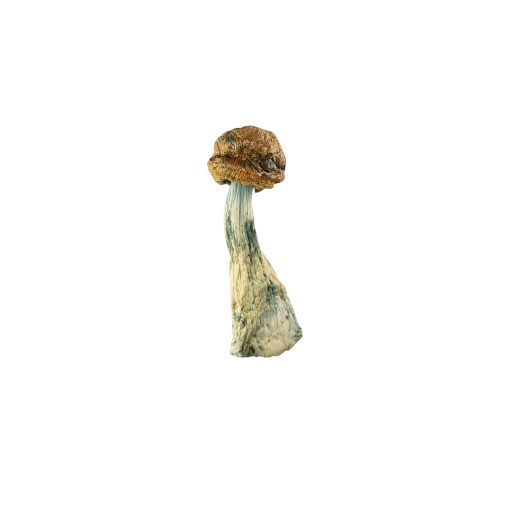
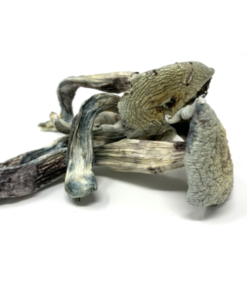
“Blue Meanies” is an ambiguous common name rather than a precise scientific designation. It has been used informally for more than one psychoactive mushroom, which illustrates why mycologists rely on scientific taxonomy rather than informal names.
Phenotypic mushroom identification may consider features such as cap morphology, gill arrangement, stem structure, spore characteristics, coloration, bruising reactions, and ecological habitat. However, appearance alone is not enough to safely identify an unknown wild mushroom.
Some mushrooms associated with this nickname contain controlled psychoactive compounds. Therefore, this article does not provide instructions for cultivation, preparation, dosage, or recreational consumption.
Instead, the remainder focuses on a very different fungus: Trametes versicolor, commonly known as turkey tail mushroom.
What Is Turkey Tail Mushroom?
Turkey tail is a woody bracket fungus that grows on dead logs around the world. Its overlapping bands of brown and tan can resemble turkey tail feathers, which explains its common name.
The species is scientifically known as Trametes versicolor and has also historically been called Coriolus versicolor.
Turkey tail has received considerable scientific attention because it contains polysaccharides and related compounds. According to the National Cancer Institute’s professional medicinal mushroom review, medicinal mushroom preparations have a history of use in Asia, and certain standardized mushroom-derived preparations have been investigated as adjuncts to conventional cancer treatment.
Turkey Tail Mushroom Cancer Study: Why Scientists Are Interested
The keyword turkey tail mushroom cancer study covers several different areas of research.
Scientists have investigated components of Trametes versicolor, particularly polysaccharide-containing preparations such as PSK (polysaccharide-K). Research questions have included potential effects on immune-response pathways and how standardized preparations might function alongside conventional therapy.
An important distinction is that research involving a standardized extract is not automatically evidence that ordinary turkey tail powder, tea, capsules, or other consumer supplements will produce the same outcome.
This distinction matters when interpreting headlines about medicinal mushrooms.
Turkey Tail Cancer: Does It Treat Cancer?
The phrase turkey tail cancer is frequently used by people looking for information about medicinal mushrooms.
The scientific answer requires nuance.
The National Cancer Institute reports that turkey tail-derived PSK has been used as an adjunctive cancer treatment in Japan. However, this does not mean that turkey tail mushrooms or dietary supplements are established standalone cancer cures in the United States.
Cancer treatment decisions should be made with qualified oncology professionals.
Mushrooms for Cancer Treatment
People searching for mushrooms for cancer treatment may encounter several species, including:
- Turkey tail (Trametes versicolor)
- Reishi (Ganoderma lucidum)
- Shiitake (Lentinula edodes)
- Maitake (Grifola frondosa)
The NCI identifies these among medicinal mushrooms that have been investigated in cancer-related research. Importantly, evidence varies considerably among species, preparations, cancers, study designs, and countries.
Therefore, “medicinal mushroom” should not be interpreted as synonymous with “proven cancer medicine.”
For additional general mushroom education and fungal terminology, readers can explore mushroom science resources on PsychedelicsAndShrooms.com.
What Does “Anti Cancer Mushroom” Actually Mean?
Anti cancer mushroom is a popular search phrase, but scientifically it is too broad.
A laboratory experiment might find that an isolated fungal compound influences cultured cells. An animal study might subsequently investigate a biological mechanism. Early human trials may then evaluate safety or immune markers.
None of these stages individually proves that consuming the mushroom treats cancer in humans.
For this reason, phrases such as mushrooms that fight cancer and mushroom good for cancer should be interpreted as questions about research—not established medical conclusions.
Turkey Tail Breast Cancer Study
Turkey tail has specifically been investigated in breast cancer research.
One published Phase I trial enrolled 11 women, nine of whom completed the study, after standard chemotherapy and radiation-related treatment. The primary objective concerned safety and tolerability, while researchers also examined immune measures. Because it was a very small early-stage study, it should not be interpreted as evidence that turkey tail cures or independently treats breast cancer.
Readers interested in examining the actual publication rather than secondary interpretations can access the Phase I Trametes versicolor breast cancer study on PubMed.
Turkey Tail Mushroom for Breast Cancer
Searches for turkey tail mushroom for breast cancer should therefore be approached carefully.
Research has investigated turkey tail preparations primarily in complementary or adjunctive contexts. The existence of such research does not justify replacing surgery, chemotherapy, radiation therapy, immunotherapy, hormone therapy, targeted therapy, or another oncology treatment with mushroom supplements.
Anyone undergoing cancer treatment should discuss supplements with their oncology team because supplements can have side effects or potentially interact with medications.
Mushroom Supplements and Cancer
The relationship between mushroom supplements and cancer is particularly important because commercial supplements are not necessarily equivalent to preparations used in clinical studies.
Two products labeled “turkey tail” can differ in:
- Mushroom material used
- Extraction process
- Concentration
- Beta-glucan content
- Other ingredients
- Manufacturing standards
- Contaminant testing
- Independent laboratory verification
Therefore, results from a particular standardized preparation should not automatically be generalized to every mushroom supplement.
Are Mushrooms That Fight Cancer Scientifically Proven?
It is more accurate to say that certain mushrooms contain compounds being investigated in cancer research.
The NCI’s evidence-based summaries discuss medicinal mushrooms as complementary and alternative medicine research and review laboratory, animal, and human evidence. They do not establish ordinary mushroom supplements as universal cancer treatments.
This difference is especially important for educational websites because wording such as “mushrooms that fight cancer” can otherwise sound like a treatment guarantee.
Understanding PSK and Turkey Tail Research
One particularly important substance in turkey tail research is polysaccharide-K (PSK).
PSK is a standardized mushroom-derived preparation rather than simply ground turkey tail mushroom. The NCI reports a substantial history of PSK research and adjunctive use in Japan.
This demonstrates an important scientific principle: research about a purified or standardized compound cannot automatically be applied to every preparation containing the original organism.
How to End an Acid Trip: A Safety Perspective
People sometimes search how to end an acid trip when they or someone around them is experiencing distress after taking a hallucinogen.
There is no reliable home technique that instantly switches off a psychedelic drug’s effects. The safest priorities are avoiding additional substances, moving away from hazards such as traffic or heights, staying with a calm sober person, and obtaining professional medical assistance when symptoms become severe.
Urgent medical attention is appropriate when someone experiences loss of consciousness, seizures, dangerous behavior, severe confusion that creates immediate risk, serious physical symptoms, or another medical emergency.
This information is intended for emergency harm reduction—not to encourage psychedelic use.
What About a Truffle Mushroom Grow Kit?
The term truffle mushroom grow kit can describe very different things.
True culinary truffles are fungi belonging primarily to the genus Tuber. They form underground fruiting bodies and have complex ecological relationships with tree roots.
However, “magic truffle” is also a commercial term associated with psychoactive fungal material. Because of that distinction, this guide does not provide instructions for an indoor truffle growing kit intended to produce psychoactive fungi.
Educational discussion of culinary truffles, fungal ecology, taxonomy, and mycorrhizal relationships is a separate and fascinating area of mycology.
How to Evaluate Medicinal Mushroom Claims
When reading claims about an anti cancer mushroom, ask several questions:
- Was the research performed in cells, animals, or humans?
- How many participants were included?
- Was the study randomized and controlled?
- Was the mushroom itself tested or an isolated extract?
- Was it tested independently or alongside conventional treatment?
- Has the finding been replicated?
- Does an authoritative medical organization recognize the proposed use?
These questions make it easier to distinguish promising research from exaggerated marketing.
The National Cancer Institute’s PDQ evidence summaries are particularly useful because they are designed to help clinicians and the public evaluate published cancer evidence.
Why Mushroom Cancer Research Remains Important
Medicinal mushroom research remains scientifically valuable even when the evidence does not support dramatic consumer claims.
Fungi contain enormous chemical diversity. Investigating their polysaccharides, proteins, enzymes, and other compounds may improve scientists’ understanding of immunology, cellular biology, microbiology, and pharmacology.
The correct message is therefore neither “mushrooms cure cancer” nor “mushroom research is meaningless.”
Instead, evidence should be evaluated species by species, compound by compound, and study by study.
Readers can continue exploring general mycology and mushroom education through PsychedelicsAndShrooms.com educational resources.
Frequently Asked Questions
What is turkey tail mushroom?
Turkey tail, or Trametes versicolor, is a woody bracket fungus found on dead wood worldwide. It contains several compounds that have attracted scientific interest.
Is turkey tail an anti cancer mushroom?
“Anti cancer mushroom” is an oversimplified description. Certain turkey tail-derived preparations have been investigated in cancer research, but ordinary turkey tail supplements should not be considered proven standalone cancer treatments.
Are there mushrooms that fight cancer?
Some medicinal mushroom compounds are being investigated for potential anticancer and immune-related effects. That research does not mean eating mushrooms or taking supplements has been proven to cure cancer.
What did the turkey tail breast cancer study find?
A small Phase I study primarily evaluated safety and tolerability following conventional treatment and examined immune measures. With only nine participants completing it, the study cannot establish turkey tail as an effective breast cancer treatment.
Can turkey tail replace chemotherapy?
No. Turkey tail supplements should not replace evidence-based cancer treatment. Cancer patients should discuss supplements with their oncology team.
Are mushroom supplements the same as research extracts?
Not necessarily. Commercial supplements may differ substantially from standardized preparations studied in research.
Can an acid trip be stopped immediately?
There is no dependable home method that instantly stops the drug’s effects. If someone is severely distressed or medically unwell, prioritize physical safety and seek professional medical assistance.
| Quantity | 3.5G, 7G, 14G, 28G |
|---|
Be the first to review “Blue Meanies”
Related products
Microdose Shrooms
Microdose Shrooms
Microdose Shrooms
Mushrooms
Mushrooms
Mushrooms
Microdose Shrooms
Reviews
There are no reviews yet.