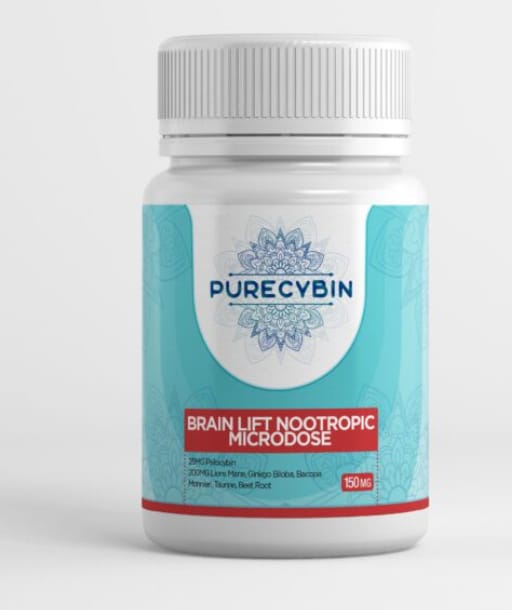
Brain Lift Nootropic Microdose: Mushroom Gummies, Anxiety & Psilocybin Research
What Is Brain Lift Nootropic Microdose?
Brain Lift Nootropic Microdose is a product-style phrase combining three increasingly popular wellness concepts: cognitive enhancement, mushroom products, and microdosing.
The terminology sounds scientific. However, none of those words establishes what a particular product actually contains.
A “nootropic” generally describes a substance marketed around cognition, attention, memory, or mental performance. Meanwhile, “microdose” is commonly associated with relatively low-level psychedelic exposure, although manufacturers also use the word on non-psychedelic mushroom supplements.
Therefore, consumers should begin with the ingredient panel rather than the product name.
A mushroom-branded product could contain functional mushrooms, botanical ingredients, Amanita-derived constituents, other psychoactive compounds, or a mixture of ingredients.
Consequently:
mushroom branding ≠ psilocybin
and
microdose branding ≠ verified chemical concentration.
For additional educational information about mushrooms and psychedelic science, visit PsychedelicsAndShrooms.com.
What Does Nootropic Mean?
The word nootropic appears across supplements marketed for mental performance.
Products may associate themselves with:
- focus;
- memory;
- concentration;
- motivation;
- mental clarity;
- creativity; and
- cognitive performance.
However, “nootropic” doesn’t mean FDA-approved treatment for cognitive impairment.
Likewise, calling a mushroom gummy a nootropic doesn’t prove that controlled human trials have demonstrated cognitive improvement.
Therefore, consumers should ask which ingredient supposedly produces the claimed effect and what evidence supports it.
What Is a Microdose?
Microdosing generally refers to using a relatively small amount of a psychedelic substance while attempting to remain below the intensity associated with a conventional psychedelic experience.
However, there isn’t one universally standardized real-world mushroom microdose.
Natural fungal material can vary chemically.
Moreover, commercial products can contain entirely different ingredients despite using similar “microdose mushroom” language.
For those reasons, this article doesn’t provide recreational dosing quantities, schedules, or redosing instructions.
Magic Mushroom Microdose Gummies
Magic mushroom microdose gummies have become highly visible online.
However, gummy format creates an important identification problem.
Once ingredients have been processed into candy, consumers cannot visually determine which mushroom—or chemical—went into the product.
Professional packaging doesn’t solve that problem.
Neither does a mushroom illustration.
Instead, meaningful evaluation requires:
- complete ingredients;
- manufacturer identity;
- batch information;
- relevant analytical testing;
- expiration information;
- warnings; and
- accurate chemical terminology.
Mushroom Microdose Gummies
The term mushroom microdose gummies can describe several completely different product categories.
One product might contain lion’s mane or another functional mushroom.
Another might use Amanita terminology.
Another could claim psilocybin.
Still another might contain unrelated psychoactive compounds.
Therefore, consumers shouldn’t treat all mushroom microdose gummies as interchangeable.
Why Mushroom Gummy Ingredients Matter
Recent U.S. public-health investigations demonstrate why this distinction matters.
FDA testing of recalled Diamond Shruumz products identified varying compounds across tested products, including muscimol in some samples, psilocin in some, acetylpsilocin in some, prescription pregabalin in some, and kavalactones in others. FDA ultimately reported 180 illnesses, 73 hospitalizations, and three potentially associated deaths in that investigation.
That case doesn’t prove that every mushroom gummy has the same problem.
Instead, it demonstrates a broader principle:
marketing language cannot replace chemical verification.
FDA Concerns About Amanita Mushroom Edibles
Amanita muscaria is also fundamentally different from psilocybin-containing Psilocybe mushrooms.
In December 2024, the FDA stated that Amanita muscaria, its extracts, and constituents including muscimol, ibotenic acid, and muscarine don’t meet the safety standard for use as conventional food ingredients. The agency recommended avoiding foods containing these ingredients.
Therefore, a product marketed as a “legal mushroom gummy” shouldn’t automatically be interpreted as safe merely because it doesn’t claim psilocybin.
Psilocybin Microdosing Gummies
Psilocybin microdosing gummies theoretically describe gummies containing psilocybin in relatively small quantities.
However, the word “psilocybin” on marketing material doesn’t independently verify composition.
Reliable chemical analysis provides much stronger evidence.
Furthermore, psilocybin remains federally controlled in the United States.
Local decriminalization measures or state-regulated psychedelic frameworks shouldn’t be confused with blanket nationwide retail legalization.
Microdose Psilocybe Gummies
The phrase microdose Psilocybe gummies associates the product with the fungal genus Psilocybe.
Several species within this genus can contain psilocybin.
However, once mushroom material becomes a gummy, visual mushroom identification becomes impossible.
Therefore, the meaningful questions become:
What does the ingredient declaration say?
What compounds did an independent laboratory detect?
Does the report correspond to this batch?
These questions are more informative than colorful packaging.
Micro Mushroom Gummies
Micro mushroom gummies may also refer to non-psychedelic functional mushroom products.
For example, gummies can contain:
lion’s mane — commonly marketed around cognition;
Cordyceps — commonly marketed around energy;
reishi — commonly marketed around relaxation;
turkey tail — frequently associated with immune-related research.
None of these mushrooms should automatically be confused with psilocybin.
Functional Mushroom Gummies vs. Psychedelic Gummies
| Product category | Typical concept |
|---|---|
| Lion’s mane gummy | Functional mushroom/cognition |
| Cordyceps gummy | Functional mushroom/energy |
| Reishi gummy | Functional mushroom/relaxation |
| Psilocybin-claimed gummy | Psychedelic product |
| Amanita-claimed gummy | Different mushroom chemistry |
| Unverified “mushroom” gummy | Composition requires verification |
Consequently, “mushroom gummy” isn’t a sufficiently specific chemical description.
Microdose Mushroom Products
Microdose mushroom products can appear as:
- gummies;
- chocolates;
- capsules;
- tablets;
- powders; or
- beverages.
However, format doesn’t determine pharmacology.
A gummy and capsule containing the same verified compound may differ primarily in formulation.
Meanwhile, two gummies with nearly identical packaging can contain entirely different ingredients.
Therefore, product format should remain secondary to composition.
Mushroom Microdose Brands
Consumers frequently compare mushroom microdose brands according to reviews, flavors, packaging, or perceived effects.
Those factors can help evaluate consumer experience.
However, they don’t establish chemical identity.
A better product comparison considers:
Ingredient transparency
Does the manufacturer disclose every ingredient?
Chemical testing
Does testing identify relevant compounds rather than simply state “lab tested”?
Batch matching
Does the laboratory report correspond to the product’s lot?
Contaminant screening
Were appropriate contaminants examined?
Claims
Does the company make unrealistic claims about treating anxiety, depression, PTSD, or other conditions?
These questions provide a stronger quality framework than star ratings.
Best Microdose Mushroom Gummies
There isn’t a scientifically established universal best microdose mushroom gummy.
The word “best” depends first on what category consumers mean.
Someone looking for a non-psychedelic lion’s mane gummy is considering a fundamentally different product from someone researching psilocybin.
Therefore, consumers should compare transparency and evidence rather than asking which psychedelic gummy produces the strongest effect.
For unregulated psychoactive products, stronger isn’t synonymous with better.
Where Can I Buy Microdose Mushroom Gummies?
The keyword where can I buy microdose mushroom gummies can refer either to ordinary functional mushroom supplements or controlled psychedelic products.
Legal functional mushroom gummies containing ingredients such as lion’s mane or Cordyceps are widely sold through ordinary lawful supplement channels.
However, this guide doesn’t provide vendors, delivery services, or purchasing instructions for psilocybin-containing products.
Moreover, online availability doesn’t establish legality, purity, or safety.
Can Online Mushroom Products Be Trusted?
Online availability alone tells consumers very little.
A professional website can still market a poorly characterized product.
Likewise, attractive packaging can be copied.
Therefore, consumers should look for traceable manufacturing information and credible batch documentation.
This matters especially when products claim psychoactive effects.
TRE House Microdose Mushroom Gummies
The keyword TRE House microdose mushroom gummies refers to a commercial branded search.
However, branded mushroom products can change formulation over time.
Therefore, old reviews, social-media posts, or screenshots shouldn’t be treated as permanent ingredient records.
The safest analytical approach is to examine the current product label and current batch documentation rather than assuming the word “mushroom” means psilocybin.
Furthermore, a manufacturer’s marketing claims aren’t equivalent to independent clinical evidence.
Reviews Don’t Establish Chemistry
Suppose a reviewer says:
“These gummies felt psychedelic.”
That report doesn’t identify the active chemical.
Several different substances can produce changes in perception, mood, sedation, stimulation, or cognition.
Consequently, subjective effects cannot replace analytical testing.
The same principle applies when a reviewer says a gummy “felt like psilocybin.”
Feeling isn’t chemical identification.
Microdosing Mushrooms for Depression and Anxiety
The keyword microdosing mushrooms for depression and anxiety enters a substantially more important medical discussion.
Psychedelic research has generated legitimate scientific interest in mental health.
However, three concepts should remain separate:
commercial microdose gummies
self-directed psychedelic microdosing
professionally supervised psilocybin clinical research
They aren’t interchangeable.
Does Microdosing Mushrooms Help With Anxiety?
The question does microdosing mushrooms help with anxiety doesn’t yet have a simple affirmative clinical answer.
Some people report improvements in mood or anxiety after microdosing.
However, anecdotal experiences can be affected by expectation, placebo effects, lifestyle differences, and selection bias.
Controlled research has produced a more complicated picture.
Therefore, microdosing shouldn’t currently be presented as a proven anxiety treatment.
Can Microdosing Mushrooms Help With Anxiety?
Can microdosing mushrooms help with anxiety?
Research remains active, but evidence for self-directed microdosing is considerably less established than popular testimonials suggest.
Furthermore, psychedelics can themselves produce anxiety in some people.
Consequently, describing microdosing as inherently calming would be misleading.
Persistent or severe anxiety deserves appropriate professional evaluation rather than reliance on an unverified mushroom gummy.
Microdosing and Depression
The same caution applies to depression.
People sometimes interpret promising psilocybin clinical trials as proof that ordinary microdosing treats depression.
That conclusion skips several important steps.
Clinical studies can involve carefully screened participants, characterized compounds, psychological support, monitoring, defined outcome measures, and follow-up.
Self-directed microdosing doesn’t automatically reproduce those conditions.
What Does Current Psilocybin Depression Research Show?
Psilocybin remains an active area of psychiatric research.
For example, a recent randomized clinical trial involving adults with recurrent major depressive disorder found a statistically significant improvement in depression scores at the study’s primary eight-day endpoint after a controlled psilocybin intervention compared with active placebo. Importantly, the study used a defined clinical intervention and psychotherapeutic support—it wasn’t a trial of retail mushroom microdose gummies.
That distinction is essential.
Promising psilocybin research shouldn’t become automatic evidence for unrelated commercial products.
Psilocybin Therapy vs. Microdosing
These approaches differ substantially.
| Self-directed microdosing | Clinical psilocybin research |
|---|---|
| Product composition may vary | Compound is characterized |
| Often repeated low-level exposure | Defined research protocol |
| Usually no professional screening | Participants are screened |
| Limited monitoring | Clinical monitoring |
| Expectations may influence results | Controlled study design |
| Commercial product may be unverified | Researchers know intervention |
Therefore, consumers shouldn’t use the phrase “psilocybin therapy” for every form of psychedelic use.
Brain Lift Nootropic Microdose and Cognitive Claims
A product called Brain Lift Nootropic Microdose naturally implies cognitive enhancement.
However, “brain lift” isn’t a scientific endpoint.
Researchers measure more specific outcomes, such as:
- attention;
- working memory;
- processing speed;
- executive function;
- cognitive flexibility; and
- creativity.
A product could theoretically influence one domain without improving another.
Therefore, broad claims such as “boosts your brain” deserve careful scrutiny.
Microdosing and Focus
Focus represents one of the most common microdosing claims.
However, perceived focus can be influenced by:
- sleep;
- caffeine;
- expectations;
- motivation;
- stress;
- other ingredients;
- mood; and
- placebo effects.
Therefore, a consumer reporting improved concentration after a gummy doesn’t prove psilocybin caused the change.
Lion’s Mane in Nootropic Mushroom Products
Some nootropic mushroom products use lion’s mane rather than psychedelics.
Lion’s mane has attracted scientific attention because researchers have studied compounds associated with neurological processes.
Some small human studies have examined cognition and mood.
Nevertheless, lion’s mane isn’t psilocybin.
Therefore, consumers should never assume that a “brain mushroom” gummy is psychedelic.
Microdosing and Placebo Effects
Placebo research is particularly important in microdosing.
People who strongly expect greater creativity, focus, or emotional wellbeing may notice and report ordinary fluctuations differently.
That doesn’t mean their experiences are fake.
Instead, it demonstrates why blinded research matters.
Scientists need controlled experiments to separate pharmacological effects from expectations.
Are Mushroom Microdose Gummies Safe?
No universal safety statement can cover every product marketed under this category.
Safety depends on what the gummy actually contains.
Questions include:
- Is the active ingredient known?
- Is the amount verified?
- Are contaminants tested?
- Are additional psychoactive substances present?
- Is the product accurately labeled?
- Does the consumer take medications?
- Are there psychiatric or medical vulnerabilities?
Consequently, a mushroom illustration on a gummy package isn’t a safety guarantee.
Why the FDA Mushroom-Edible Investigation Matters
The Diamond Shruumz investigation provides an important real-world example.
FDA laboratory testing found that products sold within one mushroom-edible brand could contain different combinations of psychoactive compounds and other substances. Severe reported outcomes included seizures, altered consciousness, abnormal heart rates, nausea and vomiting.
Therefore, consumers should treat ingredient verification as a serious safety issue rather than an SEO or marketing detail.
“Legal Mushroom Gummies” Doesn’t Mean Risk-Free
A substance can fall outside one controlled-drug category without automatically becoming a safe food ingredient.
The FDA specifically concluded that Amanita muscaria and certain constituents don’t meet the applicable safety standard for conventional food use and recommended avoiding foods containing them.
Therefore:
not psilocybin ≠ automatically safe.
What to Look for on a Mushroom Gummy Label
A useful label should make it possible to answer:
Who manufactured the product?
What exactly does it contain?
How much does each declared quantity measure?
Is there a batch number?
Is testing linked to that batch?
What compounds were actually tested?
Are appropriate warnings present?
Vague proprietary blends make those questions harder to answer.
“Lab Tested” Isn’t Enough
A laboratory can test many different things.
For example, a certificate could examine microbial contamination without measuring psychoactive compounds.
Another might test heavy metals.
Another might measure cannabinoid content.
Therefore, “lab tested” only becomes informative when consumers know the test’s scope.
Mushroom Gummies and Children
Candy-like formats create another important safety issue.
Gummies can resemble ordinary sweets.
Therefore, psychoactive or uncertain mushroom products should never be treated like conventional candy, particularly around children.
Products should remain inaccessible to children and pets.
When to Seek Medical Help
Unexpected mushroom-product reactions can require medical attention.
Seek urgent help for severe symptoms such as:
- seizures;
- loss of consciousness;
- severe confusion;
- difficulty breathing;
- extreme agitation;
- severe or persistent vomiting; or
- dangerous changes in behavior.
In the United States, Poison Control is available at 1-800-222-1222. Call 911 for a life-threatening emergency.
Preserve the packaging when possible because ingredient and batch information may help clinicians.
Frequently Asked Questions
1. What is Brain Lift Nootropic Microdose?
Brain Lift Nootropic Microdose is a product-style phrase associated with cognitive and microdosing terminology. The name itself doesn’t establish whether a product contains functional mushrooms, psilocybin, Amanita-derived ingredients, botanicals, or another formulation.
2. Are magic mushroom microdose gummies always psilocybin gummies?
No. “Magic,” “mushroom,” and “microdose” are marketing terms that don’t independently establish chemistry. Current ingredients and credible batch-specific testing provide stronger evidence.
3. Does microdosing mushrooms help with anxiety?
Current evidence doesn’t establish self-directed mushroom microdosing as a reliable treatment for anxiety. Some people report benefits, but controlled evidence remains more complicated, and psychedelics can also provoke anxiety.
4. Can microdosing mushrooms help with depression?
Psilocybin-assisted clinical interventions are being studied for depression, with some promising results. However, clinical psilocybin research isn’t equivalent to self-directed microdosing or commercial mushroom gummies.
5. Where can I buy microdose mushroom gummies?
Ordinary legal functional mushroom products containing ingredients such as lion’s mane or Cordyceps are available through lawful supplement channels. This guide doesn’t provide sellers or purchasing directions for controlled psilocybin products.
6. What should I check before evaluating a mushroom gummy?
Check the complete ingredient declaration, manufacturer, batch number, what the milligram figures actually measure, current laboratory documentation, contaminant testing, warnings, and whether health claims are supported by evidence.
Educational Resources
For further educational reading about functional mushrooms, psilocybin, mushroom-product safety and psychedelic research, explore PsychedelicsAndShrooms.com.
The FDA mushroom-edible safety investigation provides a useful real-world example of why product composition matters. The FDA Amanita muscaria safety alert explains the agency’s concerns about Amanita ingredients in food. Scientific readers can also explore current psilocybin literature through PubMed.
| Quantity | 2 bottles |
|---|
Be the first to review “Brain Lift Nootropic Microdose (30)”
Related products
Microdose Shrooms
Mushrooms
Mushrooms
Mushrooms
Mushroom Capsule
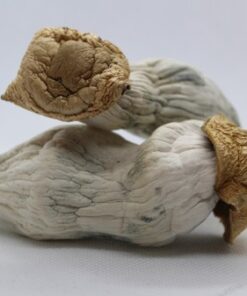
Microdose Shrooms
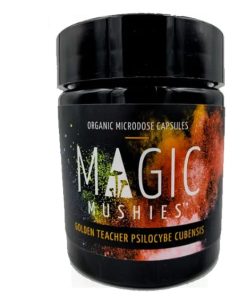
Mushroom Capsule
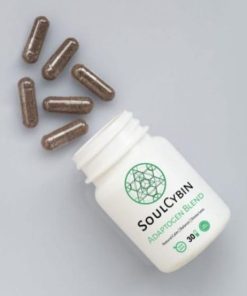
Mushroom Capsule
Reviews
There are no reviews yet.