Code Blue Mushrooms Guide: Effects, Nutrition, Spores, Research & Safety
Introduction
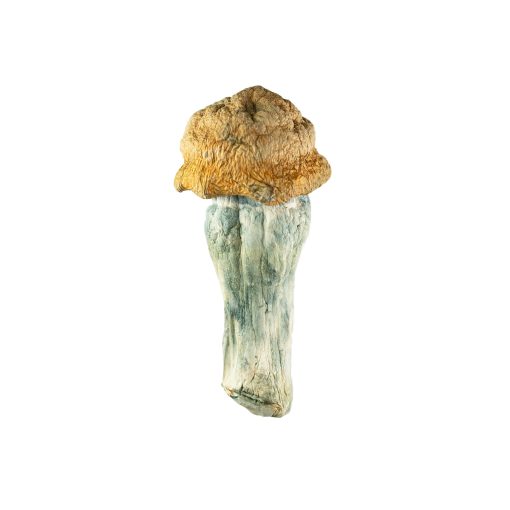
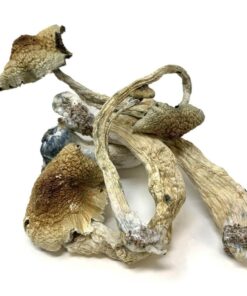
Code Blue mushrooms is a term often used in discussions about mushroom species that show a distinctive blue bruising reaction. This reaction is commonly associated with fungi that contain compounds related to psilocybin.
Researchers, mycologists, and neuroscientists study these mushrooms to understand their chemical compounds, spores, biological characteristics, and neurological effects. Scientific interest in psychedelic mushrooms has increased in recent years as institutions investigate their potential role in mental health research and neuroscience.
This educational guide explores Code Blue mushrooms from a scientific and informational perspective, including their biology, spores, potential effects, and current research findings.
Code Blue: Identifying White and Brown Mushrooms and the History of Magic Mushroom Discovery
Mushrooms come in thousands of species, making identification both fascinating and challenging. People often search for terms such as white mushroom with brown spots, white mushroom brown gills, white mushroom with brown spot on top, large white mushroom with brown spots, tan mushrooms, brown gilled mushroom, flat head mushroom, mushroom with brown spots on top, white mushroom with brown center, tan mushroom with brown gills, brown mushroom with black gills, and who discovered magic mushrooms. Learning about these characteristics can help improve mushroom awareness while emphasizing the importance of proper identification and safety.
Understanding Mushroom Colors and Features
A white mushroom with brown spots or a white mushroom with brown spot on top may simply be an aging edible mushroom, a mushroom affected by environmental conditions, or a completely different wild species. Likewise, a large white mushroom with brown spots can belong to several genera, making visual appearance alone an unreliable identification method.
Another common feature is white mushroom brown gills. Gills naturally change color as mushrooms mature because spores develop over time. A mushroom that begins with pale gills may gradually develop tan, brown, chocolate-colored, or even dark gills depending on the species.
Brown Gills, Black Gills, and Tan Mushrooms
Searches for brown gilled mushroom, tan mushroom with brown gills, and brown mushroom with black gills often relate to identification. Gill color is one of the most useful characteristics that mycologists examine, but it should always be considered alongside cap shape, stem features, bruising reactions, habitat, spore print color, and season of growth. A tan mushroom growing in a lawn may be completely unrelated to a similarly colored mushroom found in woodland habitats.
People also search for flat head mushroom, a descriptive term that may refer to mushrooms whose caps flatten as they mature. Since many unrelated species develop flat caps, this characteristic alone cannot determine whether a mushroom is edible or poisonous.
Brown Centers and Surface Spots
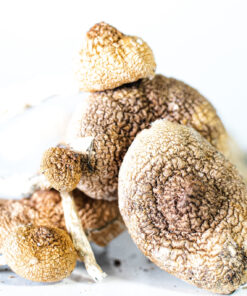
A white mushroom with brown center or a mushroom with brown spots on top may simply be displaying normal maturation, exposure to sunlight, minor bruising, or natural pigmentation. However, similar appearances can occur in poisonous species, reinforcing why mushrooms should never be identified solely by color or cap markings.
For anyone interested in wild mushrooms, experts recommend using multiple identifying characteristics rather than relying on photographs or internet searches. Field guides, experienced mycologists, and local mushroom organizations can provide valuable educational resources.
Who Discovered Magic Mushrooms?
A common historical question is who discovered magic mushrooms. Psilocybin-containing mushrooms have been used by Indigenous cultures in parts of Mesoamerica for centuries, long before modern scientific study. In the Western scientific community, interest increased significantly during the 1950s after banker and amateur ethnomycologist R. Gordon Wasson documented ceremonial mushroom use in Mexico. Shortly afterward, scientists isolated and identified the psychoactive compounds psilocybin and psilocin, contributing to decades of ongoing research. Rather than being “discovered” by one individual, these mushrooms have a long cultural and historical history spanning many generations.
Conclusion
Whether you’re learning about a white mushroom with brown spots, studying brown gilled mushrooms, or exploring the history behind who discovered magic mushrooms, careful identification and reliable scientific information are essential. Because many mushroom species closely resemble one another, proper identification should always be based on multiple characteristics and expert guidance rather than appearance alone.
For additional educational information, explore Wikipedia’s Mushroom (https://en.wikipedia.org/wiki/Mushroom) and the Missouri Botanical Garden (https://www.missouribotanicalgarden.org/) for reliable information on fungi, plant science, and biodiversity.
Are Mushrooms Addictive?
Another common question is whether psychedelic mushrooms are addictive.
Research literature suggests that classic psychedelics such as psilocybin do not typically produce physical dependence like substances such as nicotine or opioids.
However, scientists emphasize that these compounds can produce strong psychological experiences, which is why research and medical studies are carefully supervised.
Cultural References and Perception
Psychedelic experiences are sometimes compared to imaginative or dream-like states.
Popular culture occasionally references themes such as “Alice in Wonderland-style experiences,” where perception, time, and sensory awareness appear altered.
Researchers study these effects to understand how psychedelic compounds influence consciousness and brain networks.
Where to Explore Mushroom Research
Researchers and enthusiasts interested in exploring mushroom science can learn about:
- mushroom species and identification
- fungal biology and spores
- psychedelic research developments
Educational resources and mushroom guides can be explored on:
https://psychedelicsandshrooms.com
Internal research resources:
- https://psychedelicsandshrooms.com/mushroom-species-guide
- https://psychedelicsandshrooms.com/psilocybin-research
External research sources include:
- University of Melbourne
- Monash University
Frequently Asked Questions
What are Code Blue mushrooms?
Code Blue mushrooms generally refer to fungi that display a blue bruising reaction when handled or damaged.
Why do some mushrooms bruise blue?
The blue color results from oxidation reactions involving compounds related to psilocybin.
Are psychedelic mushrooms addictive?
Research indicates that classic psychedelics are not physically addictive, although they can produce strong psychological experiences.
How do mushrooms reproduce?
Mushrooms reproduce through microscopic spores that spread and grow into fungal networks called mycelium.
Why do some mushrooms cause hallucinations?
Certain compounds in psychedelic mushrooms interact with serotonin receptors in the brain, altering perception and sensory processing.
| Quantity | 14G, 28G, 1/4 LB |
|---|
Be the first to review “Code Blue”
Related products
Mushrooms
Mushrooms
Microdose Shrooms
Mushrooms
Microdose Shrooms
Mushrooms
Reviews
There are no reviews yet.