Cognitive Microdose: Psilocybin Microdosing, Effects, Mental Health & Research
What Is Cognitive Microdose?
Cognitive Microdose is a useful phrase for discussing one of the most visible trends in modern psychedelic culture: using small amounts of psychedelic substances with the expectation of subtle cognitive or emotional effects rather than a conventional psychedelic experience.
People researching microdosing frequently look for improvements in:
- focus;
- creativity;
- mood;
- energy;
- productivity;
- emotional wellbeing; and
- mental clarity.
However, popularity has moved faster than the evidence.
Observational reports often sound enthusiastic, while placebo-controlled research paints a more complicated picture. Expectation, product variability, individual psychology, and study design can all influence reported outcomes.
Therefore, Cognitive Microdose should be approached as a developing research topic rather than a scientifically established cognitive-enhancement method.
For broader educational information about psychedelic mushrooms and mushroom science, explore PsychedelicsAndShrooms.com.
What Does Microdosing Mushrooms Mean?
The question what does microdosing mushrooms mean has a relatively straightforward conceptual answer.
Microdosing generally describes using a relatively small amount of a psychedelic substance with the intention of remaining below the intensity associated with a conventional psychedelic experience.
However, there is no universally accepted real-world mushroom microdose.
That distinction matters.
Researchers can precisely measure a standardized compound under controlled conditions. Dried mushrooms, by contrast, represent biological material with variable chemical composition.
Consequently, the word “microdose” describes an approach rather than one universally standardized quantity.
What Is a Micro Mushroom?
The phrase micro mushroom isn’t a formal scientific species or pharmacological category.
Online, it may refer to:
- mushroom microdosing;
- a small amount of mushroom material;
- a microdose capsule;
- a commercial mushroom product; or
- miniature mushrooms unrelated to psychedelics.
Therefore, context determines the meaning.
A package using “micro mushroom” terminology also doesn’t automatically establish psilocybin content.
Psilocybin Microdoses
Psilocybin microdoses are widely discussed in psychedelic research and popular culture.
However, several very different things may be described using that phrase.
A scientific study may use a carefully characterized substance.
A commercial capsule may contain mushroom powder.
Someone else may refer to dried fungal material.
These preparations aren’t automatically equivalent.
Therefore, research involving a measured compound shouldn’t be directly translated into assumptions about an untested mushroom product.
How Much Is a Microdose of Mushrooms in Grams?
The search how much is a microdose of mushrooms in grams assumes that one universal mushroom weight exists.
It doesn’t.
Natural mushroom material can vary in chemical composition because of differences involving:
- species;
- genetics;
- individual specimens;
- fungal tissue;
- growing conditions;
- processing;
- storage;
- age; and
- degradation.
Consequently, the same mushroom weight doesn’t necessarily contain the same amount of psilocybin or psilocin.
For that reason, this guide doesn’t provide a gram target for recreational or self-directed microdosing.
How Much Is a Microdose of Mushrooms in G?
The abbreviation g simply means grams.
Therefore, how much is a microdose of mushrooms in g asks essentially the same question.
The underlying problem remains biological variability.
A scale measures total mushroom mass.
It doesn’t directly measure active-compound concentration.
Therefore:
mushroom grams ≠ psilocybin quantity.
Chemical analysis is required to measure specific compounds reliably.
Psilocybin Microdose MG
The phrase psilocybin microdose mg introduces another important distinction.
Milligrams can describe different things.
| Measurement | What it actually describes |
|---|---|
| mg dried mushroom | Weight of fungal material |
| mg mushroom powder | Powder weight |
| mg extract | Extract weight |
| mg capsule contents | Total formulation weight |
| mg psilocybin | Weight of one specific compound |
| mg proprietary blend | Combined ingredient weight |
Therefore, consumers shouldn’t assume that a capsule labeled with a certain number of milligrams contains that amount of psilocybin.
Microdose Psilocybe Dosage
Microdose Psilocybe dosage is another search phrase that can imply a request for a precise recreational dose.
However, Psilocybe is a genus containing multiple species.
Furthermore, natural specimens vary chemically.
Consequently, a universal species-independent mushroom dosing table would create a misleading impression of precision.
This article therefore explains the research without providing a self-directed dose calculator, dosing schedule, or redosing instructions.
Microdosing Psilocybe
Microdosing Psilocybe generally refers to low-level exposure involving mushrooms from the Psilocybe genus.
However, species identity matters.
Psilocybe cubensis, Psilocybe semilanceata, Psilocybe cyanescens, and other species shouldn’t automatically be treated as chemically interchangeable.
Likewise, informal cultivated names don’t guarantee standardized potency.
Therefore, taxonomy and analytical chemistry matter more than marketing names.
What Is Microdosing Mushrooms Like?
The question what is microdosing mushrooms like has no universal answer.
People have reported subtle changes involving:
- mood;
- attention;
- energy;
- sensory perception;
- creativity;
- emotional sensitivity; and
- thought patterns.
Others report little or no noticeable effect.
Meanwhile, some people report unwanted experiences such as anxiety, distraction, physical discomfort, or mood changes.
Therefore, anecdotes don’t establish a predictable response.
Microdosing Mushrooms Feeling
A microdosing mushrooms feeling is generally expected to be much subtler than a conventional psychedelic experience.
However, expectations can influence subjective reports.
Someone who strongly believes a microdose will increase creativity may interpret ordinary fluctuations in creativity differently.
This is one reason placebo-controlled research matters.
It helps researchers separate pharmacological effects from expectation.
Psilocybe Microdose Effects
Potential Psilocybe microdose effects remain an active research question.
Researchers have examined areas such as:
- mood;
- cognition;
- attention;
- creativity;
- emotional processing; and
- wellbeing.
However, controlled findings haven’t consistently reproduced all the benefits commonly reported online.
Therefore, statements such as “microdosing definitely improves focus” or “microdosing reliably treats depression” go beyond current evidence.
Is Microdosing Mushrooms Good for You?
The question is microdosing mushrooms good for you cannot be answered with a universal yes.
Potential outcomes depend on the substance, composition, individual, medical history, psychiatric vulnerability, medications, expectations, and context.
Furthermore, long-term repeated microdosing has less clinical evidence than popular discussions sometimes imply.
Therefore, lower-intensity psychedelic exposure shouldn’t automatically be interpreted as risk-free exposure.
Is Micro Dosing Mushrooms Good for You?
The differently spaced phrase is micro dosing mushrooms good for you raises exactly the same issue.
“Small” doesn’t automatically mean beneficial.
Many biological substances have effects that depend on individual susceptibility and repeated exposure.
Moreover, an unverified mushroom product introduces uncertainty about actual ingredients.
Consequently, product identity remains important even when the label says “microdose.”
Microdosing Psychedelic Mushrooms Benefits
Proposed microdosing psychedelic mushrooms benefits frequently include:
- improved mood;
- enhanced creativity;
- better concentration;
- greater emotional awareness;
- increased motivation; and
- improved wellbeing.
Observational research has reported some positive associations.
However, observational studies face limitations.
People who choose to microdose may differ systematically from those who don’t.
Expectations can also influence reported benefits.
Therefore, controlled trials provide a stronger test.
Placebo Effects and Microdosing
Placebo doesn’t mean that a person’s experience is imaginary.
Expectations can genuinely influence perception, mood, motivation, and interpretation.
This becomes particularly relevant when users know or believe they have taken a psychedelic.
Blinded studies attempt to reduce that influence.
Consequently, the difference between observational enthusiasm and controlled findings remains an important part of microdosing research.
Cognitive Microdose and Focus
The word Cognitive Microdose naturally suggests cognitive enhancement.
However, cognition includes many separate processes.
These include:
- attention;
- working memory;
- learning;
- executive function;
- reaction time;
- creativity; and
- cognitive flexibility.
A substance could theoretically influence one domain without improving another.
Therefore, saying something “boosts cognition” can hide important scientific detail.
Microdosing and Creativity
Creativity represents one of the most popular microdosing claims.
Anecdotal reports frequently describe more flexible thinking or novel ideas.
However, creativity is difficult to measure.
Researchers use different tests, while real-world creative work can be influenced by motivation, mood, expectations, sleep, and experience.
Consequently, evidence for a reliable creativity boost remains less certain than online testimonials suggest.
How to Microdose Mushrooms for Mood
The search how to microdose mushrooms for mood often reflects interest in self-treating low mood or depression.
However, this creates an important clinical distinction.
Persistent depression can be serious.
Furthermore, self-directed mushroom use isn’t equivalent to professionally supervised psychedelic treatment research.
Therefore, this article doesn’t provide a mushroom dosing schedule for treating mood symptoms.
Instead, it examines what researchers are learning about psychedelic interventions.
Microdosing Psychedelics for Mental Health
Microdosing psychedelics for mental health has attracted significant public attention.
Researchers are investigating whether low-level psychedelic exposure could influence mood, anxiety, cognition, and wellbeing.
However, much of the strongest clinical excitement around psilocybin has involved supervised interventions rather than ordinary self-directed microdosing.
Those approaches shouldn’t be merged.
Microdosing Mushroom Therapy
The phrase microdosing mushroom therapy can make microdosing sound like an established medical treatment.
That description is premature.
Clinical therapy generally involves structured professional care.
Meanwhile, psychedelic clinical research can include:
- participant screening;
- controlled compounds;
- professional monitoring;
- psychological preparation;
- structured support;
- outcome assessment; and
- follow-up.
Taking mushroom material independently doesn’t reproduce that framework.
Microdosing vs. Psilocybin-Assisted Therapy
These concepts should remain distinct.
| Microdosing discussion | Psilocybin clinical research |
|---|---|
| Often self-directed | Professionally structured |
| Product may vary | Compound identity controlled |
| Repeated small exposure | Protocol depends on study |
| Often wellness-oriented | Defined clinical outcomes |
| Limited monitoring | Clinical monitoring |
| Expectations may be strong | Controlled research methods |
Therefore, evidence supporting one approach shouldn’t automatically be used to validate the other.
Psilocybin Therapy Research
Researchers have studied psilocybin-assisted approaches for several psychiatric questions.
Depression has received particularly substantial attention.
Researchers have also investigated anxiety associated with serious illness and certain substance-use disorders.
Some findings have been promising.
Nevertheless, carefully controlled research doesn’t establish that commercial mushroom capsules treat psychiatric disease.
Psilocybin and Serotonin
Psilocybin acts largely as a prodrug.
The body converts it into psilocin.
Psilocin interacts with serotonin receptors, particularly 5-HT2A receptors.
This activity contributes to the characteristic effects of classic psychedelics.
However, saying psilocybin simply “increases serotonin” oversimplifies the mechanism.
The more accurate concept involves altered serotonin-receptor signaling.
Psilocybin and Brain Networks
Modern neuroimaging research has examined how psychedelics influence communication between brain networks.
Researchers have studied changes related to:
- self-referential processing;
- sensory integration;
- cognitive flexibility;
- emotional processing; and
- network connectivity.
These findings have encouraged theories about psychedelic-assisted psychological change.
However, neuroscience hasn’t established a simple “brain reset button.”
Such language remains more metaphorical than literal.
How to Microdose Mushrooms for Fun
The phrase how to microdose mushrooms for fun shifts from therapeutic interest to recreational use.
This guide doesn’t provide recreational dosing instructions, schedules, or redosing strategies.
Instead, readers should understand that a smaller intended exposure doesn’t remove uncertainty.
Product potency, composition, individual sensitivity, and legal status can still matter.
Microdosing Phycobilin
The phrase microdosing phycobilin likely reflects confusion between different scientific terms.
Phycobilins are pigments associated mainly with organisms such as cyanobacteria and certain algae.
They aren’t another name for psilocybin.
Therefore, “phycobilin microdosing” isn’t standard terminology for psychedelic mushroom use.
Psycobillin Microdosing
Likewise, psycobillin microdosing appears to be a misspelling of psilocybin microdosing.
The correct term is:
psilocybin
Psilocybin is the psychedelic compound that the body converts into psilocin.
Using accurate terminology helps readers find higher-quality scientific research.
Is Microdosing Mushrooms Legal in the US?
Is microdosing mushrooms legal in the US?
At the federal level, psilocybin remains a controlled substance.
Calling an amount a “microdose” doesn’t create a federal exemption.
However, state and local psychedelic policies have evolved in different ways.
Some jurisdictions have adopted regulated frameworks, decriminalization measures, or enforcement changes.
These aren’t interchangeable.
Therefore:
decriminalized ≠ federally legal
and
regulated services ≠ unrestricted retail sale.
Readers should check current official state and local sources for jurisdiction-specific rules.
Does a Small Amount Change Legal Status?
Generally, the concept of microdosing shouldn’t be interpreted as creating a separate substance.
Psilocybin remains psilocybin regardless of whether someone describes the intended exposure as a microdose.
Specific legal consequences can vary by jurisdiction and circumstances.
Therefore, consumers shouldn’t rely on marketing terms when determining legality.
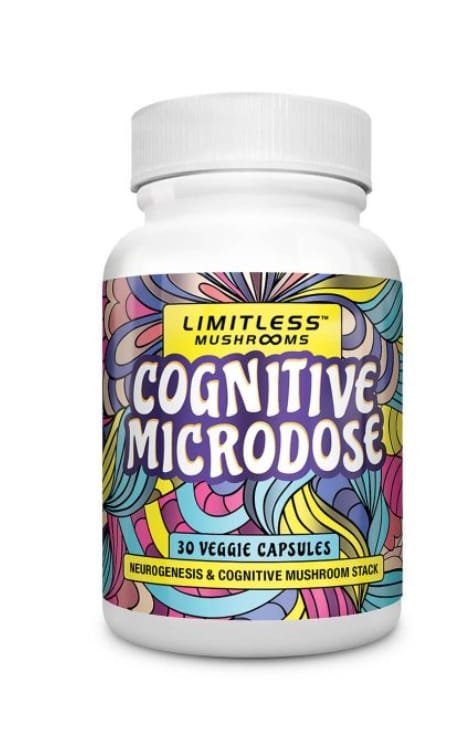
Cognitive Microdose Products and Labeling
Commercial products using words such as:
microdose, cognitive, focus, clarity, shroom, mushroom, nootropic
may contain very different formulations.
Some may contain functional mushrooms such as lion’s mane.
Others may contain botanical ingredients.
Still others may claim psychedelic compounds.
Therefore, the product name doesn’t establish chemistry.
Functional Mushroom Microdose vs. Psilocybin Microdose
This distinction can eliminate substantial confusion.
Lion’s mane, Cordyceps, reishi, and turkey tail don’t produce classic psilocybin psychedelic effects.
Therefore, a product marketed as a “mushroom cognitive microdose” might actually contain non-psychedelic functional mushrooms.
Consumers should read the ingredient panel.
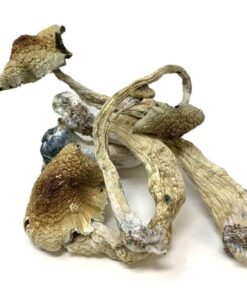
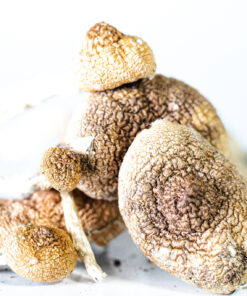
Never infer psilocybin content from mushroom imagery alone.
Lion’s Mane and Cognitive Supplements
Lion’s mane frequently appears in products targeting brain health and focus.
Researchers have investigated compounds associated with neurological processes, while some small human studies have examined cognition or mood.
However, lion’s mane isn’t psilocybin.
Likewise, research involving lion’s mane shouldn’t be used as evidence for psychedelic microdosing, or vice versa.
Can Microdosing Cause Side Effects?
Potential adverse experiences can occur.
Research and reports have described effects such as:
- anxiety;
- mood changes;
- distraction;
- physical discomfort;
- changes in blood pressure;
- sleep disturbance; and
- unwanted perceptual effects.
Individual susceptibility varies.
Furthermore, unknown commercial formulations introduce additional uncertainty.
Mental Health Vulnerability Matters
Psychedelic research programs commonly screen participants carefully.
That practice exists for a reason.
Certain psychiatric histories or vulnerabilities can influence risk.
Therefore, public discussion shouldn’t treat psychedelic microdosing as universally suitable.
A social-media success story doesn’t provide individualized medical assessment.
Medication Considerations
People using antidepressants, psychiatric medicines, or other prescription drugs shouldn’t independently stop medication in order to experiment with psychedelics.
Medication changes can carry their own risks.
Furthermore, interaction questions remain complex.
Appropriate healthcare professionals should guide prescription changes.
Why Long-Term Evidence Matters
Microdosing often implies repeated exposure over time.
Therefore, researchers need more than studies of isolated experiences.
Important questions include:
- sustained benefits;
- tolerance;
- psychological effects;
- cardiovascular considerations;
- medication interactions; and
- long-term safety.
Until stronger evidence develops, certainty should remain limited.
Cognitive Microdose: Evidence vs. Marketing
The strongest way to evaluate Cognitive Microdose claims is to separate evidence into levels.
Anecdote: “I felt more creative.”
Observational research: Microdosers report better outcomes than another group.
Placebo-controlled research: Investigators compare active exposure against placebo under blinded conditions.
Replicated clinical evidence: Independent research repeatedly supports a defined outcome.
These aren’t equivalent forms of evidence.
Marketing often collapses them into one category.
Good science doesn’t.
Frequently Asked Questions
1. What does microdosing mushrooms mean?
It generally means using a relatively small amount of psychedelic material with the intention of avoiding a conventional psychedelic experience. However, natural mushrooms aren’t chemically standardized, so there isn’t one universal real-world mushroom microdose.
2. How much is a microdose of mushrooms in grams?
There is no universally reliable mushroom weight because psilocybin concentration can vary between species and specimens. For that reason, this guide doesn’t provide a recreational gram target or dosing schedule.
3. What does a mushroom microdose feel like?
Reports range from subtle changes in mood, attention, energy, or perception to no noticeable effect. Some people also report unwanted effects. Expectation and placebo effects can influence subjective experiences.
4. Is microdosing mushrooms good for you?
Current evidence doesn’t support a universal conclusion. Some observational findings appear positive, while controlled research is more mixed. Long-term repeated-use evidence also remains limited.
5. Is microdosing mushrooms legal in the US?
Psilocybin remains federally controlled in the United States. State and local approaches vary, and decriminalization or regulated programs shouldn’t be confused with blanket legalization.
6. Is microdosing the same as psilocybin therapy?
No. Clinical psilocybin research can involve standardized compounds, professional screening, monitoring, psychological support, structured protocols and follow-up. Self-directed mushroom microdosing doesn’t reproduce those conditions.
Educational Resources
For additional educational information about microdosing, psilocybin mushrooms, psychedelic research, mushroom safety and functional mushrooms, explore PsychedelicsAndShrooms.com.
Scientific readers can explore peer-reviewed literature through PubMed’s psilocybin microdosing research and registered research through ClinicalTrials.gov. Current U.S. federal controlled-substance information is available from the U.S. Drug Enforcement Administration.
Be the first to review “Cognitive Microdose (30)”
Related products
Mushrooms
Mushroom Capsule
Mushrooms
Microdose Shrooms
Microdose Shrooms
Mushrooms
Microdose Shrooms
Reviews
There are no reviews yet.