Delic Therapy – Calm Shrooms Capsule 3000mg: Mushroom Therapy & Psilocybin Research
What Is Delic Therapy – Calm Shrooms Capsule 3000mg?
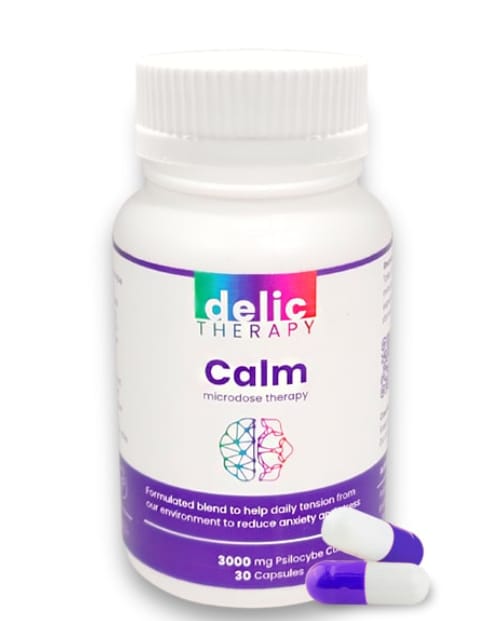
Delic Therapy – Calm Shrooms Capsule 3000mg is a product-style phrase that combines several increasingly popular concepts: mushroom capsules, calm or wellness formulations, therapeutic mushrooms, and psychedelic-therapy terminology.
However, consumers should avoid making assumptions from the product name alone.
Most importantly, 3000mg does not automatically mean 3000mg of psilocybin.
A milligram figure on a mushroom supplement might represent total mushroom powder, extracts, a proprietary blend, several combined ingredients, or another formulation measurement.
Therefore, the complete ingredient label matters much more than the number printed prominently on the package.
This distinction becomes especially important when discussing microdosing mushroom therapy and the benefits of psilocybin therapy, because clinical psilocybin research is fundamentally different from taking an unverified commercial mushroom capsule.
For additional mushroom education, explore PsychedelicsAndShrooms.com.
What Does 3000mg Mean?
Consumers often interpret a large milligram number as an indication of potency.
However, milligrams simply measure mass.
The number only becomes meaningful when the label identifies what substance the manufacturer measured.
For example:
| Label terminology | What the number might describe |
|---|---|
| 3000mg mushroom blend | Combined fungal ingredients |
| 3000mg mushroom powder | Total powdered fungal material |
| 3000mg extract equivalent | Manufacturer’s extract-equivalency claim |
| 3000mg functional mushrooms | Combined functional mushroom ingredients |
| 3000mg capsule formula | Total ingredients in a serving |
| Psilocybin amount | A separate chemical measurement |
Consequently, consumers shouldn’t convert mushroom weight into presumed psilocybin content.
They are different measurements.
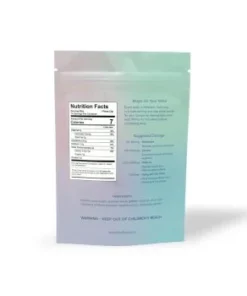
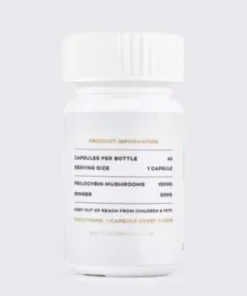
Delic Therapy Calm Shrooms and Ingredient Transparency
Before interpreting a product as therapeutic, determine what it actually contains.
A transparent mushroom capsule should identify:
- mushroom species;
- individual ingredient quantities;
- fruiting body, mycelium, or other material;
- extract versus powder;
- other botanical ingredients;
- serving information;
- manufacturer;
- batch number; and
- relevant testing.
Without this information, claims about relaxation, mood, focus, or therapy become difficult to evaluate scientifically.
What Are Therapeutic Mushrooms?
The phrase therapeutic mushrooms can describe several very different categories.
Functional mushrooms include species such as:
- lion’s mane;
- reishi;
- Cordyceps;
- turkey tail;
- maitake;
- shiitake; and
- chaga.
Meanwhile, psychedelic research frequently focuses on psilocybin, a compound found naturally in certain fungi, including some Psilocybe species.
These categories shouldn’t be merged.
Reishi isn’t psilocybin.
Lion’s mane isn’t a psychedelic.
Likewise, clinical psilocybin research doesn’t establish that an ordinary functional mushroom supplement provides psychedelic therapy.
Therapeutic Mushrooms vs. Psychedelic Mushrooms
The distinction becomes clearer in a comparison:
| Category | Examples | Major research interests |
|---|---|---|
| Functional mushrooms | Lion’s mane, reishi, Cordyceps | Cognition, immune biology, metabolism, wellness |
| Culinary mushrooms | Shiitake, oyster, button | Nutrition and food |
| Psychedelic mushrooms | Certain Psilocybe species | Psilocybin pharmacology and psychiatric research |
| Commercial blends | Formulation varies | Depends entirely on ingredients |
Therefore, the word shrooms on a capsule doesn’t establish psychedelic content.
Microdosing Mushroom Therapy
Microdosing mushroom therapy generally refers to the idea of repeatedly using relatively small quantities of psychedelic material while attempting to avoid a conventional psychedelic experience.
Online discussions commonly associate microdosing with:
- mood;
- creativity;
- focus;
- emotional wellbeing;
- productivity; and
- anxiety reduction.
However, online popularity shouldn’t be confused with established clinical effectiveness.
Controlled research into psychedelic microdosing has produced mixed results, and researchers continue to investigate the influence of expectancy and placebo effects.
Therefore, claims that microdosing reliably improves mood or cognition remain stronger than current evidence supports.
Is Microdosing the Same as Psilocybin Therapy?
No.
This is one of the most important distinctions in the article.
Microdosing usually describes repeated low-level psychedelic exposure.
By contrast, psilocybin-assisted therapy or treatment research generally involves carefully controlled clinical protocols.
Those protocols can include:
- participant screening;
- standardized compounds;
- professional supervision;
- psychological preparation;
- structured clinical sessions;
- monitoring; and
- follow-up.
Consequently, taking a commercial capsule independently isn’t equivalent to participating in a clinical psilocybin study.
Why This Difference Matters
Clinical context can substantially influence both safety and interpretation.
Researchers know the identity of the compound being administered.
They also use defined protocols and monitor participants.
An ordinary commercial product may provide considerably less certainty.
Therefore:
clinical psilocybin research ≠ commercial mushroom capsules ≠ unsupervised microdosing.
Treating those three categories as interchangeable can produce misleading health claims.
Benefits of Psilocybin Therapy
The benefits of psilocybin therapy have become an important area of modern psychiatric research.
Scientists have investigated psilocybin in relation to conditions including depression, anxiety associated with serious illness, substance-use disorders, and other psychiatric questions.
Some controlled studies have reported substantial improvements among selected participants.
These findings have helped transform psilocybin from a largely stigmatized psychedelic compound into an important research subject.
Nevertheless, several limitations remain.
Clinical trials involve selected participants and carefully controlled protocols.
Furthermore, positive research findings don’t mean psilocybin works for everyone.
Psilocybin and Depression Research
Depression represents one of the most visible areas of psilocybin research.
Researchers have examined whether psilocybin administered alongside psychological support can produce meaningful reductions in depressive symptoms.
Some studies have reported rapid and sustained improvements among participants.
However, these results shouldn’t be translated into the claim:
“Magic mushroom capsules cure depression.”
That conclusion would exceed the evidence.
The studied intervention includes far more than simply consuming mushroom material.
Psilocybin and Anxiety Research
Researchers have also investigated psilocybin in people experiencing psychological distress associated with serious or life-threatening illness.
Some trials have reported reductions in anxiety or depressive symptoms.
Again, however, study participants receive controlled interventions.
Therefore, these findings don’t prove that an independently purchased “calm shrooms” product treats anxiety disorders.
Psilocybin and Addiction Research
Another emerging research area involves substance-use disorders.
Scientists have investigated psilocybin-assisted approaches for conditions involving alcohol and tobacco.
Some results have generated significant scientific interest.
Nevertheless, research remains different from routine medical treatment.
Furthermore, individuals dealing with addiction shouldn’t replace established professional care with an unverified mushroom product.
Psilocybin and the Brain
Psilocybin acts largely as a prodrug.
The body converts it into psilocin.
Psilocin then interacts with serotonin receptors, particularly the 5-HT2A receptor, which plays an important role in classic psychedelic effects.
Researchers have investigated resulting changes involving:
- perception;
- emotional processing;
- cognitive flexibility;
- self-related processing;
- brain-network communication; and
- neuroplasticity.
However, psychedelic neuroscience remains complex.
Simple phrases such as “psilocybin resets the brain” can therefore exaggerate what researchers currently know.
Does Psilocybin Increase Serotonin?
Not in the simplistic sense often described online.
Psilocin interacts with serotonin receptors because its molecular structure allows it to influence serotonergic signaling.
Therefore, describing psilocybin as merely “boosting serotonin” doesn’t adequately explain its pharmacology.
A more accurate description focuses on serotonin-receptor activity and altered neural signaling.
Therapeutic Mushrooms for Calm
Consumers interested in Delic Therapy – Calm Shrooms Capsule 3000mg may specifically be looking for relaxation.
Functional mushroom products marketed around calm frequently feature reishi.
Reishi has a long history of traditional use and continues to attract scientific research.
However, reishi isn’t a prescription sedative.
Likewise, research on reishi doesn’t establish that every commercial reishi-containing capsule improves anxiety or sleep.
The finished formulation matters.
Reishi and Relaxation
Reishi contains numerous biologically active compounds, including polysaccharides and triterpenoids.
Researchers have investigated several biological effects.
Nevertheless, human evidence supporting specific relaxation or sleep claims remains more limited than many advertisements imply.
Therefore, a “calm” label should be interpreted as product positioning rather than proof of a therapeutic outcome.
Lion’s Mane and Mental Wellness
Lion’s mane frequently appears in mushroom formulas targeting cognition, mood, and focus.
Researchers have investigated compounds associated with neurological processes.
Some small human studies have also explored cognition and mood.
However, lion’s mane hasn’t been established as a treatment for depression, anxiety, dementia, or other psychiatric disorders.
Therefore, promising research should remain separate from disease-treatment claims.
Cordyceps and Energy
Cordyceps commonly appears in formulations positioned around energy and performance rather than calm.
Researchers have investigated exercise physiology, metabolism, fatigue, immune processes, and respiratory biology.
However, evidence varies.
Moreover, Cordyceps doesn’t simply act like caffeine.
Therefore, consumers should examine whether an “energy mushroom” product also contains actual stimulants.
Multi-Mushroom Therapeutic Blends
Some products combine several functional mushrooms.
For example, a formula might combine:
lion’s mane + reishi + Cordyceps
The marketing rationale may be:
lion’s mane → focus
reishi → relaxation
Cordyceps → energy
This structure sounds logical.
However, ingredient rationale isn’t equivalent to finished-product clinical evidence.
A combination can only make strong therapeutic claims when appropriate evidence supports the actual formulation.
Do Therapeutic Mushroom Supplements Work?
The answer depends on the mushroom and the intended outcome.
Laboratory studies may demonstrate interesting biological activity.
Animal studies can provide additional evidence.
Small human studies can identify promising signals.
However, robust clinical recommendations require stronger evidence.
Therefore, consumers should ask:
What mushroom was studied?
What preparation did researchers use?
And what population did they study?
What outcome did they measure?
Does the commercial product resemble the studied preparation?
These questions help separate research from marketing.
Powder vs. Extract
Commercial mushroom products may contain powders or extracts.
A powder generally consists of dried and milled fungal material.
An extract undergoes additional processing designed to concentrate or isolate certain soluble compounds.
Therefore:
1000mg mushroom powder isn’t automatically equivalent to 1000mg mushroom extract.
Likewise, neither number tells consumers the psilocybin content unless appropriate analysis establishes it.
Fruiting Body vs. Mycelium
Another important distinction involves fungal anatomy.
The fruiting body is the familiar mushroom structure.
Mycelium, meanwhile, consists of networks of fungal hyphae.
Both represent genuine fungal material.
However, their chemical profiles can differ.
Therefore, transparent supplement labels should identify what material the manufacturer uses.
Why Laboratory Testing Matters
Testing can help answer questions that branding cannot.
Depending on the product, laboratories may examine:
- ingredient identity;
- specified active compounds;
- heavy metals;
- microorganisms;
- pesticides;
- residual solvents; and
- other contaminants.
However, consumers should inspect what was actually tested.
A statement saying only “lab tested” provides limited information.
Batch-Specific Testing
Testing becomes stronger when the laboratory report matches the batch number printed on the product.
Without that connection, consumers may be viewing results from an unrelated production run.
Therefore, batch-specific documentation provides better transparency.
This principle matters for mushroom capsules, powders, extracts, gummies, and chocolates.
Can Reviews Prove Therapeutic Benefits?
No.
Consumer reviews can provide useful information about:
- packaging;
- taste;
- convenience;
- perceived experience; and
- customer service.
However, testimonials cannot establish clinical efficacy.
A reviewer reporting improved mood doesn’t prove that a supplement treats depression.
Likewise, one negative experience doesn’t necessarily prove that an ingredient is ineffective.
Controlled studies provide stronger evidence.
Potential Risks of Psilocybin
Psilocybin isn’t appropriate for everyone.
Potential adverse experiences can include:
- anxiety;
- fear;
- confusion;
- nausea;
- changes in perception;
- impaired judgment; and
- psychological distress.
People with particular psychiatric vulnerabilities may face additional concerns.
Furthermore, unknown commercial products introduce separate risks involving inaccurate labeling or unexpected ingredients.
Therefore, therapeutic interest shouldn’t erase the need for safety.
Microdosing Isn’t Automatically Risk-Free
Because a microdose is intended to produce subtler effects, people sometimes assume it carries no meaningful risk.
That conclusion isn’t justified.
Repeated exposure can introduce uncertainties involving psychological effects, product composition, medication interactions, and individual vulnerability.
Moreover, commercial mushroom material can vary chemically.
Therefore, this article doesn’t provide a microdosing schedule, gram amount, milligram target, or self-treatment protocol.
Psilocybin Therapy and Medication Interactions
Psychedelic research often uses participant screening partly because medical and psychiatric histories matter.
Medication use can also matter.
Therefore, people shouldn’t discontinue antidepressants or other prescribed medications simply to pursue psychedelic effects.
Medication changes should be discussed with the prescribing clinician.
Psilocybin Therapy Is Not the Same as Taking Mushrooms Alone
The word therapy is sometimes used too casually.
Therapy generally involves a structured professional process.
In psychedelic research, the surrounding clinical framework can include preparation, monitoring, psychological support, and integration or follow-up.
Therefore, simply taking a psychedelic substance doesn’t automatically constitute psychedelic therapy.
What Makes Clinical Research Different?
Clinical research attempts to control variables.
Researchers can know:
- what compound participants receive;
- how the study defines its intervention;
- participant medical history;
- study eligibility;
- monitoring procedures;
- outcome measures; and
- follow-up periods.
Commercial mushroom capsules generally don’t reproduce this environment.
Consequently, clinical outcomes shouldn’t automatically become advertising claims for retail products.
Therapeutic Doesn’t Mean FDA-Approved
Consumers should also distinguish therapeutic research from approved treatment.
Scientists can investigate a compound for potential therapeutic value long before regulators approve a treatment.
Therefore, words such as:
“clinically researched,”
“therapeutic,”
“psychedelic wellness,”
or “mood support”
don’t automatically mean a product has been approved to treat a psychiatric disorder.
Evaluating Delic Therapy – Calm Shrooms Capsule 3000mg
Consumers researching Delic Therapy – Calm Shrooms Capsule 3000mg should evaluate several questions.
First, what does the product actually contain?
Second, what does 3000mg measure?
Third, does the manufacturer disclose individual ingredients?
Fourth, is credible batch-specific testing available?
Fifth, are claims based on research involving the actual finished product or merely research about individual mushrooms?
Finally, does the marketing imply treatment of medical conditions without appropriate evidence?
Those questions provide a much stronger evaluation framework than product testimonials.
Frequently Asked Questions
1. What is Delic Therapy – Calm Shrooms Capsule 3000mg?
It is a product-style mushroom capsule name. The 3000mg figure shouldn’t automatically be interpreted as 3000mg of psilocybin. Consumers need the complete formulation to determine what the number measures.
2. What is microdosing mushroom therapy?
The phrase generally describes repeated low-level psychedelic exposure intended to avoid a conventional psychedelic experience. However, microdosing isn’t automatically equivalent to professionally supervised psilocybin-assisted therapy, and controlled evidence for many popular microdosing claims remains mixed.
3. What are therapeutic mushrooms?
Therapeutic or functional mushrooms can include lion’s mane, reishi, Cordyceps, turkey tail, maitake, and other fungi studied for biological effects. They shouldn’t automatically be confused with psilocybin-containing mushrooms.
4. What are the potential benefits of psilocybin therapy?
Controlled research has investigated psilocybin-assisted interventions for depression, psychological distress, and substance-use disorders, among other areas. Some studies report promising outcomes, but clinical research shouldn’t be generalized to unverified commercial mushroom products.
5. Is psilocybin therapy the same as taking magic mushrooms?
No. Clinical research can involve standardized compounds, participant screening, professional supervision, structured psychological support, monitoring, and follow-up. Independently consuming mushroom material doesn’t reproduce those conditions.
6. Does a 3000mg mushroom capsule contain 3000mg of psilocybin?
Not necessarily—and a mushroom-product milligram number commonly refers to mushroom material, extract, a blend, or another formulation measurement. The label and credible analysis are needed to determine what the number actually represents.
Educational Resources
For additional educational information about therapeutic mushrooms, functional mushrooms, psychedelic science, and psilocybin research, explore PsychedelicsAndShrooms.com.
Scientific readers can explore peer-reviewed studies through PubMed’s psilocybin research database and information about ongoing human studies through ClinicalTrials.gov.
| Quantity | 2 bottles |
|---|
Be the first to review “Delic Therapy- Calm Shrooms Capsule 3000mg”
Related products
Microdose Shrooms
Mushroom Capsule
Mushrooms
Mushrooms
Mushrooms
Mushrooms
Microdose Shrooms
Reviews
There are no reviews yet.