K-Mint 4ct Herbal Tablets: Mushroom Effects, Vapes & Button Mushrooms
What Are K-Mint 4ct Herbal Tablets?
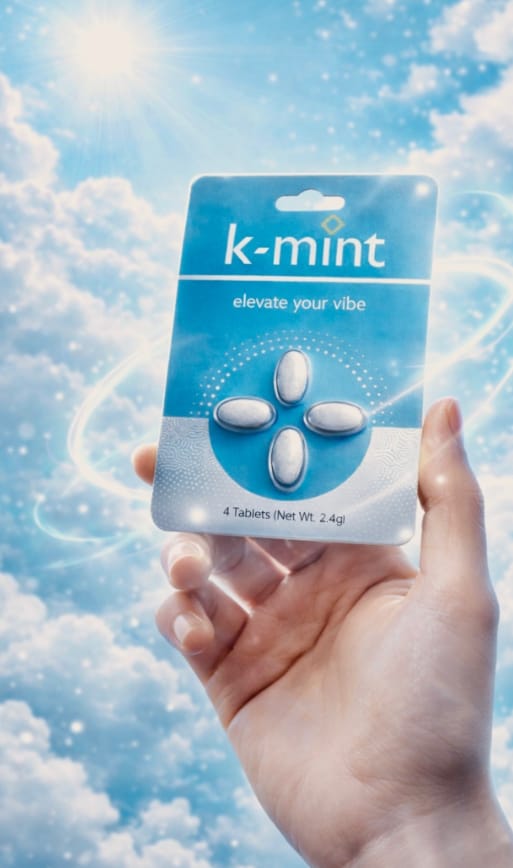
K-Mint 4ct Herbal Tablets is a product-style phrase that may appear alongside herbal supplements, mushroom products, alternative wellness products, or psychoactive-product searches.
However, a product name doesn’t establish chemical composition.
Likewise, the word herbal doesn’t prove that a tablet contains only plants, and “4ct” generally describes package quantity rather than potency.
Therefore, consumers evaluating K-Mint 4ct Herbal Tablets should begin with the actual packaging.
Important information includes:
- complete ingredient list;
- manufacturer identity;
- amount of each declared ingredient;
- serving information;
- batch or lot number;
- manufacturing or expiration information;
- warnings;
- laboratory documentation; and
- storage instructions.
Without verified formulation information, consumers shouldn’t assume K-Mint contains psilocybin, functional mushrooms, or any particular psychoactive ingredient.
For additional mushroom education, explore PsychedelicsAndShrooms.com.
What Does “4ct” Mean?
The abbreviation 4ct usually means four count.
In other words, the package contains four individual units.
It doesn’t necessarily mean four doses.
Likewise, it doesn’t describe the concentration of any particular chemical.
For example, four tablets could contain four identical formulations, or a manufacturer could provide different serving instructions.
Therefore, consumers should never convert package count into chemical potency without reading the label.
Does “Herbal” Mean Natural?
Not necessarily.
Herbal traditionally refers to ingredients derived from plants.
Mushrooms, however, aren’t plants. They belong to the fungal kingdom.
Furthermore, commercial products can combine botanical extracts, fungal ingredients, flavorings, vitamins, minerals, or other substances.
Consequently, broad front-label terms provide much less information than the complete ingredient panel.
Does Shrooms Make You Throw Up?
The search question does shrooms make you throw up usually refers to psilocybin-containing mushrooms.
Yes, nausea and vomiting can occur following mushroom ingestion.
However, several different explanations are possible.
Gastrointestinal symptoms may relate to the consumed material, individual sensitivity, other ingredients, an unknown product formulation, or—in the case of wild mushrooms—poisoning.
Therefore, vomiting shouldn’t automatically be dismissed as a normal psychedelic effect.
Why Can Mushrooms Cause Nausea?
Mushrooms contain complex biological materials.
Meanwhile, psychoactive compounds can influence both the brain and gastrointestinal system.
Individual reactions also vary.
Potential symptoms associated with mushroom ingestion can include:
- nausea;
- abdominal discomfort;
- vomiting;
- dizziness;
- anxiety; and
- changes in perception.
However, these symptoms aren’t specific enough to identify what substance someone consumed.
Therefore, a person’s reaction cannot reliably verify a product’s ingredients.
When Vomiting After Mushrooms Is More Concerning
Vomiting becomes especially concerning when someone consumed an unidentified wild mushroom.
Some dangerous mushroom poisonings initially cause gastrointestinal symptoms.
Other toxic syndromes can involve delayed organ injury.
Seek urgent medical attention for symptoms such as:
- repeated or severe vomiting;
- severe abdominal pain;
- seizures;
- fainting;
- severe confusion;
- breathing problems;
- jaundice;
- loss of consciousness; or
- rapidly worsening illness.
In the United States, Poison Control can be reached at 1-800-222-1222. Call 911 for a severe or life-threatening emergency.
Preserve photographs, packaging, or remaining mushroom material when safely possible because those details may help medical professionals.
Don’t Assume Vomiting Means “The Shrooms Are Working”
This misconception can become dangerous.
Nausea doesn’t prove that a product contains psilocybin.
Likewise, vomiting doesn’t establish potency.
An unknown edible could contain completely different ingredients.
Meanwhile, a wild mushroom could contain a toxin.
Therefore, symptoms should never substitute for chemical identification.
K-Mint 4ct Herbal Tablets and Ingredient Transparency
The same principle applies to K-Mint 4ct Herbal Tablets.
If the exact formulation isn’t independently established, avoid assigning effects based solely on the name.
Instead, examine whether the manufacturer provides transparent information.
A useful product evaluation might look like this:
| Question | Why it matters |
|---|---|
| Who manufactures it? | Establishes accountability |
| What are the ingredients? | Clarifies composition |
| What does each quantity measure? | Prevents potency confusion |
| Is there a batch number? | Connects testing to production |
| Is laboratory documentation available? | Supports composition claims |
| What was tested? | “Lab tested” can mean many things |
| Are warnings included? | Provides safety information |
Transparent labeling provides a much stronger basis for evaluation than online anecdotes.
What Does “Lab Tested” Mean?
A product may advertise itself as lab tested, yet that phrase alone remains incomplete.
Laboratories can test for:
- ingredient identity;
- specified active compounds;
- heavy metals;
- microorganisms;
- pesticides;
- residual solvents; or
- other contaminants.
Therefore, consumers should ask what the laboratory actually measured.
A microbial test, for example, doesn’t automatically confirm psychoactive-compound content.
Caps Mushroom Vape
The phrase caps mushroom vape can refer to products marketed with mushroom terminology or mushroom-inspired branding.
However, consumers should approach such products carefully.
Mushroom imagery on a vape doesn’t prove that it contains mushroom-derived compounds.
Likewise, a brand name containing “caps” or “mush” doesn’t establish its chemistry.
Instead, evaluate the actual ingredients and credible testing documentation.
Mush Caps Vape
The same principle applies to mush caps vape searches.
A vaping product and an edible mushroom product represent very different exposure formats.
Furthermore, compounds that manufacturers formulate for oral consumption aren’t automatically appropriate for inhalation.
Heating can also change chemicals.
Therefore, consumers shouldn’t assume that a substance is safe to vape simply because another formulation can be eaten.
Can You Vape Mushrooms?
Whole mushroom material isn’t a conventional vaping ingredient.
More importantly, lungs and digestive systems process exposures differently.
A compound that can be consumed orally doesn’t automatically become safe when heated and inhaled.
Consequently, consumers should avoid improvising inhaled formulations from mushroom powders, extracts, tablets, gummies, or other oral products.
Why Vape Ingredients Matter
The lungs provide an enormous surface for gas exchange.
Therefore, inhaled contaminants can create different risks from swallowed ingredients.
Unknown vaping products may introduce concerns involving:
- undeclared chemicals;
- contaminants;
- solvents;
- flavoring compounds;
- thermal breakdown products; and
- inaccurate labeling.
As a result, subjective effects don’t prove product purity.
Mushroom Vape Marketing vs. Mushroom Science
Functional mushroom research primarily investigates specific fungal preparations and biological compounds.
That research doesn’t automatically validate inhaling a mushroom-branded vape.
Likewise, studies involving orally administered mushroom extracts don’t establish the safety of vaporized versions.
Route of exposure matters.
Therefore, consumers should be skeptical when a company uses general mushroom research to justify a fundamentally different inhaled product.
Button White Mushrooms
The supporting keyword button white mushrooms moves into an entirely different category: ordinary food.
White button mushrooms are among the world’s most familiar cultivated edible mushrooms.
They belong to the species Agaricus bisporus.
Consumers commonly find them in supermarkets.
Depending on maturity and commercial terminology, the same species also gives rise to products marketed as cremini and portobello mushrooms.
Therefore, button mushrooms have no direct connection to psilocybin mushrooms simply because both are fungi.
What Are Champignon Mushrooms?
Champignon mushrooms commonly refers to Agaricus bisporus, particularly white button mushrooms.
“Champignon” simply means mushroom in French.
In international food labeling, consumers may encounter phrases such as:
- champignon mushrooms;
- champignons de Paris;
- white mushrooms;
- button mushrooms; or
- white button mushrooms.
These terms frequently describe familiar culinary mushrooms.
Button Cap Mushroom
A button cap mushroom generally describes a young mushroom with a compact, rounded cap.
In supermarkets, this terminology commonly points toward young Agaricus bisporus mushrooms.
However, “button” can also describe a developmental stage rather than provide a complete scientific identification.
Therefore, people shouldn’t identify unknown wild mushrooms as edible simply because they resemble supermarket button mushrooms.
White Button Mushroom vs. Portobello
An interesting feature of Agaricus bisporus is that several familiar supermarket products can represent the same species at different stages or varieties.
White button mushrooms are typically harvested young.
Cremini mushrooms are usually brown varieties harvested while relatively immature.
Portobello mushrooms represent more mature forms with larger, open caps.
Consequently, supermarket labels can make closely related products appear more biologically different than they actually are.
Are Button Mushrooms Psychedelic?
No.
Ordinary cultivated white button mushrooms don’t produce the classic psilocybin psychedelic experience.
They’re culinary fungi.
Therefore, terms such as button white mushrooms, champignon mushrooms, and button cap mushroom shouldn’t be confused with Psilocybe species.
Nutritional Value of Button Mushrooms
White button mushrooms can contribute several nutrients while remaining relatively low in calories.
Depending on preparation and serving size, they can provide:
- B vitamins;
- minerals;
- protein;
- fiber;
- water; and
- other fungal compounds.
However, cooking method matters.
For example, a mushroom cooked in large quantities of butter, salt, or cream has a different nutritional profile from a lightly cooked mushroom.
Therefore, evaluate the entire dish rather than one ingredient.
Cheap Mushrooms
Consumers searching for cheap mushrooms are often looking for affordable culinary options.
White button mushrooms frequently qualify because commercial growers produce them at large scale.
Other affordable options can vary by region and season.
Price depends on:
- local production;
- fresh vs. dried format;
- organic certification;
- mushroom species;
- seasonality;
- package size; and
- retailer.
For everyday cooking, inexpensive supermarket button mushrooms can provide a versatile option.
Cheap Doesn’t Necessarily Mean Low Quality
Price alone doesn’t determine mushroom quality.
Large-scale cultivation can make common species inexpensive because growers produce them efficiently.
Therefore, white button mushrooms can cost much less than specialty mushrooms without being nutritionally worthless.
Freshness matters more.
Look for mushrooms that are appropriately firm and free from obvious decomposition or mold.
Fresh Mushroom Quality
When buying culinary mushrooms, examine their physical condition.
Fresh button mushrooms generally shouldn’t be excessively slimy, badly decomposed, or covered with mold.
Some discoloration can occur naturally as mushrooms age.
However, severe deterioration, unpleasant odors, or extensive slime suggest declining quality.
Proper refrigeration can help preserve freshness.
Culinary Mushrooms vs. Functional Mushrooms vs. Psychedelic Mushrooms
Consumers often see all three categories discussed online.
Yet they aren’t interchangeable.
| Category | Examples | Typical context |
|---|---|---|
| Culinary | Button, oyster, shiitake | Food |
| Functional | Lion’s mane, reishi, Cordyceps | Supplements/wellness |
| Psychedelic | Certain Psilocybe species | Psychoactive research/legal issues |
| Mushroom-branded vape | Composition varies | Requires label verification |
Understanding these categories prevents considerable confusion.
Are Mushroom Products Always Made From Mushrooms?
Not necessarily.
A mushroom-themed product can contain extracts, isolated ingredients, botanical compounds, flavorings, or proprietary mixtures.
Likewise, branding may emphasize mushrooms even when several non-mushroom ingredients contribute to the formulation.
Therefore, consumers should always read the complete label.
Online Reviews Cannot Verify Ingredients
Reviews can help answer questions about:
- taste;
- texture;
- packaging;
- customer service; and
- user experience.
However, reviews cannot independently prove chemical composition.
A reviewer saying that a product “felt strong” doesn’t identify the substance responsible.
Likewise, a pleasant experience doesn’t establish safety.
Analytical testing provides much stronger evidence.
Unknown Tablets Deserve Extra Caution
Tablets create an important challenge because visual appearance provides almost no information about chemistry.
Two tablets can look identical while containing completely different ingredients.
Therefore, a product’s shape, color, logo, or packaging cannot independently establish its contents.
This principle matters particularly when evaluating K-Mint 4ct Herbal Tablets or similarly branded products.
Herbal Products Can Still Cause Interactions
Consumers sometimes interpret “herbal” as meaning harmless.
However, botanical and fungal compounds can interact with medications or affect physiological systems.
Additionally, multi-ingredient formulations make attribution harder.
Therefore, people using prescription medications or managing significant medical conditions should discuss unfamiliar concentrated supplements with an appropriate healthcare professional.
Frequently Asked Questions
1. What are K-Mint 4ct Herbal Tablets?
The phrase describes a four-count tablet product, but the name alone doesn’t establish its ingredients. Consumers should rely on the actual ingredient panel, manufacturer information, and credible testing rather than assuming its composition.
2. Does shrooms make you throw up?
Psilocybin-containing mushrooms can be associated with nausea and vomiting. However, vomiting can also indicate an adverse reaction or mushroom poisoning, particularly after an unknown wild mushroom.
3. Are mushroom vapes the same as mushroom edibles?
No. Inhalation and oral consumption represent different exposure routes. Research on orally consumed mushroom ingredients doesn’t automatically establish that inhaling a mushroom-branded formulation is safe.
4. What are button white mushrooms?
White button mushrooms are common culinary mushrooms belonging to Agaricus bisporus. They’re ordinary food mushrooms rather than psilocybin-containing psychedelic mushrooms.
5. What are champignon mushrooms?
Champignon commonly refers to edible button mushrooms, particularly Agaricus bisporus. The word “champignon” itself simply means mushroom in French.
6. Are cheap mushrooms less nutritious?
Not necessarily. Common button mushrooms can be inexpensive because producers cultivate them efficiently at large scale. Price alone doesn’t determine nutritional quality.
Educational Resources
For additional educational material about mushrooms, mushroom safety, functional products, and psychedelic research, explore PsychedelicsAndShrooms.com.
Readers interested in scientific mushroom literature can explore PubMed. For poisoning emergencies and mushroom-exposure guidance in the United States, consult Poison Control.
| Quantity | 5 packs, 10 packs, 15 packs, 20 packs |
|---|
Be the first to review “K-Mint 4ct Herbal Tablets”
Related products
Mushroom Capsule
Mushrooms
Mushrooms
Mushrooms
Mushrooms
Mushroom Capsule
Microdose Shrooms
Mushrooms
Reviews
There are no reviews yet.