MasterMind Funghi Chocolate Bars: Mushroom Chocolate, THC Edibles, Chocorooms and Safety Guide
Introduction
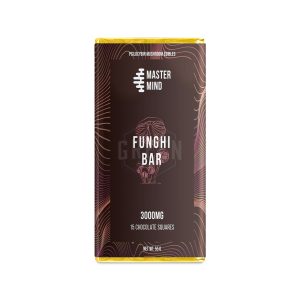
MasterMind Funghi Chocolate Bars is a product-style name associated online with mushroom-infused chocolate products. I could verify that the name appears in online marketplace listings, but I could not verify authoritative pharmaceutical labeling, FDA approval, or reliable independent testing that establishes the exact active ingredients or potency of every product sold under this name. For that reason, consumers should not assume from branding alone that a bar contains a particular amount of psilocybin, mushroom material, THC, or another psychoactive compound.
Searches for MasterMind Funghi Chocolate Bars also overlap with chocolate edibles, THC chocolate, THC chocolate bar, chocolate bar edibles, chocolate bar weed, chocolate weed, chocolate weed edibles, edible pot chocolate, edible THC chocolate, chocolates con marihuana, edible cannabis chocolate, choco shrooms, chocolate mushrooms Meiji, Meiji Chocorooms, chocolate mushroom snack, choco mushroom snack, Chocorooms near me, and chocolate mushroom cookies.
These phrases actually describe several completely different food and drug categories. A cannabis-infused chocolate contains cannabinoids such as THC; a psychedelic mushroom chocolate may claim to contain psychoactive mushroom compounds; a functional mushroom chocolate may contain non-psychedelic mushrooms; and Meiji Chocorooms are ordinary chocolate-and-cracker candies shaped like mushrooms and contain no mushrooms at all.
Readers interested in broader education about psychedelics and psychoactive substances can also explore Psychedelics and Shrooms.
What Are MasterMind Funghi Chocolate Bars?
The name MasterMind Funghi Chocolate Bars suggests a mushroom-related chocolate edible, but a brand or product name is not sufficient to establish its chemistry.
When evaluating an unregulated mushroom chocolate, the most important questions are:
- What exact mushroom species or active ingredient is listed?
- What does the stated milligram amount actually measure?
- Is independent laboratory testing available?
- Does the test correspond to the same production batch?
- Are contaminants or undeclared psychoactive ingredients screened?
- Is the product being sold under a regulated food or pharmaceutical framework?
This matters because “mushroom chocolate” has become a broad marketing term covering products with very different pharmacological profiles.
The FDA’s investigation of Diamond Shruumz products illustrates this problem. The agency investigated illnesses involving mushroom-themed chocolate bars, cones, and gummies and found multiple substances in tested products. The affected products were ultimately recalled.
That incident does not mean every mushroom chocolate is unsafe. It does demonstrate why packaging and branding should not substitute for verified chemical information.
What Does “Funghi” Mean?
Funghi is the Italian word for fungi or mushrooms.
In commercial branding, however, the word can be used loosely.
A chocolate bar carrying “funghi” in its name may theoretically contain:
- mushroom powder,
- mushroom extract,
- functional mushrooms,
- psychoactive mushrooms,
- isolated mushroom-related compounds,
- or simply mushroom-themed branding.
Therefore, the term itself does not identify a pharmaceutical ingredient.
What Are Chocolate Edibles?
Chocolate edibles generally refers to chocolate products containing an active substance intended to be consumed orally.
In cannabis markets, this commonly means chocolate containing cannabinoids such as THC.
In psychedelic-product markets, it can mean chocolate represented as containing psychoactive mushroom material or related compounds.
There are also completely ordinary chocolate snacks shaped like mushrooms that contain neither THC nor psychedelic ingredients.
Understanding this difference is essential because the effects, risks, and legal status vary dramatically between categories.
What Is THC Chocolate?
THC chocolate is chocolate infused with tetrahydrocannabinol, the primary intoxicating cannabinoid associated with cannabis.
The National Center for Complementary and Integrative Health explains that cannabis contains numerous chemical substances and that THC is chiefly responsible for marijuana’s mind-altering effects.
Cannabis edibles can include:
- chocolates,
- baked foods,
- gummies,
- candies,
- beverages,
- and other oral preparations.
A PubMed-indexed survey of oral cannabis products specifically included chocolate among commonly used cannabis edible forms.
THC chocolate should not be confused with psilocybin mushroom chocolate.
What Is a THC Chocolate Bar?
A THC chocolate bar is a cannabis edible in which THC is incorporated into chocolate.
The chocolate is simply the food-delivery format. The psychoactive ingredient is THC.
Because the product is swallowed rather than inhaled, its pharmacology differs from smoked cannabis. Oral cannabinoids undergo gastrointestinal absorption and first-pass metabolism, which can result in delayed and sometimes prolonged effects compared with inhalation.
This delayed effect is one reason cannabis-edible education should emphasize product labeling and patience rather than assuming the absence of immediate effects means nothing has happened.
Chocolate Bar Edibles vs Smoking Cannabis
Chocolate edibles and inhaled cannabis deliver cannabinoids through different routes.
Smoking or vaping typically produces effects more rapidly because cannabinoids enter circulation through the lungs.
Oral products take longer to pass through digestion and metabolism.
This difference can affect:
- onset,
- duration,
- perceived intensity,
- and the likelihood of taking additional amounts before the first amount has taken effect.
The CDC notes that THC is the principal impairing compound in cannabis and that cannabinoid products can affect memory, attention, decision-making, coordination, and reaction time.
What Does “Chocolate Bar Weed” Mean?
The phrase chocolate bar weed generally refers to cannabis-infused chocolate.
It is informal terminology rather than a pharmaceutical name.
The same is true of:
chocolate weed,
chocolate weed edibles,
edible pot chocolate, and
edible THC chocolate.
All of these terms usually describe cannabis chocolate products rather than ordinary chocolate containing pieces of the cannabis plant.
What Is Edible Cannabis Chocolate?
Edible cannabis chocolate is simply a cannabis edible prepared in a chocolate format.
Cannabis contains cannabinoids including THC and CBD. THC is intoxicating, while CBD does not ordinarily cause the same type of high.
A cannabis chocolate should therefore identify the relevant cannabinoid content rather than simply using general terms such as “cannabis infused.”
Product regulations differ substantially among U.S. states, so packaging, allowable potency, testing requirements, and legal availability also vary.
Chocolates con Marihuana: Explicación en Español
Chocolates con marihuana son productos de chocolate que contienen cannabis o cannabinoides, normalmente THC en productos intoxicantes.
El THC es el principal cannabinoide responsable de los efectos psicoactivos de la marihuana. Estos chocolates no son iguales a chocolates con hongos psicodélicos.
También es importante distinguir entre:
chocolate con cannabis → contiene cannabinoides;
chocolate con hongos funcionales → puede contener hongos no psicodélicos;
chocolate con psilocibina → implica una categoría psicoactiva completamente diferente;
Meiji Chocorooms → es simplemente un dulce de chocolate y galleta con forma de hongo.
What Are Choco Shrooms?
The phrase choco shrooms is ambiguous.
It can refer informally to mushroom-shaped chocolate candy, functional mushroom chocolate, or psychedelic mushroom chocolate.
The word “shrooms” is particularly confusing because in recreational contexts it frequently refers to psilocybin mushrooms, while food companies may use mushroom imagery simply because the snack is shaped like a mushroom.
Consumers should therefore look at the ingredient list rather than relying on informal terminology.
Sources and Further Reading
For concerns about mushroom-infused chocolates and uncertain ingredients, see the FDA investigation of Diamond Shruumz mushroom edibles. The investigation provides useful real-world context about adverse events and the importance of verifying ingredients in psychoactive mushroom products.
For cannabis and THC education, the National Center for Complementary and Integrative Health guide to cannabis and cannabinoids explains THC, CBD, cannabis effects, potential risks, and current research.
For peer-reviewed scientific literature, PubMed research on oral cannabis products and edibles discusses consumer experiences with oral cannabis products, including chocolate and other edible formulations.
For additional educational material, readers can explore Psychedelics and Shrooms.
What Are Meiji Chocorooms?
Meiji Chocorooms are ordinary Japanese chocolate snacks shaped like small mushrooms.
This is one of the most important distinctions in the entire article because people searching “chocolate mushrooms” may encounter them alongside actual mushroom-containing products.
Meiji’s official U.S. information explicitly states that Chocorooms do not contain mushrooms. They consist of a crisp cracker stem topped with chocolate and are shaped to resemble mushrooms.
Meiji’s global site describes Kinoko no Yama, sold as Chocorooms in some markets, as a long-running chocolate-and-biscuit snack introduced in Japan in 1975.
They are not psychedelic.
They are not cannabis edibles.
They are not functional mushroom supplements.
What Does “Chocolate Mushrooms Meiji” Mean?
Chocolate mushrooms Meiji generally refers to Meiji’s mushroom-shaped Chocorooms candy.
The snack is designed to resemble a tiny mushroom:
chocolate cap + crunchy biscuit stem.
The visual shape explains the name.
Meiji specifically answers the common question about whether the product contains real mushrooms by stating that it does not.
This makes it fundamentally different from MasterMind Funghi Chocolate Bars or products marketed as mushroom extracts.
What Is a Chocolate Mushroom Snack?
A chocolate mushroom snack can mean one of two very different things.
First, it may be an ordinary food shaped like a mushroom, such as Meiji Chocorooms.
Second, it may refer to chocolate actually containing mushrooms.
The ingredient list settles the distinction.
People should never infer psychoactivity merely from mushroom-shaped packaging.
What Is a Choco Mushroom Snack?
Choco mushroom snack is another broad search phrase commonly associated with Meiji-style chocolate-and-biscuit products.
Again, the word mushroom can describe shape rather than ingredient.
A snack may look like a mushroom without containing any fungal ingredient.
That distinction is useful for parents, consumers, and anyone attempting to distinguish ordinary imported candy from psychedelic or functional mushroom products.
What Does “Chocorooms Near Me” Mean?
People searching Chocorooms near me are usually looking for the ordinary Meiji snack rather than a psychedelic mushroom product.
Meiji states that Chocorooms are sold internationally, including in the United States.
Retail availability can change, so current local inventory is best checked through legitimate grocery or candy retailers.
The key educational point is that Chocorooms is a conventional confectionery product.
What Are Chocolate Mushroom Cookies?
The phrase chocolate mushroom cookies can describe mushroom-shaped cookies, chocolate-coated biscuit snacks, or recipes designed to resemble mushrooms.
It does not automatically imply psychoactive ingredients.
This is another example of why search engines can group unrelated products together merely because they share the words “mushroom” and “chocolate.”
MasterMind Funghi Chocolate Bars vs Meiji Chocorooms
These products should not be confused.
| Feature | MasterMind Funghi Chocolate Bars | Meiji Chocorooms |
|---|---|---|
| Product category | Mushroom-themed/influenced edible | Conventional candy |
| Mushroom branding | Yes | Yes, shape only |
| Contains actual mushrooms | Requires verified product label | No |
| THC established by name | No | No |
| Psychedelic content established by name | No | No |
| Ordinary snack food | Cannot assume | Yes |
| Official manufacturer documentation | Limited verification found | Yes |
Meiji provides clear official information about its product.
By contrast, I found the MasterMind product name primarily through a retail listing rather than authoritative pharmaceutical or regulatory documentation.
Mushroom Chocolate vs THC Chocolate
The easiest distinction is by active ingredient.
THC chocolate contains or claims to contain THC from cannabis.
Psychedelic mushroom chocolate contains or claims to contain psychoactive fungal material or related compounds.
Functional mushroom chocolate contains non-psychedelic fungal ingredients.
Meiji Chocorooms contain no mushroom ingredient at all.
These categories should never be merged into a single concept called “edibles.”
Can Mushroom Chocolate Contain Unexpected Ingredients?
Yes, which is why verified labeling matters.
The FDA’s Diamond Shruumz investigation is an important real-world example. The agency tested multiple mushroom-branded edible products during an investigation involving serious adverse reactions and found a range of compounds across sampled products.
The broader lesson is not that all mushroom chocolates contain hidden drugs.
The lesson is that unregulated psychoactive food products can have composition uncertainty.
Amanita Mushroom Chocolate Safety
Some mushroom products use Amanita muscaria or constituents such as muscimol rather than psilocybin mushrooms.
These are different pharmacological categories.
In December 2024, the FDA stated that Amanita muscaria and certain constituents did not meet the applicable safety standard for use as conventional food ingredients and advised consumers to avoid foods containing them.
Therefore, the label “mushroom chocolate” is not specific enough to determine safety.
The mushroom species matters.
Is THC Chocolate a Psychedelic?
Cannabis and classic psychedelics are pharmacologically different.
THC primarily acts through cannabinoid receptors, particularly CB1 receptors.
Classic psychedelics such as psilocin primarily exert characteristic psychedelic effects through serotonin-related mechanisms, especially 5-HT2A receptors.
High-dose THC can sometimes produce severe perceptual or psychological effects, but cannabis is not usually classified as a classic psychedelic.
Can THC Chocolate Cause Anxiety or Paranoia?
Cannabis can produce unwanted psychological effects in some people.
NCCIH notes possible side effects of cannabis including anxiety and paranoia, along with cognitive and coordination effects.
Individual response depends on factors including cannabinoid content, previous exposure, other substances, and personal vulnerability.
This is another reason cannabis edibles should not be treated like ordinary candy.
Child Safety and Chocolate Edibles
Chocolate presentation can create an additional safety issue because cannabis or psychoactive chocolate can resemble conventional candy.
Children may not recognize the difference.
Any psychoactive edible should therefore be kept securely away from children and clearly separated from ordinary snacks.
The visual similarity between a standard chocolate bar and an infused product can otherwise create accidental-exposure risk.
Frequently Asked Questions
1. What are MasterMind Funghi Chocolate Bars?
MasterMind Funghi Chocolate Bars is a product name found in online mushroom-product listings. I could not verify authoritative FDA labeling establishing a standardized pharmaceutical formulation under this name.
2. Are MasterMind Funghi Chocolate Bars THC chocolate?
The product name alone does not establish THC content. The actual ingredient label and reliable laboratory documentation are necessary.
3. What are chocolate edibles?
Chocolate edibles are chocolate products containing an active ingredient such as cannabis cannabinoids or, in some products, mushroom-derived compounds.
4. What is THC chocolate?
THC chocolate is cannabis-infused chocolate containing tetrahydrocannabinol, the main intoxicating cannabinoid in cannabis.
5. What is a THC chocolate bar?
It is chocolate containing THC and intended for oral consumption rather than inhalation.
6. What does chocolate weed mean?
The phrase usually refers to cannabis-infused chocolate.
7. What is edible pot chocolate?
It is another informal term for cannabis chocolate containing psychoactive cannabinoids.
8. What are chocolates con marihuana?
Son chocolates que contienen cannabis o cannabinoides, generalmente THC en productos con efectos psicoactivos.
9. What are choco shrooms?
The phrase is ambiguous and can refer to mushroom chocolates, mushroom-shaped candy, or psychedelic mushroom products. The ingredient list matters.
10. What are Meiji Chocorooms?
They are Japanese chocolate-and-cracker snacks shaped like mushrooms. Meiji states that they contain no mushrooms.
11. Are Meiji Chocorooms psychedelic?
No. They are ordinary confectionery snacks.
12. Do Meiji Chocorooms contain THC?
No indication from the manufacturer’s official product information suggests THC; they are conventional chocolate-and-cracker snacks.
13. Is mushroom chocolate always psychedelic?
No. It can contain functional mushrooms, psychoactive ingredients, or simply be mushroom-shaped candy.
14. Is THC chocolate the same as psilocybin chocolate?
No. THC is a cannabinoid, whereas psilocybin is a psychedelic tryptamine precursor.
15. Why is verified labeling important for mushroom edibles?
Because products marketed similarly can contain very different ingredients, and FDA investigations have documented serious illnesses and unexpected compounds in some mushroom-branded edibles.
Responsible Chocolate Edible Education
MasterMind Funghi Chocolate Bars demonstrates how easily very different products become grouped together by search engines.
Terms such as THC chocolate, chocolate bar weed, edible THC chocolate, and chocolates con marihuana refer to cannabis edibles containing cannabinoids such as THC. Cannabis chocolate belongs to the cannabinoid category, not the classic psychedelic category.
The phrase choco shrooms is less specific. It can refer to psychoactive mushroom chocolate, functional mushroom products, or simply mushroom-shaped candy.
The clearest example is Meiji Chocorooms. Despite the mushroom shape and name, Meiji explicitly states that the snack contains no mushrooms. It is a chocolate-and-cracker confection first introduced in Japan decades ago.
Unregulated mushroom edibles require greater caution. FDA investigations have demonstrated that products marketed as mushroom chocolates can contain unexpected compounds and have been associated with serious illness.
Consumers should therefore distinguish ordinary candy, THC edibles, functional mushroom foods, and psychedelic products instead of assuming that anything called “mushroom chocolate” has the same chemistry or effects.
Be the first to review “MasterMind Funghi Chocolate Bars”
Related products
Microdose Shrooms
Mushrooms
Mushrooms
Microdose Shrooms
Microdose Shrooms
Microdose Shrooms
Microdose Shrooms
Reviews
There are no reviews yet.