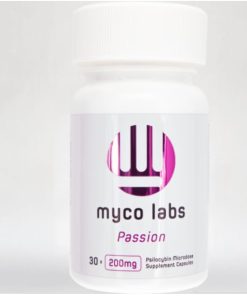
Myco Lab Passion: Wild Psychedelic Mushrooms, Identification, Addiction & Serotonin
What Is Myco Lab Passion?
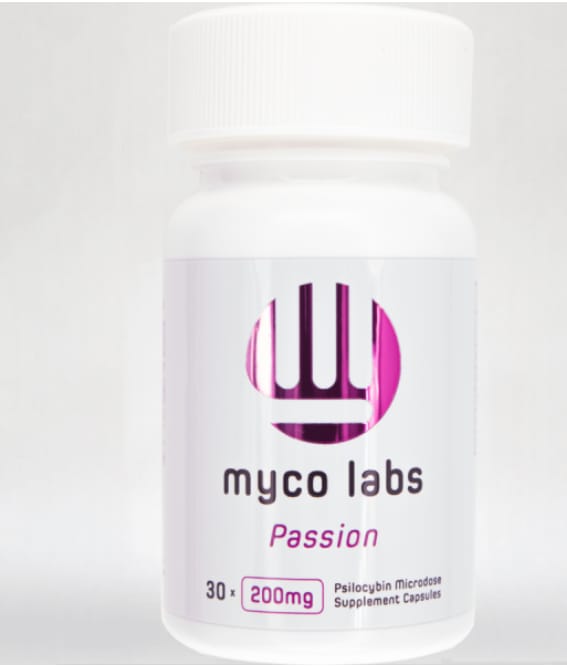
Myco Lab Passion is a useful starting point for exploring mycology, psychedelic mushroom taxonomy, fungal ecology, identification, psilocybin pharmacology, serotonin, and questions about addiction.
Interest in wild psychedelic mushrooms has increased alongside scientific research into psilocybin. However, searching for wild mushrooms introduces an important safety problem: photographs and simple identification rules cannot reliably determine whether an unknown mushroom is safe to consume.
Some toxic mushrooms can resemble species that inexperienced collectors seek.
Therefore, responsible mycology emphasizes taxonomy and safety rather than treating mushroom identification as a treasure hunt.
The same distinction applies to online searches asking where hallucinogenic mushrooms grow, how to identify hallucinogenic mushrooms, or how do you find magic mushrooms.
Understanding fungal ecology is educational. Providing specific harvesting locations or instructions for locating controlled psychedelic mushrooms is a different matter.
This guide focuses on the science.
For broader educational mushroom information, explore PsychedelicsAndShrooms.com.
What Are Hallucinogenic Mushrooms?
The phrase hallucinogenic mushrooms generally describes fungi containing compounds capable of producing psychedelic effects.
Psilocybin-containing mushrooms represent the best-known group.
However, “hallucinogenic mushroom” isn’t one taxonomic category.
Multiple fungal species can contain psilocybin or related compounds.
Likewise, some psychoactive mushrooms contain completely different chemicals.
For example, Amanita muscaria has a different pharmacological profile from psilocybin-containing Psilocybe species.
Therefore, consumers shouldn’t treat every psychoactive mushroom as chemically equivalent.
Where Do Hallucinogenic Mushrooms Grow?
Where do hallucinogenic mushrooms grow?
From an ecological perspective, fungi occupy extraordinarily diverse habitats.
Different psilocybin-containing species have evolved relationships with different substrates and environments. Depending on the species, researchers have documented associations with organic debris, wood-rich material, soil, grassland environments, and other ecological niches.
However, there is no single “magic mushroom habitat.”
Furthermore, knowing a broad ecological category doesn’t identify a mushroom.
Many harmless, inedible, and poisonous fungi occupy overlapping environments.
Therefore, habitat should never serve as the sole basis for determining whether a wild mushroom contains psilocybin.
Where Do Psilocybe Mushrooms Grow?
Members of the genus Psilocybe occur in different regions around the world.
Nevertheless, individual species have different geographic distributions.
Climate, substrate, fungal genetics, moisture, temperature, and local ecology all influence fungal distribution.
Consequently, the question where do Psilocybe mushrooms grow cannot be answered accurately with one habitat description.
More importantly, this article doesn’t provide specific collection sites, GPS coordinates, seasonal harvesting schedules, or location strategies for obtaining controlled psychedelic mushrooms.
Readers interested in distribution science can instead study herbarium records, peer-reviewed taxonomy, fungal ecology, and museum collections.
Psychedelic Mushrooms in the Wild
Psychedelic mushrooms in the wild exist as part of natural fungal ecosystems.
Like other fungi, they contribute to ecological processes involving decomposition and nutrient cycling.
However, the wild environment creates identification challenges.
A mushroom’s appearance can change because of:
- age;
- moisture;
- sunlight;
- genetics;
- weather;
- damage;
- developmental stage; and
- substrate.
Therefore, a photograph of a perfect textbook specimen may look considerably different from another specimen of the same species.
Psilocybin Mushrooms in the Wild
The same caution applies to psilocybin mushrooms in the wild.
Finding a mushroom that superficially resembles a photograph doesn’t establish its chemistry.
Furthermore, psilocybin isn’t visible to the naked eye.
No person can look at an unknown mushroom and directly see whether psilocybin is present.
Chemical analysis can provide evidence about compounds, while professional taxonomic examination can help establish species identity.
Therefore, visual identification and chemical identification answer different questions.
Identifying Magic Mushrooms
Searches for identifying magic mushrooms often produce simplified checklists.
That approach can create dangerous confidence.
Reliable fungal identification may involve examining:
- cap morphology;
- gills;
- stem structures;
- spore characteristics;
- microscopic anatomy;
- substrate;
- ecological context; and
- DNA evidence.
Even then, expertise matters.
Consequently, no single feature should determine whether someone consumes an unknown wild mushroom.
Identifying Psychedelic Mushrooms
Identifying psychedelic mushrooms presents an additional challenge because psychedelic activity is a chemical property.
Taxonomy may suggest that a correctly identified species is known to contain particular compounds.
However, appearance alone doesn’t measure those compounds.
Additionally, concentration can vary between specimens.
Therefore, mushroom identification should never become a substitute for chemical analysis.
How to Identify Hallucinogenic Mushrooms
There is no universal visual test for how to identify hallucinogenic mushrooms.
Several popular rules are unreliable.
For example:
“If it bruises blue, it must be psychedelic.”
False. Blue coloration alone isn’t sufficient identification.
“If insects eat it, humans can eat it.”
False. Different animals tolerate different toxins.
“Bright mushrooms are poisonous.”
False. Toxic mushrooms can appear plain, while colorful mushrooms can be edible.
“A mushroom identification app can confirm it.”
Apps can assist learning, but a photograph-based suggestion shouldn’t determine whether an unknown mushroom is safe to eat.
Does Blue Bruising Prove Psilocybin?
No.
Bluing can occur in some psilocybin-containing mushrooms, but it isn’t a universal or exclusive safety test.
Other fungi can show color changes after handling or damage.
Furthermore, the absence of blue staining doesn’t automatically prove that a mushroom lacks psychoactive compounds.
Therefore, bruising should never function as a yes/no consumption test.
What Do Hallucinogenic Mushrooms Look Like in the Wild?
There is no single appearance.
Depending on species and maturity, mushrooms can differ in cap shape, coloration, gill structure, stem proportions, size, and texture.
Environmental conditions further increase variation.
Consequently, what do hallucinogenic mushrooms look like in the wild is better answered through taxonomic diversity than through one representative picture.
A mushroom doesn’t become identifiable merely because it has a brown cap and pale stem.
Many unrelated fungi share those characteristics.
Psychedelic Mushroom Names List and Pictures
People searching for a psychedelic mushroom names list and pictures often encounter names such as:
- Psilocybe cubensis;
- Psilocybe semilanceata;
- Psilocybe cyanescens; and
- Psilocybe azurescens.
These represent scientifically recognized species names.
Meanwhile, terms such as Golden Teacher, Penis Envy, Enigma, Jack Frost, Jedi Mind Fuck, and similar names usually refer to informal cultivated labels rather than separate formally recognized species.
That distinction matters.
A marketing name isn’t equivalent to botanical taxonomy.
Species vs. “Strain” Names
Online mushroom culture frequently uses the word strain.
However, fungal taxonomy doesn’t necessarily recognize these commercial names as formal taxonomic ranks.
For example, two products may carry different cultivated names while both being associated with Psilocybe cubensis.
Therefore, readers should distinguish:
Genus: Psilocybe
Species: Psilocybe cubensis
Informal cultivated name: a label such as Golden Teacher
This framework makes mushroom research much clearer.
Trippy Mushroom Pics
Trippy mushroom pics often feature exaggerated colors, glowing caps, fractal patterns, cartoon faces, or surreal landscapes.
They can work well as psychedelic artwork.
However, artistic mushroom imagery shouldn’t be treated as identification material.
Likewise, AI-generated mushroom images may create structures that don’t exist biologically.
Therefore, use artistic images for illustration and professionally verified photographs for serious taxonomy.
Even verified photographs shouldn’t independently determine edibility.
Psilocybin Mushrooms Grow Map
A psilocybin mushrooms grow map can mean several things.
Scientific distribution maps may document historical records of fungal species.
However, such maps can contain sampling biases.
A region with many records might simply have more active mycologists or better herbarium documentation.
Likewise, an absence of records doesn’t prove that a species cannot occur there.
For educational research, herbarium databases and peer-reviewed occurrence records provide better context than maps designed to direct collectors to harvesting areas.
This guide doesn’t provide a harvesting map for controlled psychedelic mushrooms.
How Do You Find Magic Mushrooms?
From a scientific perspective, mycologists find and document fungi through field surveys, ecological research, herbarium collections, microscopy, and genetic analysis.
However, how do you find magic mushrooms can also request instructions for locating controlled substances in the wild.
Therefore, this guide doesn’t provide harvesting locations, search routes, exact seasonal timing, or collection strategies.
Anyone interested in field mycology can develop the same observational skills using legal culinary and non-psychoactive fungi.
There are thousands of fascinating species to study.
Psychedelic Mushrooms: How to Find Them Safely as a Research Topic
Rather than searching for mushrooms to consume, students can study psychedelic fungi through legitimate scientific resources.
Useful research approaches include:
- taxonomic literature;
- museum specimens;
- herbarium records;
- fungal DNA databases;
- peer-reviewed papers;
- university mycology resources; and
- professionally led educational programs.
This approach teaches fungal biology without turning identification into an unsafe consumption guide.
Where to Find Hallucinogenic Mushrooms
The question where to find hallucinogenic mushrooms often implies physical collection.
This article doesn’t provide specific locations for obtaining controlled psychedelic mushrooms.
Instead, readers can explore documented geographic distribution through scientific literature.
This distinction also protects against a serious problem: potentially lethal look-alikes.
A person who expects to find one particular species may unintentionally interpret unrelated mushrooms as the desired species.
Confirmation bias can become dangerous in field identification.
Mushroom Look-Alikes
Many mushroom groups contain species that look superficially alike.
Small brown mushrooms create an especially difficult category because many unrelated fungi share similar coloration and proportions.
Potentially dangerous fungi can also occupy environments that overlap with other species.
Therefore, responsible identification requires more than matching a photograph.
When consumption is involved, uncertainty should mean do not eat it.
Why Mushroom Apps Aren’t Enough
Modern identification apps can be impressive educational tools.
They can suggest possible taxa based on photographs.
However, image recognition has limitations.
The application may not see microscopic features, chemical characteristics, hidden structures, or ecological details.
Furthermore, a photograph may distort size or color.
Therefore, an app suggestion should be treated as a hypothesis rather than a consumption decision.
Myco Lab Passion and Mushroom Addiction Questions
The keyword mushrooms addictive raises a different scientific question.
Psilocybin doesn’t display the same classic dependence profile as substances such as nicotine or opioids.
Classic psychedelics also tend to produce rapid tolerance when repeatedly used over short periods.
However, saying that psilocybin has relatively low dependence potential isn’t equivalent to saying that all use is harmless.
Psychological risks, impaired judgment, dangerous environments, underlying psychiatric vulnerabilities, and unknown product composition can still matter.
Are Psilocybin Mushrooms Addictive? What You Should Know
Are psilocybin mushrooms addictive? What you should know starts with defining addiction carefully.
Addiction involves more than simply experiencing a drug effect.
Clinicians consider patterns such as:
- impaired control;
- continued use despite harm;
- compulsive behavior;
- functional impairment; and
- problematic patterns of use.
Psilocybin generally shows lower compulsive-use potential than many commonly misused substances.
Nevertheless, individuals can still develop unhealthy behavioral patterns involving almost any rewarding or psychologically significant experience.
Therefore, “lower addiction potential” shouldn’t become “zero risk.”
Do Psilocybin Mushrooms Cause Physical Dependence?
Classic psilocybin use isn’t typically associated with the severe physical dependence syndrome seen with substances such as alcohol, benzodiazepines, or opioids.
Furthermore, repeated psychedelic exposure can produce tolerance.
However, physical dependence represents only one dimension of substance-related risk.
Psychological distress, unsafe behavior, and persistent perceptual or psychiatric complications can matter even without classic physical dependence.
Mushrooms and Serotonin
The relationship between mushrooms and serotonin becomes particularly important with psilocybin-containing species.
Psilocybin acts largely as a prodrug.
The body converts it into psilocin, which interacts with serotonin receptors.
Researchers particularly emphasize the 5-HT2A receptor when explaining classic psychedelic effects.
That receptor participates in neural signaling related to perception, cognition, and other brain functions.
Therefore, psilocybin affects the serotonin system without simply functioning as “extra serotonin.”
Do Psychedelics Increase Serotonin?
The question do psychedelics increase serotonin oversimplifies psychedelic pharmacology.
Classic psychedelics such as psilocin can activate or partially activate particular serotonin receptors because their molecular structures interact with those receptors.
That isn’t the same as saying they simply flood the brain with serotonin.
Therefore, “psychedelics increase serotonin” isn’t a sufficiently accurate description of how psilocybin works.
A better explanation focuses on serotonin-receptor signaling, particularly 5-HT2A activity.
Psilocybin, Psilocin and 5-HT2A
The simplified pathway looks like this:
Psilocybin → converted to psilocin → psilocin interacts with serotonin receptors → altered neural signaling
The actual neuroscience is more complicated.
Researchers have investigated changes in brain-network communication, sensory processing, self-related cognition, emotional processing, and neuroplasticity.
Nevertheless, receptor activity doesn’t mean scientists fully understand every subjective psychedelic effect.
Research continues.
Does Psilocybin Permanently Change Serotonin?
Current evidence doesn’t justify the simplistic claim that one psychedelic experience permanently “resets serotonin.”
Human neurobiology is much more complex.
Researchers are studying whether psychedelics can influence neuroplasticity and longer-lasting psychological processes.
However, those findings shouldn’t become claims that psilocybin permanently repairs serotonin levels.
Likewise, clinical research doesn’t prove that recreational psychedelic use treats depression.
Clinical Research vs. Wild Mushrooms
Modern psilocybin trials typically operate under highly controlled conditions.
Researchers can control:
- participant screening;
- compound identity;
- study procedures;
- psychological support;
- clinical monitoring; and
- follow-up.
Wild mushroom consumption lacks many of those controls.
Furthermore, an incorrectly identified wild mushroom can introduce toxins unrelated to psilocybin.
Therefore, clinical psilocybin research shouldn’t be used to claim that consuming unidentified wild mushrooms is medically beneficial.
Wild Mushroom Poisoning vs. Psychedelic Effects
These conditions can overlap in confusing ways.
For example, nausea or altered mental status might occur during intoxication, but serious mushroom poisoning can also cause gastrointestinal or neurological symptoms.
Potential warning signs include:
- repeated severe vomiting;
- severe abdominal pain;
- seizures;
- loss of consciousness;
- breathing problems;
- severe confusion;
- jaundice; or
- rapidly worsening illness.
If serious symptoms follow wild mushroom ingestion, seek urgent medical assistance.
Do not wait for symptoms to “turn psychedelic.”
Why Delayed Mushroom Poisoning Can Be Dangerous
Some toxic mushrooms don’t produce immediate severe symptoms.
A person may initially feel relatively well.
Therefore, absence of immediate illness doesn’t prove that an unidentified mushroom was safe.
Certain mushroom toxins can damage organs after a delay.
Consequently, suspected poisonous-mushroom exposure deserves professional guidance rather than home experimentation.
Myco Lab Passion: A Better Approach to Wild Mycology
Myco Lab Passion can represent a more scientific approach to mushroom curiosity.
Instead of asking only, “Is this magic?”
ask:
What genus could this belong to?
Which microscopic characteristics matter?
What ecological role does it perform?
What does DNA reveal about its relationships?
Could dangerous look-alikes exist?
Those questions transform mushroom hunting into genuine mycology.
They also reduce the dangerous assumption that every interesting mushroom needs to be consumed.
Frequently Asked Questions
1. Where do hallucinogenic mushrooms grow?
Different psilocybin-containing species occupy different ecological niches around the world. Their habitats can overlap with numerous non-psychoactive and poisonous fungi, so habitat alone cannot identify them.
2. How can you identify psychedelic mushrooms?
Reliable identification can involve morphology, microscopy, ecology, spore characteristics, and sometimes DNA analysis. No single visual feature reliably identifies every psychedelic mushroom.
3. Does blue bruising prove a mushroom contains psilocybin?
No. Bluing isn’t a universal or exclusive identification test. It shouldn’t determine whether someone consumes an unknown mushroom.
4. Are psilocybin mushrooms addictive?
Psilocybin generally has lower dependence and compulsive-use potential than many other psychoactive substances. However, lower addiction potential doesn’t mean psychedelic use carries no psychological or behavioral risks.
5. Do psychedelics increase serotonin?
That description is too simplistic. Psilocin primarily affects serotonin-receptor signaling, particularly involving 5-HT2A receptors, rather than simply adding large amounts of serotonin to the brain.
6. Can a mushroom photograph confirm whether it is safe?
No. Photographs can support educational identification, but they cannot reliably establish edibility, toxicity, or chemical composition. Never consume an unknown wild mushroom based only on an image or app.
Educational Resources
For additional educational information about psychedelic mushrooms, mushroom identification, fungal taxonomy, mushroom safety, and psilocybin research, explore PsychedelicsAndShrooms.com.
Readers can explore peer-reviewed research through PubMed’s psilocybin literature and general fungal taxonomy through MycoBank.
| Quantity | 2 bottles |
|---|
Be the first to review “Myco Lab Passion”
Related products
Mushroom Capsule
Mushroom Capsule

Mushrooms
Mushrooms
Mushrooms
Mushrooms
Mushrooms

Mushroom Capsule
Reviews
There are no reviews yet.