White Mushrooms and Truffles: Understanding Modern Mushroom Science
Mushrooms come in extraordinary shapes, sizes, and colors. Some are large and brightly colored, while others appear as a skinny white mushroom, long skinny mushroom, or clusters of tiny white mushrooms.
At the same time, mushroom terminology has expanded beyond traditional mycology. Consumers now encounter expressions such as mushroom gummies, mushroom candy, magic truffles, functional mushrooms, and microdosing.
These terms don’t necessarily describe the same organisms or compounds.
Understanding the distinction between fungal taxonomy, commercial terminology, psychoactive compounds, and consumer products is therefore increasingly important.
Readers interested in broader fungal science can explore PsychedelicsAndShrooms.com for additional educational information about mushroom biology and taxonomy.
PF-Classic Mushroom: Brief Scientific Background
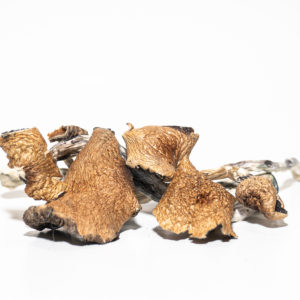
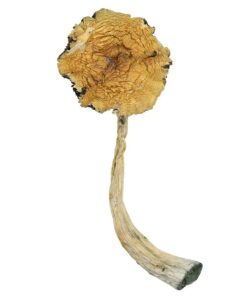
“PF-Classic” is an informal variety-style name associated with Psilocybe cubensis rather than a separate formally recognized fungal species.
Psilocybe cubensis belongs to the family Hymenogastraceae. General phenotypic characteristics of the species include a centrally positioned stem, gilled cap, and dark purplish-brown spores.
Individual morphology can vary considerably.
Therefore, informal names such as PF-Classic shouldn’t be interpreted as standardized measurements of genetics, chemistry, or potency.
Because P. cubensis contains controlled psychoactive compounds, this article doesn’t provide cultivation, preparation, dosage, purchasing, or consumption instructions.
What Is a Skinny White Mushroom?
A skinny white mushroom isn’t a scientific classification.
Many unrelated mushroom species can develop:
- White caps
- Pale stems
- Thin stems
- Small fruiting bodies
Consequently, identifying an unknown mushroom simply because it is white and skinny is unreliable.
Mycologists examine numerous characteristics when identifying fungi, potentially including cap morphology, gill structure, stem characteristics, spore features, habitat, substrate, microscopic anatomy, and genetic information.
What Is a Long Skinny Mushroom?
The term long skinny mushroom similarly describes morphology rather than taxonomy.
One familiar culinary example is enoki, which is known for its relatively long, narrow appearance when commercially cultivated.
However, numerous unrelated wild species can also produce long stems.
Stem length therefore doesn’t establish whether a mushroom is edible.
Small White Mushrooms
Small white mushrooms occur throughout the fungal kingdom.
Some are harmless decomposers. Others are edible species. Still others can be toxic.
This presents an important identification problem because superficial characteristics can overlap between unrelated fungi.
A person shouldn’t assume that a wild mushroom is safe because it resembles a familiar grocery-store variety.
Tiny White Mushrooms in Lawns and Gardens
People frequently discover tiny white mushrooms appearing after rainfall.
Mushrooms can emerge when environmental conditions favor fungal fruiting. Moisture, temperature, organic material, soil composition, and the underlying fungal species can all influence their appearance.
The visible mushroom may represent only a temporary reproductive structure.
Much of the fungal organism can exist within soil or organic material as microscopic filaments known collectively as mycelium.
For additional information about fungal anatomy and mushroom diversity, explore Mushroom Science and Education.
Are Truffles a Type of Mushroom?
Are truffles a type of mushroom? is an interesting question because everyday and scientific terminology differ slightly.
Truffles are fungi, but they don’t develop the familiar above-ground cap-and-stem fruiting body that most people imagine when hearing “mushroom.”
True culinary truffles primarily belong to the genus Tuber.
Their fruiting structures develop underground.
Therefore, truffles and familiar mushrooms are both fungi, but their reproductive structures and ecological strategies differ.
Truffle vs Mushroom
A truffle vs mushroom comparison becomes easier when examining anatomy.
Typical mushroom
Many familiar mushrooms:
- Produce above-ground fruiting bodies
- Develop caps and stems
- Release spores into the surrounding environment
True truffle
True truffles generally:
- Develop underground
- Form compact fruiting structures
- Frequently live in symbiotic relationships with tree roots
- Depend substantially on animals for spore dispersal
This makes truffles biologically fascinating members of the fungal kingdom.
Culinary Truffles and Mycorrhizal Relationships
Many true truffles form mycorrhizal relationships with trees.
In these partnerships, fungi interact closely with plant roots.
The fungus can help plants access nutrients and water, while receiving carbohydrates produced by the plant through photosynthesis.
These relationships demonstrate why fungi are essential components of forest ecosystems.
Truffle Psychedelic Mushroom: An Important Terminology Difference
The phrase truffle psychedelic mushroom can cause considerable confusion.
So-called “magic truffles” aren’t the same thing as culinary truffles belonging to Tuber.
The term commonly refers to sclerotia produced by certain psychoactive fungi.
Sclerotia are compact fungal structures that can store nutrients.
Therefore:
Culinary truffle: underground fungal fruiting structure, often belonging to Tuber.
Psychedelic “truffle”: informal terminology for sclerotia associated with certain psychoactive fungi.
These shouldn’t be treated as the same biological category.
Magic Truffles vs Mushrooms
Understanding magic truffles vs mushrooms requires distinguishing fungal structures.
A mushroom is generally a reproductive fruiting body.
A sclerotium is a hardened mass of fungal tissue associated with survival and nutrient storage.
Certain fungi can produce both mushroom fruiting bodies and other structures depending on species and environmental biology.
Because some so-called magic truffles contain controlled psychoactive compounds, this guide doesn’t provide instructions for obtaining, cultivating, preparing, or consuming them.
What Are Mushroom Gummies?
Mushroom gummies is a broad commercial term.
A gummy could contain:
- Functional mushroom extracts
- Culinary mushroom-derived ingredients
- Botanical ingredients
- Vitamins
- Cannabinoids
- Other compounds
Therefore, a gummy package displaying mushrooms doesn’t establish what’s chemically inside.
Ingredient labels matter considerably more than product imagery.
Mushroom Gummies at Smoke Shops
The search phrase mushroom gummies smoke shop deserves particular consumer-safety attention.
Products sold through smoke shops or online may use mushroom-associated branding without necessarily containing a clearly identifiable mushroom ingredient.
The U.S. Food and Drug Administration has specifically warned about certain mushroom-derived or mushroom-marketed psychoactive edibles. For example, the agency concluded that Amanita muscaria and certain constituents do not meet the applicable safety standard for conventional food ingredients.
Consumers can review the FDA’s mushroom-edible safety information for authoritative guidance.
Why Mushroom Gummy Labels Matter
Recent U.S. experience demonstrates why label transparency is important.
During the FDA investigation of Diamond Shruumz-branded chocolates, cones, and gummies, reported illnesses included seizures, loss of consciousness or confusion, agitation, abnormal heart rates, blood-pressure abnormalities, nausea, and vomiting. FDA testing also identified compounds in certain tested chocolate products that illustrated the difficulty of assuming composition from branding alone.
The educational lesson extends beyond any individual brand:
Never assume a product’s chemistry from the word “mushroom.”
Shroomz Gummies and Similar Product Names
Terms such as Shroomz gummies, Shroomz psychedelic gummy, and Shroomz psychedelic gummies are commercial-style terminology rather than fungal taxonomy.
A product name doesn’t tell consumers:
- Which mushroom species is present
- Whether mushrooms are present at all
- Which active compounds are present
- Their concentrations
- Whether other psychoactive substances are included
- Whether the product has undergone reliable independent testing
Consequently, online reviews and package terminology shouldn’t substitute for ingredient verification and authoritative safety information.
Mushroom Candy
Mushroom candy presents the same challenge.
Candy is simply a product format.
Some products may contain legal functional-mushroom ingredients. Others may use mushroom terminology to market products containing entirely different compounds.
This is particularly relevant because candy-like products can be mistaken for ordinary food.
Consumers should keep any psychoactive or intoxicating products securely away from children.
Microdosing Mushrooms for Mental Health
Micro dosing mushrooms for mental health has become a prominent topic in online wellness discussions.
“Microdosing” generally describes taking small amounts of a psychedelic substance with the intention of avoiding a conventional full psychedelic experience.
However, popularity isn’t the same thing as established medical effectiveness.
Research into psychedelic compounds and mental health is ongoing, but clinical psychedelic research should be distinguished from unsupervised microdosing.
What Does Research Say About Psychedelics and Mental Health?
Scientists are investigating psilocybin and related psychedelics in carefully controlled clinical environments.
Research questions include potential applications involving certain psychiatric conditions, mechanisms of action, safety, and serotonin signaling.
Clinical research may involve:
- Participant screening
- Precisely characterized substances
- Defined research protocols
- Professional supervision
- Psychological support
- Follow-up evaluation
These conditions differ substantially from consuming unidentified mushrooms or commercial gummies.
Readers can explore peer-reviewed studies through PubMed.
Is Microdosing an Established Mental Health Treatment?
Microdosing shouldn’t be presented as a proven replacement for established mental-health treatment.
Research remains active, and study findings have not established unsupervised mushroom microdosing as a universal treatment for depression, anxiety, or other psychiatric conditions.
Anyone experiencing mental-health difficulties should seek guidance from qualified healthcare professionals rather than replacing prescribed treatment with unverified products.
Signs of Weed Use
The keyword signs of weed use concerns cannabis rather than mushrooms.
Cannabis contains cannabinoids, most notably THC, which can alter perception, mood, coordination, attention, memory, and appetite.
Possible observable changes associated with recent cannabis use can include:
- Altered coordination
- Changes in attention
- Increased appetite
- Changes in perception of time
- Relaxation or euphoria
- Anxiety or panic in some individuals
These signs aren’t specific enough to prove that someone has consumed cannabis.
THC Use Symptoms
THC use symptoms vary considerably among individuals.
According to information from the U.S. National Institute on Drug Abuse, cannabis can produce relaxation and euphoria but can also cause anxiety, fear, distrust, or panic in some people. Higher exposure can produce more serious psychological effects.
THC-containing edibles also differ from inhaled cannabis because effects can be delayed, increasing the possibility that someone consumes additional product before recognizing the full effect.
THC Gummies vs Mushroom Gummies
THC gummies and mushroom gummies shouldn’t automatically be grouped together.
THC gummy: generally refers to a cannabinoid-containing edible.
Functional mushroom gummy: may contain ingredients derived from mushrooms such as Lion’s Mane or reishi.
Psychedelic-branded mushroom gummy: may contain different psychoactive ingredients depending on formulation.
The ingredient list—not the gummy format—determines what consumers are actually dealing with.
Why “Natural” Doesn’t Guarantee Safety
Mushroom marketing frequently emphasizes natural origins.
However, natural substances aren’t automatically harmless.
Numerous mushrooms naturally contain toxins. Likewise, plants and fungi produce powerful chemicals precisely because biological organisms have complex chemical defenses and metabolic systems.
Safety must therefore be evaluated through toxicology and scientific evidence rather than the natural-versus-synthetic distinction.
Frequently Asked Questions
What is a skinny white mushroom?
It’s a descriptive phrase rather than a species name. Many unrelated mushrooms can be white and thin, so appearance alone isn’t enough for safe identification.
Are small white mushrooms edible?
Some are, while others may be toxic. Unknown wild mushrooms shouldn’t be consumed based solely on color or photographs.
Are truffles mushrooms?
Truffles and mushrooms are both fungi. True culinary truffles develop underground and differ structurally from familiar cap-and-stem mushrooms.
What are magic truffles?
The term usually describes sclerotia produced by certain psychoactive fungi rather than culinary truffles of the genus Tuber.
Are mushroom gummies always made from mushrooms?
No. Formulations vary considerably. Consumers should check exact ingredient disclosures rather than relying on mushroom imagery or product names.
Are Shroomz gummies scientifically standardized?
A commercial-style name alone doesn’t establish ingredients, concentration, or scientific standardization.
Is microdosing mushrooms proven to improve mental health?
Research is ongoing. Unsupervised microdosing shouldn’t be presented as an established replacement for evidence-based mental-health care.
What are common THC effects?
THC can affect perception, attention, coordination, appetite, mood, and sense of time. Some individuals can also experience anxiety, fear, or panic.
Conclusion
Understanding skinny white mushrooms, tiny white mushrooms, truffle vs mushroom, and magic truffles vs mushrooms begins with accurate fungal terminology.
Meanwhile, modern products such as mushroom candy and psychedelic-branded gummies introduce an entirely different consumer-safety challenge. Product names and mushroom imagery don’t reliably establish chemical composition, making transparent labels and authoritative safety information especially important.
Research into micro dosing mushrooms for mental health also needs to be separated from clinical psychedelic science. Controlled research may be scientifically promising without establishing unsupervised consumption as safe or medically effective.
For additional educational articles about mushroom taxonomy, fungal biology, and current scientific research, continue exploring PsychedelicsAndShrooms.com Educational Mushroom Resources.
| Size | Oz, Qp, Hp, Lbs |
|---|
Be the first to review “PF-Classic Mushroom”
Related products
Microdose Shrooms
Mushrooms
Mushrooms
Microdose Shrooms
Microdose Shrooms
Mushrooms
Mushrooms
Microdose Shrooms
Reviews
There are no reviews yet.