Shroomology-Mushroom Microdosed Capsules: Effects, Benefits, Drug Tests & Legality
What Are Shroomology-Mushroom Microdosed Capsules?
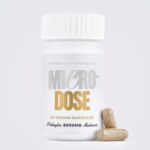
Shroomology-Mushroom Microdosed Capsules is a product-style phrase associated with growing public interest in mushroom capsules, psychedelic microdosing, mood, cognition, and psilocybin research.
However, a product name doesn’t establish what a capsule actually contains.
For example, mushroom capsules can contain functional mushroom extracts, ordinary mushroom powders, mycelium, botanical ingredients, psilocybin-containing material, or combinations of ingredients.
Therefore, consumers should examine the ingredient panel and credible laboratory documentation rather than assuming that words such as “microdosed” establish chemical composition.
The same principle applies to potency claims.
A capsule marketed as a microdose doesn’t automatically contain a standardized amount of psilocybin.
Consequently, this article focuses on the science behind microdose mushrooms, current research, possible effects, drug-testing questions, and U.S. legal considerations.
What Does Microdosing Mushrooms Mean?
The phrase microdosing mushrooms usually refers to taking an amount of a psychedelic mushroom product intended to remain below the level associated with a conventional psychedelic experience.
Researchers also use terms such as low-dose psychedelic exposure when studying related questions.
However, scientists haven’t established one universally applicable definition across every mushroom species and preparation.
That matters because natural mushroom material can vary chemically.
Furthermore, scientific studies may use characterized materials under controlled conditions, whereas an unverified commercial capsule may have uncertain composition.
Therefore, “microdose” should describe a research concept or marketing category rather than serve as proof of standardized potency.
Psilocybin Microdoses and Scientific Research
Interest in psilocybin microdoses has increased substantially.
Researchers have investigated whether low-dose psychedelic exposure affects:
- mood;
- cognition;
- creativity;
- attention;
- emotional processing;
- wellbeing; and
- subjective experience.
Nevertheless, results remain inconsistent.
A review of placebo-controlled research concluded that available evidence couldn’t yet determine whether microdosing effects primarily reflect pharmacology or placebo-related factors. More recent controlled research has also produced mixed results.
Therefore, claims that microdosing reliably improves mood, intelligence, creativity, or productivity remain stronger than current evidence supports.
Is Microdosing Mushrooms Good for You?
There isn’t enough high-quality evidence to answer this question with a universal “yes.”
Observational studies sometimes report favorable experiences. Participants have described improvements in mood, wellbeing, creativity, or everyday functioning.
However, observational research faces important limitations.
People who choose to microdose may already expect positive results. Furthermore, researchers may struggle to separate pharmacological effects from expectations, lifestyle changes, and placebo responses.
Controlled studies provide a more complicated picture.
Some report measurable changes, while others find little or no meaningful advantage over placebo.
Therefore, is microdosing mushrooms good for you remains a research question rather than an established medical conclusion.
Microdosing Psychedelic Mushrooms Benefits
Claims surrounding microdosing psychedelic mushrooms benefits often include:
- improved mood;
- increased creativity;
- better concentration;
- greater productivity;
- reduced anxiety;
- improved emotional wellbeing; and
- increased energy.
However, reported benefits don’t automatically establish clinical effectiveness.
A 2026 placebo-controlled study found no reliable improvement across several cognitive and emotional measures compared with placebo. Meanwhile, other controlled research has identified narrower effects in specific domains.
Consequently, the evidence remains mixed.
Readers should distinguish between personal testimonials and reproducible clinical findings.
Microdosing Mushroom Therapy
The phrase microdosing mushroom therapy can create another misconception.
Microdosing isn’t currently equivalent to an established standard psychiatric therapy.
Clinical psychedelic research generally involves much more than simply administering a psychedelic compound.
Research protocols may include:
- participant screening;
- psychiatric assessment;
- standardized compounds;
- professional supervision;
- psychological support; and
- structured follow-up.
Therefore, results from supervised clinical research shouldn’t automatically become claims about commercial mushroom capsules.
Microdosing Mushrooms for Mood
Many people investigate how to microdose mushrooms for mood because they have heard claims involving depression, anxiety, or emotional wellbeing.
However, this article doesn’t provide a self-treatment schedule or recreational dosing instructions.
Instead, the evidence deserves attention.
A recent systematic review of low-dose psilocybin for mental disorders concluded that therapeutic efficacy remains unclear and requires further investigation.
Similarly, controlled microdosing research has produced inconsistent psychological results.
Consequently, people experiencing persistent depression, anxiety, or significant mood changes shouldn’t assume that unregulated mushroom capsules offer an established treatment.
Microdosing Mushrooms Feeling
People searching microdosing mushrooms feeling often want to know whether a microdose produces obvious psychedelic effects.
By definition, researchers generally use microdosing to describe low-dose exposure intended to avoid a full psychedelic experience.
Nevertheless, individuals can respond differently.
Reported experiences may include subtle changes in:
- mood;
- sensory awareness;
- energy;
- attention; or
- emotional state.
Meanwhile, unwanted experiences can occur as well.
Research has reported anxiety, physical discomfort, cognitive changes, and increases in physiological measures such as blood pressure in some participants.
Therefore, “subtle” doesn’t mean “risk-free.”
Psilocybe Microdose Effects
Psilocybe microdose effects depend partly on psilocybin and its conversion to psilocin.
Psilocin interacts with the serotonin system, particularly receptors involved in classic psychedelic effects.
At low exposure levels, effects may be less obvious than those associated with a conventional psychedelic experience.
Still, biological effects don’t disappear simply because someone uses the word microdose.
Furthermore, natural mushroom composition can vary.
As a result, one capsule or mushroom sample can’t automatically be assumed to match another.
How Much Is a Microdose of Mushrooms in Grams?
Searches for how much is a microdose of mushrooms in grams and how much is a microdose of mushrooms in g are common.
However, giving readers a universal recreational quantity would create a misleading impression of precision.
Mushroom weight doesn’t directly equal psilocybin content.
Concentrations can vary according to:
- species;
- specimen;
- genetics;
- cultivation conditions;
- mushroom tissue;
- processing;
- storage; and
- degradation.
Therefore, the same physical weight can contain different amounts of active compounds.
Clinical researchers address this problem through characterized study materials and controlled protocols.
Psilocybin Microdose MG
The search phrase psilocybin microdose mg raises a similar issue.
Milligrams can describe either the weight of mushroom material or the amount of a specific purified compound.
Those aren’t interchangeable measurements.
For example:
| Measurement | What it describes |
|---|---|
| mg of mushroom powder | Physical mushroom material |
| mg of mushroom extract | Extract weight |
| mg of psilocybin | Amount of a specific compound |
| Capsule weight | May include inactive ingredients |
| Blend weight | May include several ingredients |
Therefore, consumers shouldn’t interpret a milligram number on the front of a package as automatically representing purified psilocybin.
Microdose Psilocybe Dosage
Microdose Psilocybe dosage also lacks universal standardization across natural mushrooms.
Consequently, this article doesn’t provide a recreational dose table, calculator, or personalized dosing instructions.
From an educational perspective, the important lesson is that natural mushrooms aren’t standardized pharmaceutical tablets.
Their chemical profiles can vary substantially.
Moreover, a product’s label may not reliably establish its contents unless credible analytical testing supports the claim.
Microdosing Psilocybe
Microdosing Psilocybe refers broadly to low-dose exposure involving mushrooms from psilocybin-containing species.
However, Psilocybe represents a genus rather than one standardized product.
Different species can have different chemical profiles.
Even mushrooms belonging to the same species can vary.
Therefore, a species name alone doesn’t guarantee a particular concentration.
“Microdosing Phycobilin” and “Psycobillin Microdosing”
Searches such as microdosing phycobilin and psycobillin microdosing likely reflect spelling confusion around psilocybin.
Psilocybin is the psychedelic compound associated with many Psilocybe mushrooms.
By contrast, phycobilins are light-capturing pigments associated with organisms such as cyanobacteria and certain algae.
They aren’t another name for psilocybin.
Therefore, accurate terminology matters when researching scientific evidence.
How to Microdose Mushrooms for Fun
Some searches specifically ask how to microdose mushrooms for fun.
However, recreational instructions create a different issue from explaining the science.
Psilocybin remains federally controlled in the United States, and low-dose use can still produce unwanted psychological or physiological effects.
Therefore, this article doesn’t provide recreational dosing schedules or instructions.
Instead, readers can use scientific literature to understand effects, uncertainty, and potential risks.
Do Microdose Mushrooms Show on Drug Tests?
Do microdose mushrooms show on a drug test? The answer depends on what the laboratory actually tests for.
A drug test doesn’t detect every psychoactive compound automatically.
Testing programs use specific analytical panels and target particular substances or metabolites.
Therefore, a result depends on:
- compounds included in the test;
- analytical method;
- laboratory procedures;
- specimen type; and
- timing.
A standard test and a specialized toxicology analysis aren’t necessarily looking for the same substances.
Consequently, nobody should assume that the word “drug test” describes one universal laboratory procedure.
This article also doesn’t provide strategies for defeating or manipulating drug testing.
Can Specialized Tests Detect Psilocybin Exposure?
Specialized analytical methods can target compounds that ordinary screening panels may not routinely investigate.
Laboratories can develop tests for particular drugs or metabolites when medically, legally, or scientifically relevant.
Therefore, claims that psilocybin is “completely undetectable” are misleading.
The better question is:
Was the laboratory specifically testing for relevant compounds or metabolites?
Is Microdosing Mushrooms Legal in the US?
At the federal level, psilocybin remains a Schedule I controlled substance in the United States.
The DEA continues to list psilocybin under federal controlled-substance law.
Therefore, calling an amount a “microdose” doesn’t create a federal exemption.
A small amount of a controlled substance remains subject to applicable law.
However, state and local policies can differ.
Some jurisdictions have developed regulated psychedelic programs or adopted local decriminalization policies.
Still, decriminalization, legalization, medical regulation, and federal legality don’t mean the same thing.
Federal Law vs. State and Local Policy
This distinction frequently causes confusion.
Federal scheduling addresses federal controlled-substance law.
State law can create separate state-level rules.
Local decriminalization may change enforcement priorities without creating statewide legal retail sales.
Regulated programs may permit particular activities under specific conditions.
Therefore, readers should verify current government guidance for their jurisdiction rather than relying on social-media claims.
Microdosing Doesn’t Automatically Mean Legal
People sometimes assume that extremely small quantities fall outside drug laws.
However, controlled-substance laws generally don’t create a universal “microdose exception” simply because the amount is intended to produce subtle effects.
Furthermore, commercial availability doesn’t prove legality.
A website or package can make claims that don’t reflect federal, state, or local law.
Consequently, consumers should separate product marketing from legal status.
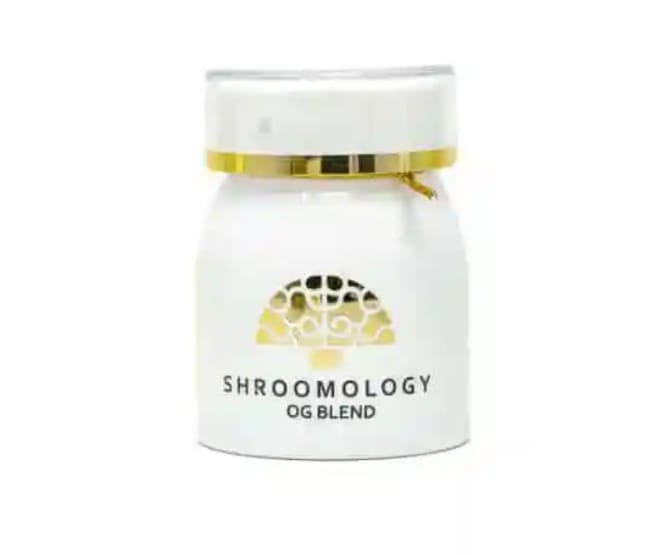
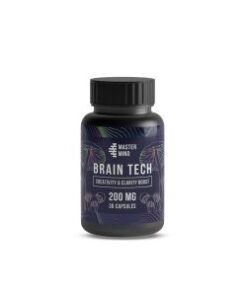
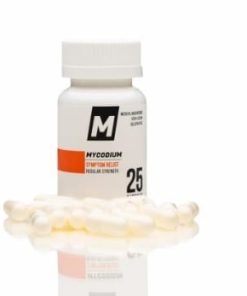
Shroomology-Mushroom Microdosed Capsules and Product Labels
When evaluating Shroomology-Mushroom Microdosed Capsules, start with the ingredient panel rather than the product name.
Ask:
- Which mushroom species does the product identify?
- Does it claim to contain psilocybin?
- What does the listed quantity actually measure?
- Does the manufacturer provide batch information?
- Is credible laboratory documentation available?
- Which compounds did the laboratory test?
- Does the product contain additional ingredients?
These questions provide far more useful information than colorful packaging.
“Lab Tested” Needs Context
A manufacturer may advertise a product as lab tested.
However, that phrase alone says very little.
Testing might examine:
- identity;
- potency;
- heavy metals;
- microorganisms;
- pesticides;
- residual solvents; or
- other contaminants.
Therefore, consumers should determine what the laboratory actually measured.
Additionally, a credible certificate should correspond to the relevant batch.
Potential Risks of Psilocybin Microdosing
Microdosing doesn’t eliminate adverse effects.
A 2025 systematic review of LSD and psilocybin microdosing found that reported side effects were generally mild and short-lived in the included research, but anxiety, increased blood pressure, and cognitive impairment appeared among the documented effects.
Other potential concerns include:
- emotional discomfort;
- headache;
- nausea;
- altered concentration;
- sleep changes;
- unexpected psychological reactions; and
- interactions with existing health conditions.
Long-term repeated-use evidence also remains less developed than many online claims suggest.
Microdosing and Mental Health
People with mental-health concerns should be particularly careful about interpreting anecdotal success stories.
Psychedelic research often excludes or carefully screens participants with particular psychiatric risk factors.
Moreover, clinical researchers monitor participants closely.
That controlled environment differs substantially from self-administering an unverified capsule.
Therefore, someone experiencing serious depression, mania, psychosis, suicidal thinking, or another significant mental-health problem should seek appropriate professional care rather than relying on a commercial mushroom product as a substitute.
Placebo and Expectation Effects
Microdosing research faces an unusual challenge: expectation.
People who strongly believe a psychedelic will improve creativity or mood may notice positive changes regardless of whether pharmacology explains the entire effect.
However, the scientific story isn’t as simple as saying microdosing is “just placebo.”
A review of 19 placebo-controlled studies found both positive and null findings and concluded that available evidence couldn’t settle the question.
Therefore, researchers continue to investigate how pharmacology, expectations, context, and individual differences interact.
Does Microdosing Improve Creativity?
Creativity represents another heavily marketed benefit.
Recent placebo-controlled research has produced nuanced results.
For example, a 2026 analysis pooling three double-blind trials found changes in some measures of divergent thinking.
However, that doesn’t establish a universal creativity boost.
Other cognitive research has produced null findings or identified possible disadvantages.
Therefore, describing microdosing as a proven “brain hack” would overstate current science.
Microdosing and Cognitive Performance
The evidence for cognition remains particularly mixed.
A recent meta-analysis found no detectable benefit across most cognitive domains and identified a decrease in cognitive control.
Meanwhile, other individual studies have reported narrower changes.
Consequently, consumers shouldn’t assume that a low psychedelic dose reliably improves memory, attention, productivity, or decision-making.
Science remains much less certain than many marketing claims.
Clinical Research vs. Commercial Microdose Capsules
Clinical psychedelic research and commercial capsules belong to different evidence categories.
Researchers can control:
- compound identity;
- purity;
- study conditions;
- participant selection;
- clinical monitoring; and
- outcome measurement.
An ordinary commercial capsule may not offer those safeguards.
Therefore, evidence involving controlled psilocybin research shouldn’t automatically serve as evidence for an unrelated finished product.
Are Mushroom Microdose Capsules Psychedelic?
Not necessarily.
“Mushroom capsule” can describe many non-psychedelic products.
For example, supplements may contain lion’s mane, reishi, Cordyceps, turkey tail, or other functional mushrooms.
Therefore, the word mushroom doesn’t establish psilocybin content.
Likewise, “microdose” on packaging doesn’t prove that psilocybin is present.
Only reliable ingredient information and appropriate chemical analysis can answer that question.
Frequently Asked Questions
1. What does microdosing mushrooms mean?
Microdosing generally describes low-dose psychedelic exposure intended to remain below the level of a conventional psychedelic experience. However, definitions vary across research and commercial products.
2. Is microdosing mushrooms good for you?
Researchers haven’t established a universal health benefit. Studies report mixed results, while recent reviews emphasize inconsistent evidence and the need for better placebo-controlled trials.
3. Do microdose mushrooms show on drug tests?
Detection depends on the specific substances a laboratory tests for and the analytical method it uses. Standard and specialized toxicology panels can differ considerably.
4. Is microdosing mushrooms legal in the US?
Psilocybin remains federally controlled in the United States. State and local policies vary, but calling something a microdose doesn’t create a general federal exemption.
5. Does microdosing improve mood?
Some observational studies report mood improvements, while controlled studies have produced inconsistent results. Therefore, microdosing isn’t an established replacement for evidence-based mental-health treatment.
6. How much psilocybin is in a mushroom microdose capsule?
The product name alone cannot answer that question. Mushroom powder weight, extract weight, capsule weight, and purified psilocybin quantity are different measurements. Credible chemical testing provides stronger evidence about composition.
Educational Resources
For more educational material about mushroom science, psilocybin research, functional mushrooms, and psychedelic studies, explore PsychedelicsAndShrooms.com.
Readers can also explore peer-reviewed microdosing literature through PubMed and review federal controlled-substance information through the U.S. Drug Enforcement Administration.
| Quantity | 3 bottles, 5 bottles |
|---|
Be the first to review “Shroomology-Mushroom Microdosed Capsules”
Related products
Mushrooms
Mushroom Capsule
Mushrooms
Mushrooms
Microdose Shrooms
Mushrooms
Mushroom Capsule
Mushroom Capsule
Reviews
There are no reviews yet.