SoulCybin: Psilocybin Mushrooms, Effects, Chocolate, Shelf Life & Research
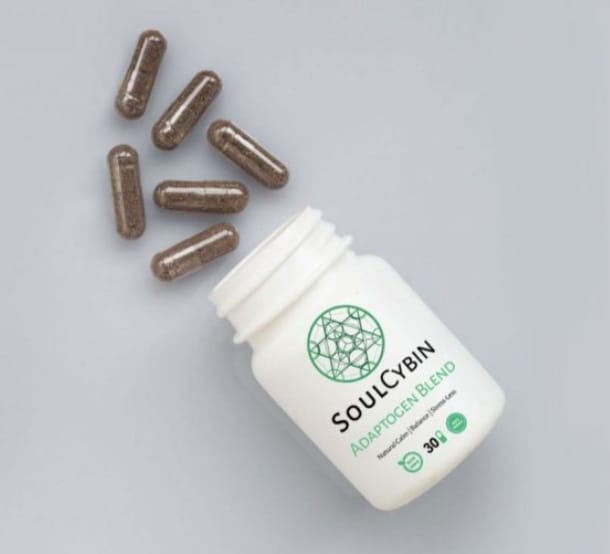
What Is SoulCybin?
SoulCybin appears in online searches connected with psilocybin mushrooms, psychedelic products, mushroom chocolates, spores, and related terminology.
However, consumers should separate a product or brand name from verified chemical composition. A name containing terms associated with mushrooms or psychedelics doesn’t establish what a finished product contains.
Therefore, anyone researching SoulCybin should distinguish between three different questions:
What does the product claim to contain?
What does independent laboratory analysis show?
What does scientific research actually say about those ingredients?
That distinction becomes particularly important with products marketed using terms such as psilocybin, mushroom chocolate, microdose, psychedelic, or magic mushroom.
Meanwhile, psilocybin itself has attracted substantial scientific attention. Researchers continue to investigate its pharmacology and potential therapeutic applications, although clinical research shouldn’t be confused with unsupervised commercial use. Recent reviews describe promising but still developing evidence across several psychiatric applications.
For additional educational mushroom material, explore PsychedelicsAndShrooms.com.
What Is a Psilocybin Mushroom?
A psilocybin mushroom contains naturally occurring psychedelic compounds, principally psilocybin and, in varying amounts, psilocin and related tryptamines.
After entering the body, psilocybin converts rapidly to psilocin. Researchers associate psilocin’s psychedelic effects primarily with activity at serotonin receptors, especially the 5-HT2A receptor.
Importantly, psilocybin isn’t present in every mushroom.
Thousands of fungal species exist, ranging from familiar culinary mushrooms to medicinal fungi, toxic mushrooms, wood-decaying fungi, and psychedelic species.
Consequently, the word mushroom alone tells you very little about chemistry.
Psilocybe Mushrooms Explained
Psilocybe represents a fungal genus that includes numerous psilocybin-containing species.
However, people sometimes use “Psilocybe” loosely when discussing psychedelic mushrooms in general.
Taxonomy requires more precision.
Researchers can examine characteristics such as microscopic structures, spore morphology, genetics, habitat, and other taxonomic features to distinguish species.
Furthermore, visual appearance alone doesn’t reliably establish chemical composition.
A brown cap or blue discoloration cannot prove that an unknown mushroom contains psilocybin.
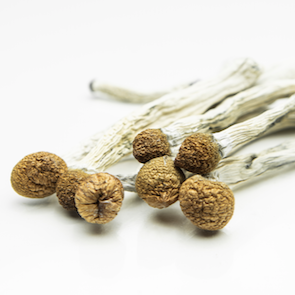
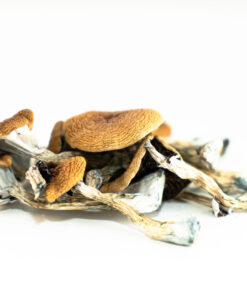
What Do Psilocybe Mushrooms Look Like?
There isn’t one universal Psilocybe mushroom appearance.
Different species vary considerably.
Depending on the species and developmental stage, mushrooms may differ in:
- cap shape;
- cap color;
- stem proportions;
- gill appearance;
- spore characteristics;
- size; and
- habitat.
Environmental conditions can also change appearance.
Therefore, readers shouldn’t rely on an internet photograph, phone application, or single feature to decide whether a wild mushroom contains psilocybin—or whether it is safe to eat.
Dangerous mushrooms can resemble desirable species.
Mushrooms Psilocybin Effects
Psilocybin can produce substantial changes in perception, emotion, cognition, and sense of self.
Research participants have reported alterations involving:
- visual perception;
- time perception;
- emotional intensity;
- thought patterns;
- self-awareness;
- sensory processing; and
- feelings of connectedness.
Nevertheless, experiences can vary considerably.
Some people experience anxiety, confusion, fear, nausea, or psychologically distressing reactions. Controlled studies manage these risks through screening, preparation, professional supervision, and follow-up.
That environment differs significantly from consuming an unidentified commercial edible or wild mushroom.
How Does Psilocybin Affect the Brain?
After conversion to psilocin, the compound interacts strongly with the serotonin system.
Researchers particularly emphasize 5-HT2A receptor activity when explaining classic psychedelic effects.
Brain-imaging studies also suggest temporary changes in communication among networks involved in perception, self-processing, cognition, and emotion.
However, popular phrases such as “rewires your brain” can oversimplify complex neuroscience.
Researchers continue investigating neuroplasticity and network-level changes, but scientific findings shouldn’t become claims that psilocybin permanently upgrades or repairs the brain.
Psilocybin Duration of Action
People frequently search for psilocybin duration of action.
The answer varies.
Researchers have found substantial pharmacokinetic variability depending on factors such as formulation, route, metabolism, and study conditions. A 2025 systematic review reported that psilocybin rapidly converts to psilocin and that psilocin’s elimination half-life varied across studies.
However, blood concentration and subjective psychedelic experience aren’t identical measurements.
Furthermore, natural mushrooms create additional uncertainty because their chemical concentrations can vary.
For those reasons, this article doesn’t provide consumption schedules, redosing instructions, or personalized timing advice.
How Long Do Psilocybin Mushrooms Last?
This question has two possible meanings.
Someone might ask:
How long do the psychoactive effects last?
Alternatively, they may mean:
How long can dried mushrooms remain stored before they deteriorate?
Those questions require different answers.
Subjective effects depend on pharmacology and individual circumstances. By contrast, psilocybin mushroom shelf life concerns moisture, oxygen, temperature, light, contamination, and chemical stability.
Therefore, never use a food-storage timeline to predict psychoactive effects.
Psilocybin Mushrooms Shelf Life
Dried fungal material can physically remain intact much longer than fresh mushrooms.
Nevertheless, storage time can influence both food quality and chemical stability.
Important environmental factors include:
- moisture;
- oxygen;
- excessive heat;
- light;
- microbial contamination; and
- packaging integrity.
Visible appearance also cannot establish remaining psilocybin concentration.
Only appropriate analytical testing can quantify chemical content reliably.
Moreover, discard fungal material that develops mold, unusual moisture, obvious contamination, or other signs of decomposition.
Fresh vs. Dried Mushroom Shelf Life
Fresh mushrooms contain substantial water.
Consequently, microorganisms and natural decomposition can affect them relatively quickly.
Drying removes much of that water and generally improves physical shelf stability.
Still, drying doesn’t guarantee permanent chemical stability.
Likewise, dried material can absorb moisture again when stored poorly.
Therefore, consumers should distinguish physical preservation from chemical potency.
Psilocybe Mushroom Chocolate
Psilocybe mushroom chocolate and psilocybin chocolate have become prominent search terms.
Chocolate can provide a convenient edible format, but packaging doesn’t prove chemical composition.
A mushroom-themed chocolate might contain:
- functional mushrooms;
- mushroom extracts;
- psilocybin-containing material;
- Amanita-derived ingredients;
- unrelated psychoactive compounds; or
- ingredients that don’t match marketing claims.
Consequently, consumers shouldn’t identify a chocolate’s chemistry from branding alone.
Psilocybin Chocolate and Product Testing
Independent laboratory analysis provides far stronger evidence than package artwork.
A useful laboratory report should identify the tested batch and specify which compounds the laboratory measured.
Meanwhile, vague claims such as “lab tested” deserve scrutiny when a company doesn’t provide traceable documentation.
Even attractive packaging can be copied.
Therefore, branding should never substitute for chemical verification.
Chocolate Shelf Life vs. Active-Compound Stability
Chocolate usually keeps far longer than fresh mushrooms under appropriate storage conditions.
However, the stability of chocolate and the stability of compounds mixed into it aren’t necessarily identical.
Heat can alter chocolate texture. Moisture can cause additional problems, while oxygen and light may influence some chemical compounds over time.
Therefore, an intact-looking chocolate bar doesn’t prove that its original chemical composition remains unchanged.
Likewise, appearance can’t determine psychoactive potency.
Enigma Psilocybin Mushrooms
Enigma psilocybin mushrooms commonly refers to an unusual cultivated Psilocybe cubensis-associated phenotype rather than a separate formally recognized mushroom species.
The name has become popular in online mushroom culture because of its unusual morphology.
Instead of developing the conventional cap-and-stem appearance associated with many P. cubensis mushrooms, Enigma-associated material may develop irregular clustered tissue.
However, the name Enigma doesn’t guarantee chemical potency.
Genetics, cultivation conditions, individual biological variation, processing, storage, and analytical methods can all affect measured compounds.
Therefore, claims that one named mushroom is always the “strongest” should be treated cautiously.
Enigma Psilocibina
The search phrase enigma psilocibina reflects Spanish-language interest in the same general subject.
“Psilocibina” translates to psilocybin.
Again, Enigma commonly functions as an informal cultivated mushroom label.
It shouldn’t be confused with a standardized pharmaceutical formulation.
Furthermore, a name printed on packaging doesn’t verify genetics or chemistry.
Psilocybe Cubensis Spore Print
A Psilocybe cubensis spore print refers to spores deposited from a mature mushroom onto a surface.
Mycologists use spore characteristics as one part of fungal study and identification.
However, a spore print alone doesn’t provide an infallible species identification.
Researchers may also consider microscopic characteristics, morphology, genetics, and ecological information.
Legal treatment can also differ between spores, fungal cultures, mature mushrooms, and controlled compounds depending on jurisdiction.
Therefore, people should verify current local law rather than assuming one universal rule applies everywhere.
Can You Identify Psilocybin Mushrooms From a Spore Print?
Not reliably from a spore print alone.
Several mushroom species can produce superficially similar spore colors.
Consequently, mycologists combine multiple lines of evidence when identifying fungi.
DNA sequencing can provide much stronger taxonomic evidence in difficult cases.
Most importantly, don’t use a spore print as the sole basis for deciding whether a wild mushroom is edible.
Where Can You Find Psilocybin Mushrooms?
Psilocybin-producing fungi occur naturally in different regions of the world.
However, providing specific collection sites, harvesting directions, or strategies for locating controlled psychedelic mushrooms could facilitate illegal possession.
Therefore, this guide doesn’t provide psychedelic mushroom hunting locations.
Readers interested in fungal ecology can instead study verified museum collections, herbarium records, peer-reviewed taxonomy, and educational mycology resources.
Those sources allow people to learn about fungal biodiversity without turning an identification guide into a collection manual.
Buy Psilocybin Mushrooms Online: Important Legal Context
Searches such as buy psilocybin mushrooms online, psilocybin for sale, order psilocybin mushrooms online, and Psilocybe for sale are increasingly common.
However, online availability doesn’t establish legality, authenticity, or safety.
Psilocybin remains subject to strict federal controls in the United States, while certain states and local jurisdictions have developed different approaches involving regulated services or decriminalization.
Therefore, this article doesn’t direct readers to online psilocybin sellers or provide purchasing instructions.
Instead, consumers should consult current government sources for the laws applying to their jurisdiction.
Why “For Sale Online” Doesn’t Mean Legal
Internet marketplaces can operate across state and national borders.
As a result, a website may display a product to someone living in a jurisdiction where possession or importation creates legal problems.
Furthermore, websites can misrepresent products.
Potential concerns include:
- inaccurate ingredient labels;
- counterfeit packaging;
- unknown potency;
- contamination;
- unidentified psychoactive substances; and
- missing laboratory verification.
Consequently, a professional-looking online store isn’t proof of regulatory compliance.
Psilocybin Dosage
Psilocybin dosage is another frequently searched topic.
However, providing individualized recreational dosing instructions can create significant safety risks.
Natural mushrooms don’t contain a universally standardized amount of psilocybin.
Concentrations can vary between species, individual specimens, batches, and preparations.
Furthermore, body size alone cannot predict psychological response.
Clinical researchers avoid these uncertainties by using characterized preparations, carefully controlled protocols, participant screening, and professional monitoring.
Recent scientific reviews also emphasize that clinical findings come from structured research environments rather than uncontrolled recreational settings.
Psilocybin Tea
Psilocybin tea commonly refers to a beverage associated with psilocybin-containing mushroom material.
However, this article doesn’t provide preparation instructions, extraction techniques, or recipes for controlled psychedelic substances.
From a scientific perspective, changing a delivery format doesn’t remove psilocybin’s psychoactive properties or legal status.
Likewise, tea doesn’t automatically make an unidentified wild mushroom safe.
Potentially toxic mushrooms remain dangerous regardless of whether someone eats, boils, dries, or brews them.
Psychopsilocybin Mushrooms
The phrase psychopsilocybin mushrooms isn’t a standard scientific taxonomic category.
People may use it informally when referring to psychoactive or psilocybin-containing mushrooms.
Scientifically, researchers identify mushrooms using recognized genus and species names.
For example, Psilocybe cubensis represents a species name.
Therefore, readers should favor established taxonomy over marketing or internet terminology when researching fungal biology.
Psilocybin Research Is Expanding
Scientific interest in psilocybin has grown considerably.
Researchers have investigated potential applications involving depression, anxiety associated with serious illness, and substance-use disorders.
For example, a 2025 systematic review found preliminary evidence supporting further research into psilocybin-assisted psychotherapy for alcohol and tobacco use disorders, while emphasizing the need for larger clinical trials.
Likewise, a 2026 review described promising but variable psychiatric findings and emphasized that evidence remains limited for several proposed indications.
Therefore, “promising research” shouldn’t become “proven cure.”
Clinical Psilocybin vs. Commercial Mushroom Products
Clinical research differs fundamentally from purchasing an unidentified mushroom product.
Researchers may use:
- characterized compounds;
- screened participants;
- controlled environments;
- structured psychological support;
- medical oversight; and
- follow-up assessments.
Commercial mushroom chocolates or other unverified products don’t automatically reproduce these conditions.
Consequently, clinical research results shouldn’t serve as advertisements for unrelated retail products.
Potential Psilocybin Risks
Psilocybin can produce intense psychological effects.
Potential adverse experiences include:
- anxiety;
- panic;
- confusion;
- nausea;
- impaired judgment;
- temporary increases in distress; and
- psychologically overwhelming experiences.
Researchers carefully screen participants partly because individual vulnerabilities matter.
Recent reviews continue to report mostly transient adverse events in controlled trials while also noting that notable adverse reactions can occur.
Wild Mushroom Poisoning Is a Different Emergency
Someone who becomes ill after consuming a wild mushroom may be experiencing poisoning rather than expected psychedelic effects.
That distinction can be lifesaving.
Potential warning signs include:
- persistent vomiting;
- severe abdominal pain;
- seizures;
- loss of consciousness;
- severe confusion;
- breathing problems; or
- rapidly worsening illness.
Seek urgent medical assistance when serious symptoms develop.
Moreover, preserve photographs or remaining mushroom specimens when doing so can help medical professionals or poison specialists with identification.
Don’t assume that a mushroom was safe merely because someone intended to collect a psychedelic species.
Frequently Asked Questions
1. What is SoulCybin?
SoulCybin appears as a name associated online with mushroom and psychedelic searches. However, consumers should rely on verified ingredient information and credible batch testing rather than assuming composition from branding alone.
2. What effects do psilocybin mushrooms have?
Psilocybin can alter perception, emotion, thought, time perception, and sense of self. However, reactions vary, and some people experience anxiety, panic, nausea, or confusion. Controlled research manages these risks through screening and professional supervision.
3. How long do psilocybin mushrooms last?
If “last” means storage, dried fungal material generally remains physically stable longer than fresh mushrooms, although chemical composition can change with time and poor storage. If “last” means psychoactive effects, duration varies and shouldn’t be predicted from mushroom appearance alone.
4. Can you buy psilocybin mushrooms online?
Websites may advertise them, but online availability doesn’t establish legality or product authenticity. This article doesn’t provide vendors or purchasing directions for controlled psychedelic substances.
5. What do Psilocybe mushrooms look like?
Appearance varies by species and environmental conditions. No single cap color, blue stain, stem shape, or photograph reliably identifies every psilocybin-containing mushroom. Potentially dangerous look-alikes make wild identification particularly risky.
6. Is Enigma a psilocybin mushroom?
Enigma commonly refers to an unusual cultivated Psilocybe cubensis-associated phenotype. However, the informal name doesn’t guarantee a specific chemical concentration or potency.
Educational Resources
For additional educational material on mushrooms, psychedelic science, fungal biology, and psilocybin research, explore PsychedelicsAndShrooms.com.
Readers who want to examine the scientific literature directly can explore PubMed’s psilocybin research collection. Recent systematic reviews show why scientific context matters: researchers continue to investigate potential therapeutic applications, but evidence varies by condition and clinical findings shouldn’t be generalized to unregulated commercial mushroom products.
Be the first to review “SoulCybin”
Related products
Microdose Shrooms
Mushrooms
Microdose Shrooms
Mushrooms
Mushroom Capsule
Mushroom Capsule
Reviews
There are no reviews yet.