Psilocybin Mushrooms in Michigan: Understanding Ann Arbor Policy, Terminology, and Research
Interest in psilocybin mushrooms in Michigan has grown alongside broader U.S. discussions about psychedelic research, decriminalization, mental-health studies, and changing local policies. Ann Arbor receives particular attention because local policy toward certain entheogenic plants and fungi has differed from federal law.
However, terms such as psychedelic dispensary, psilocybin dispensary, and Ann Arbor mushroom shops can create a misleading impression that psychedelics operate under the same regulatory framework as recreational cannabis.
They do not.
Local enforcement policies, state law, federal controlled-substance law, decriminalization, legalization, and regulated medical access are distinct concepts. Understanding those differences is essential when researching psychedelics in the United States.
Readers can explore additional educational material about fungal science through PsychedelicsAndShrooms.com.
Transkei Cubensis: Brief Scientific Background
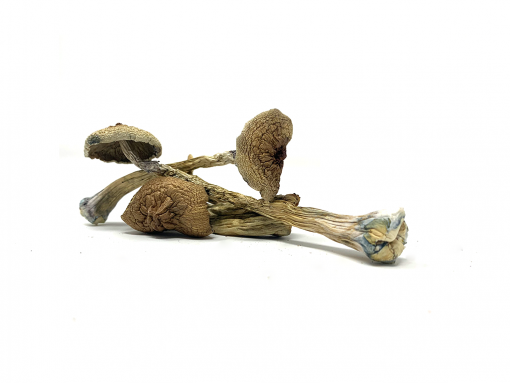
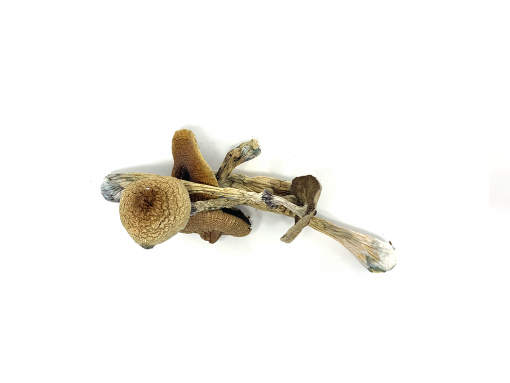
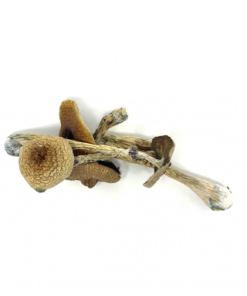
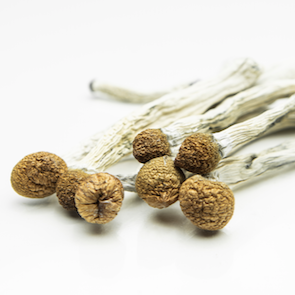
“Transkei Cubensis” is an informal variety-style designation associated with Psilocybe cubensis rather than a separate formally recognized mushroom species.
Psilocybe cubensis belongs to the family Hymenogastraceae. General characteristics associated with the species include a cap supported by a central stem, gills underneath the cap, and dark purplish-brown spores.
Morphological characteristics can vary according to genetics, developmental stage, and environmental conditions. Consequently, informal variety names shouldn’t be interpreted as standardized measurements of potency or chemical composition.
This article doesn’t provide cultivation, dosage, preparation, purchasing, or consumption instructions.
Psilocybin Mushrooms Michigan: Why the Topic Gets Confusing
People researching psilocybin mushrooms Michigan may encounter conflicting statements such as:
“Psilocybin is illegal.”
“Ann Arbor decriminalized mushrooms.”
“Psychedelics are legal in Ann Arbor.”
These statements aren’t interchangeable.
A substance can remain prohibited under federal or state law while a local government changes enforcement priorities concerning certain activities.
That is why understanding the difference between decriminalization and legalization matters.
Psychedelic Mushrooms Michigan: Federal Law Still Matters
Psilocybin remains a Schedule I controlled substance under U.S. federal law.
Consequently, a local policy change doesn’t automatically change federal controlled-substance law.
The U.S. Drug Enforcement Administration’s controlled-substance scheduling information explains the federal scheduling framework.
Legal status can also evolve, so anyone researching current Michigan rules should consult official government information rather than relying solely on commercial websites or old social-media posts.
Shrooms Ann Arbor: What Actually Changed?
The phrases shrooms Ann Arbor and magic mushrooms Ann Arbor became prominent after the city adopted a policy concerning entheogenic plants and fungi.
In September 2020, the Ann Arbor City Council adopted a resolution making investigation and arrest involving certain activities related to entheogenic plants or fungi the city’s lowest law-enforcement priority.
That distinction is extremely important.
Lowest enforcement priority does not mean the same thing as creating a regulated retail marketplace.
Therefore, descriptions such as “legal mushroom shops” can oversimplify the actual policy framework.
Decriminalization vs Legalization
What is Decriminalization
Decriminalization generally reduces or changes criminal enforcement concerning particular conduct.
Legalization
Legalization establishes that previously prohibited conduct is lawful under the applicable legal framework, often accompanied by regulations.
Regulated commercial access
A regulated commercial framework goes further by establishing rules concerning production, licensing, testing, distribution, sales, age restrictions, and oversight.
These concepts shouldn’t be collapsed into one another.
For additional educational explanations of psychedelic terminology and mushroom science, readers can explore Mushroom Education at PsychedelicsAndShrooms.com.
What Is a Psychedelic Dispensary?
Psychedelic dispensary isn’t a universally standardized legal category across the United States.
The word “dispensary” is familiar because many states use it within cannabis regulatory systems.
That doesn’t mean the cannabis dispensary model automatically applies to psilocybin.
Different states have taken different approaches to psychedelics. Some have considered decriminalization, while others have developed limited regulated programs or continued conventional prohibition.
Therefore, a business calling itself a psychedelic dispensary doesn’t by itself establish its regulatory status.
What Is a Psilocybin Dispensary?
The phrase psilocybin dispensary similarly needs context.
A regulated psilocybin-services framework, local decriminalization policy, clinical research program, and ordinary retail store are fundamentally different models.
Consumers shouldn’t assume that a storefront, website, or social-media account using psychedelic terminology has government authorization comparable to a state-licensed pharmacy or cannabis dispensary.
Psilocybin Mushroom Dispensary vs Cannabis Dispensary
Cannabis provides a useful comparison.
Michigan has a state-regulated adult-use cannabis industry with specific licensing requirements.
Psilocybin doesn’t simply fall under those cannabis licenses.
Consequently:
Cannabis dispensary ≠ psilocybin dispensary
and
Local psychedelic decriminalization ≠ statewide commercial legalization.
This distinction can prevent considerable misunderstanding.
Ann Arbor Mushroom Shops: Why Terminology Matters
Searches for Ann Arbor mushroom shops can also refer to perfectly ordinary businesses selling culinary or functional mushrooms.
Examples of legal mushroom categories include:
- Lion’s Mane
- Shiitake
- Oyster mushrooms
- Maitake
- Reishi
- Turkey Tail
Therefore, “mushroom shop” doesn’t necessarily mean psychedelic retailer.
Scientific names and precise ingredient descriptions provide much more information than broad commercial terminology.
Dispensaries That Sell Mushrooms: Which Mushrooms?
Similarly, dispensaries that sell mushrooms is ambiguous.
There are thousands of mushroom-forming fungal species.
A wellness business could sell Lion’s Mane capsules, while a grocery store might sell shiitake and oyster mushrooms. Neither situation implies psilocybin distribution.
When interpreting search results, readers should identify the actual fungal species or ingredient being discussed.
Why This Guide Doesn’t List Psychedelic Mushroom Shops
Queries such as psychedelic mushroom shop near me, shroom shops near me, where can I buy shroom, and where can I buy shroom gummies near me are acquisition-oriented.
This educational guide doesn’t provide sellers, store locations, delivery services, or purchasing directions for psilocybin products.
Instead, readers researching Michigan should distinguish between:
- Federal law
- Michigan state law
- Ann Arbor municipal policy
- Clinical research
- Regulated programs in other jurisdictions
That provides substantially more useful legal context than a seller directory.
What Is Psychedelic Mushroom Extract?
A psychedelic mushroom extract is a broad phrase that can describe preparations in which compounds associated with mushroom material have been separated or concentrated.
Scientifically, an extract isn’t the same thing as an intact mushroom.
An intact fungus contains numerous compounds and biological structures.
Extraction can change the relative concentration of different constituents.
This article discusses extracts only conceptually and doesn’t provide extraction procedures.
What Is Psilocybin Mushroom Extract?
Psilocybin mushroom extract generally implies a preparation containing psilocybin or related compounds originating from fungal material.
However, terminology on commercial packaging isn’t analytical proof.
Determining chemical composition scientifically may involve laboratory techniques such as chromatography and mass spectrometry.
Those methods allow researchers to identify and quantify compounds much more reliably than product names, colors, or subjective experiences.
Extract vs Whole Mushroom
An important scientific distinction exists between a whole fungal fruiting body and an extract.
Whole mushroom
Contains complex biological material and numerous naturally occurring constituents.
Extract
Contains substances separated from the original biological material according to a particular extraction process.
Purified compound
A specific molecule isolated or manufactured to a defined degree of purity.
Pharmaceutical research material
May involve carefully characterized compounds manufactured and tested according to research requirements.
These categories shouldn’t automatically be treated as pharmacologically equivalent.
Psilocybin vs Psilocin
Psilocybin and psilocin are closely related compounds.
After psilocybin enters the body, it is converted substantially into psilocin.
Psilocin interacts with serotonin receptors, particularly 5-HT2A receptors, contributing to psychedelic changes in perception, cognition, emotion, and sensory processing.
Researchers continue investigating these mechanisms in neuroscience and psychiatry.
The National Institute on Drug Abuse overview of psychedelics and dissociative drugs provides U.S. educational information about psilocybin and related substances.
Why Clinical Psilocybin Research Is Different
Modern psilocybin research shouldn’t be confused with commercial mushroom products.
Clinical studies can involve:
- Carefully characterized psilocybin
- Participant screening
- Controlled research protocols
- Professional supervision
- Psychological preparation
- Safety monitoring
- Follow-up assessments
These controls allow researchers to evaluate potential benefits and risks systematically.
Commercial products marketed using psychedelic terminology don’t automatically reproduce these conditions.
Psychedelic Research in the United States
Scientific interest in psilocybin has expanded considerably.
Researchers have investigated potential applications involving several psychiatric conditions while simultaneously studying safety, mechanisms of action, psychological effects, and appropriate clinical frameworks.
Importantly, a promising clinical study doesn’t automatically establish unsupervised psychedelic use as safe or medically effective.
Clinical research and recreational use remain fundamentally different contexts.
Why Local Psychedelic Policies Are Changing
Some U.S. cities and states have reconsidered how psychedelic substances should be addressed through criminal law, public health, research, and regulated services.
Supporters of reform often point toward emerging therapeutic research and concerns about criminalization.
Critics and public-health researchers may emphasize uncertainties involving unsupervised use, commercialization, psychiatric vulnerability, product composition, and the need for stronger clinical evidence.
Understanding both considerations is more informative than treating psychedelic policy as simply “legal” or “illegal.”
Psychedelic Mushroom Bars Near Me: Product Labels Don’t Establish Legality
Commercial searches for psychedelic mushroom bars near me can create another problem.
A product marketed with psychedelic imagery isn’t necessarily a psilocybin product.
Mushroom-branded chocolates and gummies can contain:
- Functional mushroom ingredients
- Botanical substances
- Cannabinoids
- Other psychoactive compounds
- Unclear proprietary mixtures
Consequently, commercial availability doesn’t establish composition, safety, or legal status.
Why Mushroom Product Safety Matters
The FDA has previously investigated illnesses associated with mushroom-branded edible products, demonstrating why consumers shouldn’t infer chemical composition from mushroom imagery.
A package saying “magic,” “mushroom,” or “shroom” isn’t a substitute for verified ingredient information.
Consumers should distinguish:
Marketing terminology → what the package claims
from
Analytical chemistry → what compounds are actually present.
Frequently Asked Questions
What is Transkei Cubensis?
Transkei Cubensis is an informal variety-style name associated with Psilocybe cubensis. It isn’t a separate formally recognized fungal species.
Are psilocybin mushrooms legal in Michigan?
Psilocybin remains controlled under federal law, and local policies such as Ann Arbor’s shouldn’t automatically be interpreted as statewide legalization. Current official state and municipal information should be checked because policies can change.
Did Ann Arbor legalize magic mushrooms?
Ann Arbor adopted a lowest-law-enforcement-priority policy concerning certain entheogenic plants and fungi. That isn’t the same thing as establishing unrestricted statewide legalization or a conventional regulated retail market.
What is a psychedelic dispensary?
It’s an informal term whose legal meaning depends on jurisdiction. It shouldn’t automatically be assumed to describe a government-licensed psilocybin retailer.
Are cannabis dispensaries allowed to sell psilocybin?
Cannabis and psilocybin operate under different legal and regulatory frameworks. A cannabis license shouldn’t automatically be interpreted as authorization to distribute psilocybin.
Where can I legally buy shrooms in Ann Arbor?
This educational guide doesn’t provide sellers or purchasing directions for controlled psychedelic substances. Readers should consult current official Michigan and Ann Arbor government resources for legal information.
What is psychedelic mushroom extract?
It’s a broad term for preparations containing compounds separated or concentrated from mushroom material. It isn’t necessarily equivalent to a whole mushroom or purified pharmaceutical compound.
What is Transkei Cubensis psilocybin mushroom extract?
The phrase generally describes an extract associated with psilocybin-containing fungal material. Product terminology alone, however, doesn’t verify chemical composition.
Conclusion
Understanding psilocybin mushrooms in Michigan, psychedelic mushrooms Michigan, and shrooms Ann Arbor requires careful attention to legal terminology.
Ann Arbor’s local approach shouldn’t be confused with federal legalization, statewide commercial legalization, or the creation of an unrestricted psilocybin dispensary system.
Likewise, terms such as psychedelic mushroom extract and psilocybin mushroom extract describe different forms of material that shouldn’t automatically be treated as equivalent to whole mushrooms or carefully characterized compounds used in clinical research.
For additional USA-focused educational resources covering mushroom taxonomy, fungal biology, and psychedelic science, continue exploring PsychedelicsAndShrooms.com Educational Mushroom Resources.
| Size | Oz, Qp, Hp, Lbs |
|---|
Be the first to review “Transkei Cubensis”
Related products
Mushrooms
Mushrooms
Mushrooms
Microdose Shrooms
Microdose Shrooms
Microdose Shrooms
Mushrooms
Reviews
There are no reviews yet.