mushroom and shrooms
What Is Microdosing? A Beginner’s Guide to Benefits, Research, and Common Questions
Jun
Microdosing has become one of the most discussed topics in the growing field of psychedelic research and wellness. As public interest in mental health, productivity, creativity, and personal development continues to increase, many people are seeking reliable information about microdosing and what current science actually says. Educational platforms such as https://psychedelicsandshrooms.com/ help readers better understand psychedelic research, mushroom science, and the important distinctions between scientific evidence and popular claims.
Although microdosing has gained significant attention through podcasts, documentaries, books, and social media discussions, there is still considerable confusion about what it involves and how researchers are studying it. Understanding the basics of microdosing can help people make informed decisions while encouraging responsible and evidence-based conversations.
Today, microdosing remains an active area of scientific investigation, with researchers continuing to explore its potential effects, limitations, and safety considerations.
What Is Microdosing?
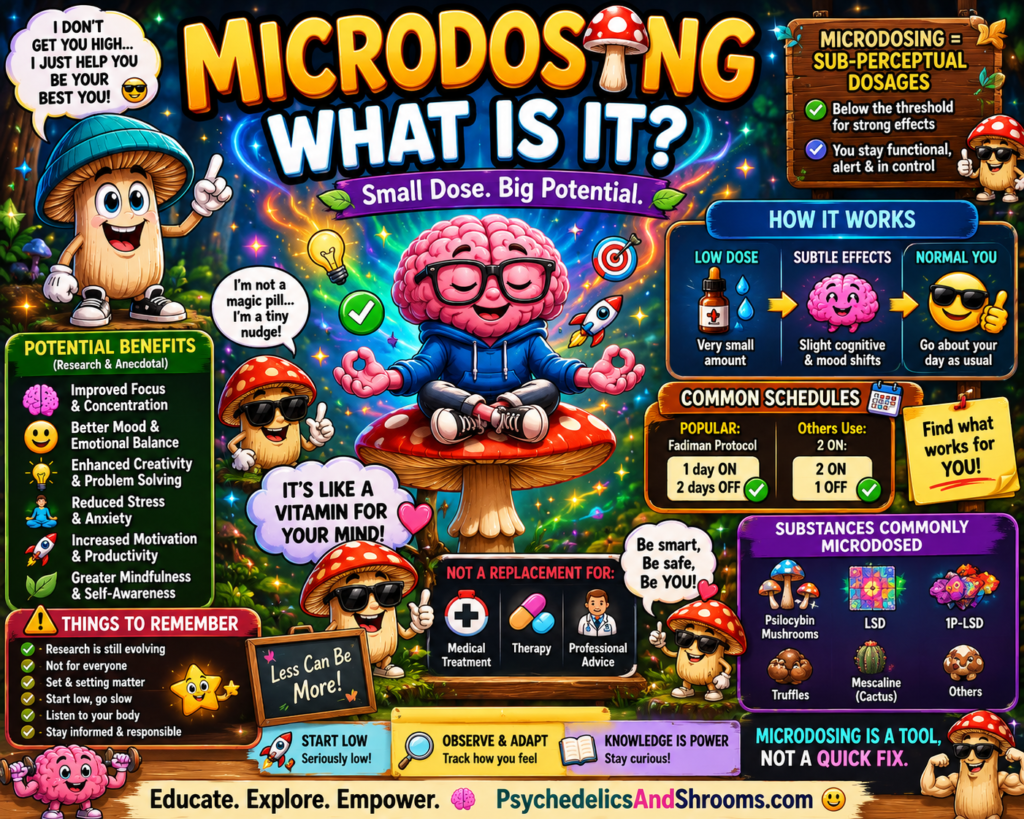
Microdosing refers to the practice of taking very small amounts of a substance that are significantly below the level typically associated with noticeable psychoactive effects. The goal of microdosing is generally not to produce an altered state of consciousness but rather to explore subtle changes that some individuals report experiencing in areas such as mood, focus, creativity, or overall well-being.
In discussions involving psychedelic substances, microdosing often refers to taking amounts that are small enough that daily activities can continue normally. Researchers continue to study how and whether these low doses produce measurable effects.
It is important to understand that scientific research on microdosing is still developing. While some individuals report positive experiences, researchers emphasize that more controlled studies are needed to fully understand potential benefits, risks, and long-term outcomes.
Educational resources available through https://psychedelicsandshrooms.com/guides/ help readers better understand the science behind psychedelic research while promoting responsible education.
Why Has Microdosing Become So Popular?
Interest in microdosing has increased dramatically over the past decade. Several factors have contributed to its growing popularity, including increased awareness of mental health issues, renewed interest in psychedelic science, and widespread media coverage of emerging research.
Many individuals have shared personal stories about microdosing through online communities, podcasts, and social media platforms. These anecdotal reports often describe experiences related to productivity, creativity, mood, and personal growth.
At the same time, researchers have become increasingly interested in understanding whether these reported experiences can be observed under controlled scientific conditions. This growing body of research has helped bring microdosing into mainstream discussions about wellness and mental health.
However, experts continue to caution that personal testimonials should not be confused with scientific evidence. Rigorous research remains essential for understanding the true effects of microdosing.
What Does Current Research Say About Microdosing?
Scientific research on microdosing is still evolving. Some studies have reported improvements in self-reported well-being, mood, and psychological functioning among participants who practice microdosing. However, researchers have also noted that expectation effects and placebo responses may influence reported outcomes.
Several clinical studies have attempted to examine whether microdosing produces measurable changes in cognitive performance, emotional well-being, and mental health. Results have been mixed, and researchers continue investigating the mechanisms that may be involved.
One challenge facing scientists is that microdosing practices vary widely among individuals, making it difficult to compare results across studies. Differences in substances, frequency, dosage, and participant expectations can all influence outcomes.
As research progresses, scientists hope to gain a clearer understanding of both the potential opportunities and limitations associated with microdosing.
For current research updates, readers can explore:
Potential Areas Being Studied
Researchers investigating microdosing have explored several areas of interest. These include emotional well-being, creativity, cognitive performance, focus, stress management, and overall quality of life.
Some studies suggest participants may report improvements in mood and self-perceived productivity. Other studies have found limited measurable effects beyond placebo influences.
Scientists remain cautious when interpreting results because psychological expectations can significantly affect subjective experiences. Understanding the relationship between biological effects and placebo responses remains an important area of ongoing research.
Because the evidence is still developing, researchers emphasize the need for larger and more rigorous studies before drawing definitive conclusions.
Microdosing and Mental Health Research
Mental health remains one of the most important areas of interest in microdosing research. Scientists are exploring whether low-dose psychedelic approaches may eventually contribute to a better understanding of mental health treatment and psychological well-being.
However, it is important to note that microdosing is not currently recognized as a proven treatment for mental health conditions. Individuals experiencing mental health concerns should seek guidance from qualified healthcare professionals rather than relying solely on information found online.
The growing interest in psychedelic science has encouraged broader conversations about mental health, neuroscience, and innovative therapeutic approaches. These discussions continue to drive new research initiatives around the world.
Risks and Safety Considerations
Like any area involving psychoactive substances, microdosing raises important questions about safety, legality, and long-term effects.
Researchers continue studying potential risks, including unknown long-term consequences, interactions with medications, individual differences in response, and psychological effects. Because research remains ongoing, many questions have yet to be fully answered.
Legal considerations also vary depending on location and the substances involved. Individuals should understand local laws and regulations before engaging with any substance-related topics.
Educational resources such as Psychedelics and Shrooms emphasize the importance of responsible learning, scientific literacy, and informed decision-making when discussing psychedelics and emerging research areas.
Microdosing vs Full Psychedelic Experiences
One common misconception is that microdosing produces the same effects as larger psychedelic experiences. In reality, microdosing is intended to involve amounts that are significantly lower than those typically associated with noticeable alterations in perception or consciousness.
Researchers often distinguish between microdosing and higher-dose psychedelic experiences because the goals, effects, and scientific questions involved can differ considerably.
Understanding this distinction is important for anyone seeking accurate information about psychedelic research and wellness discussions.
The Future of Microdosing Research
The future of microdosing research appears promising as universities, medical institutions, and scientific organizations continue investigating the topic. Advances in neuroscience, psychology, and mental health research may help answer important questions about how low-dose psychedelic approaches affect the brain and behavior.
Public interest is also driving increased investment in psychedelic science, leading to new studies and collaborative research efforts. As more evidence becomes available, experts hope to develop a clearer understanding of the potential role microdosing may play in future scientific and therapeutic discussions.
For now, researchers continue emphasizing the importance of evidence-based conclusions rather than relying solely on anecdotal reports.
Final Thoughts on Microdosing
Microdosing has emerged as one of the most talked-about topics in modern psychedelic research. While many individuals report positive experiences, scientific understanding remains a work in progress. Ongoing studies are helping researchers better understand the potential benefits, limitations, and safety considerations associated with this practice.
By focusing on credible research and responsible education, readers can stay informed about developments in psychedelic science while avoiding misinformation and exaggerated claims.
For more educational articles about psychedelics, mushroom science, wellness research, and mental health topics, visit https://psychedelicsandshrooms.com/.
FAQs
What is microdosing?
Microdosing refers to taking very small amounts of a substance below the level typically associated with noticeable psychoactive effects. Learn more about psychedelic education at https://psychedelicsandshrooms.com/.
Why do people microdose?
Some individuals report exploring microdosing for reasons related to creativity, focus, mood, and personal development, although scientific research is still ongoing.
Is microdosing scientifically proven?
Research is continuing, and scientists have not yet reached definitive conclusions regarding many of the reported benefits associated with microdosing.
Is microdosing legal?
Legal status varies depending on the substance involved and local laws. Individuals should review regulations in their specific jurisdiction.
Does microdosing produce hallucinations?
Microdosing is generally intended to involve amounts below those typically associated with noticeable psychedelic effects or hallucinations.
Where can I learn more about microdosing and psychedelic science?
You can explore educational resources, research updates, and psychedelic guides at https://psychedelicsandshrooms.com/ and https://psychedelicsandshrooms.com/guides/.
