mushroom and shrooms
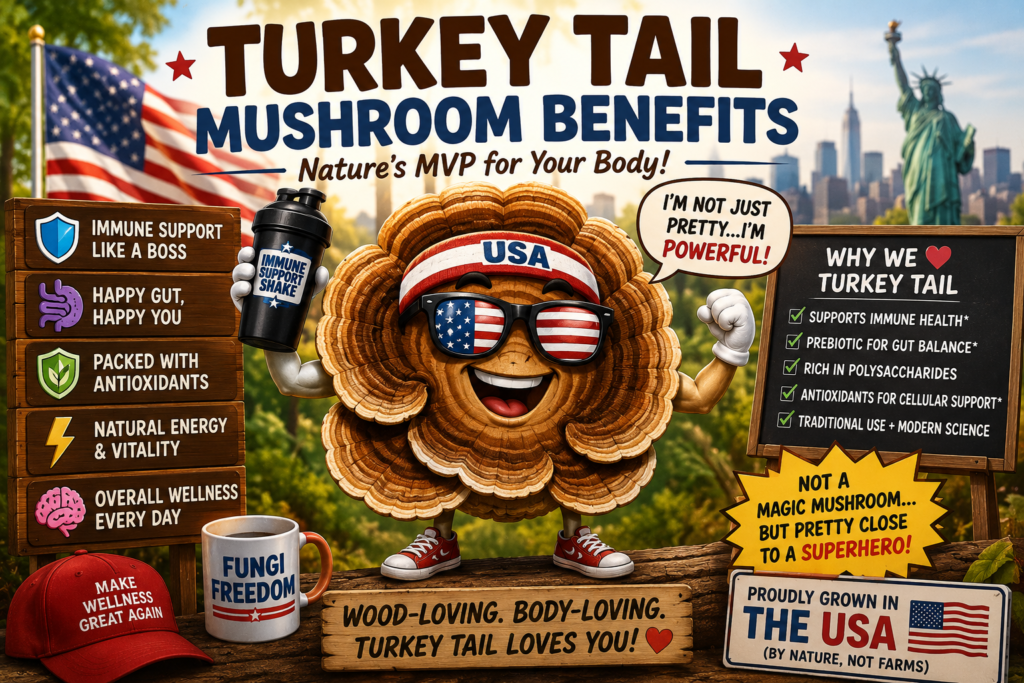
Turkey Tail Mushroom Benefits: Why This Functional Mushroom Continues to Gain Attention
Jun
Turkey Tail mushrooms have become one of the most researched functional fungi in the world. Known for their colorful appearance and long history of traditional use, these mushrooms continue to attract attention from scientists, nutrition experts, and wellness enthusiasts. As interest in natural wellness and functional foods grows throughout the United States, many people are seeking reliable information about Turkey Tail mushroom benefits and what current research actually says.
Scientifically known as Trametes versicolor, Turkey Tail grows naturally on decaying wood throughout North America, Europe, and Asia. Its name comes from the distinctive bands of color that resemble the feathers of a wild turkey’s tail. Unlike psychedelic mushrooms, Turkey Tail does not contain psychoactive compounds and is valued primarily for its nutritional profile and unique bioactive compounds.
Educational resources available at https://psychedelicsandshrooms.com/ help readers better understand functional mushrooms, mushroom science, and the differences between medicinal, edible, and psychedelic fungi.
What Makes This Mushroom Unique?
One reason researchers remain interested in Turkey Tail is its rich concentration of naturally occurring polysaccharides, beta-glucans, antioxidants, and other biologically active compounds. These components have made the mushroom a major subject of scientific investigation for several decades.
In nature, Turkey Tail plays an important ecological role by helping break down dead wood and recycle nutrients within forest ecosystems. This ability reflects the remarkable biological complexity of fungi and their importance to environmental health.
Its combination of traditional use and modern research has helped establish Turkey Tail as one of the most recognized functional mushrooms available today.
Supports Ongoing Immune System Research
Much of the scientific attention surrounding Turkey Tail focuses on immune-related research. Scientists have spent years studying compounds such as polysaccharide-K (PSK) and polysaccharopeptide (PSP), which naturally occur within the mushroom.
Researchers continue exploring how these compounds interact with immune-related processes and biological pathways. While studies remain ongoing, this area of investigation has made Turkey Tail one of the most extensively studied fungi in modern mushroom science.
Experts emphasize that overall immune health depends on numerous factors, including proper nutrition, physical activity, adequate sleep, stress management, and healthy lifestyle habits.
No single food or supplement can replace these foundational aspects of wellness.
Rich in Antioxidants
Turkey Tail contains naturally occurring antioxidants that help protect cells from oxidative stress. Oxidative stress occurs when unstable molecules known as free radicals accumulate faster than the body can neutralize them.
Antioxidants play an important role in maintaining cellular health by helping reduce the effects of these molecules. Fruits, vegetables, herbs, and mushrooms all contribute valuable antioxidant compounds to healthy dietary patterns.
The antioxidant content found in Turkey Tail continues to attract scientific interest as researchers study the relationship between nutrition, cellular health, and overall wellness.
May Support a Healthy Gut Microbiome
Researchers have increasingly focused on the relationship between gut health and overall well-being. Turkey Tail contains prebiotic compounds that may help support beneficial microorganisms within the digestive system.
A healthy gut microbiome contributes to numerous biological functions, including digestion, nutrient absorption, and communication between the gut and the immune system.
Although scientists continue investigating these relationships, the connection between fungi, dietary fiber, and gut health has become an exciting area of research.
As understanding of the microbiome expands, functional mushrooms remain important subjects within nutritional science.
Provides Valuable Nutritional Compounds
Turkey Tail contains a variety of compounds that contribute to its reputation as a functional mushroom. These include:
- Polysaccharides
- Beta-glucans
- Antioxidants
- Dietary fiber
- Phytonutrients
- Naturally occurring minerals
Unlike common culinary mushrooms, Turkey Tail has a tough texture and is rarely eaten whole. Instead, people often consume it in teas, extracts, powders, or supplement formulations.
Researchers continue examining how these compounds interact with biological systems and contribute to nutritional value.
A Long History of Traditional Use
Historical records show that Turkey Tail has been used for centuries in traditional wellness practices throughout Asia. People often prepared the mushroom as teas, decoctions, and herbal preparations.
Although modern scientific methods differ from traditional approaches, researchers frequently explore historical knowledge when investigating functional fungi.
The combination of traditional use and contemporary science has helped increase interest in Turkey Tail among consumers seeking natural wellness products.
This blend of history and research continues to make Turkey Tail one of the most respected mushrooms within the functional fungi category.
How It Compares to Other Functional Mushrooms
Turkey Tail is often discussed alongside other popular functional mushrooms such as Lion’s Mane, Reishi, Cordyceps, Chaga, and Tremella.
Each species contains different compounds and attracts scientific attention for different reasons. Lion’s Mane is frequently associated with cognitive health research, while Reishi often appears in discussions involving traditional wellness practices.
Turkey Tail stands out because of the extensive research conducted on its polysaccharides and immune-related compounds.
Understanding these distinctions helps consumers appreciate the diversity of fungi and their unique characteristics.
Readers interested in learning more about functional mushrooms can explore educational guides at https://psychedelicsandshrooms.com/guides/.
Why Interest Continues to Grow
Public interest in mushrooms has increased significantly during the past decade. Documentaries, books, podcasts, scientific publications, and social media have all contributed to greater awareness of fungi and their potential applications.
As consumers become more interested in nutrition and natural wellness, products containing Turkey Tail have become increasingly common in supplement stores and online marketplaces.
At the same time, ongoing research continues to generate new insights into fungal biology and mushroom-derived compounds.
This combination of consumer curiosity and scientific exploration has helped fuel the mushroom wellness movement.
Safety and Responsible Use
Turkey Tail has a long history of traditional use and is generally recognized as a non-psychoactive mushroom. However, individuals should consult healthcare professionals before introducing new supplements into their routines, particularly if they have underlying medical conditions or take prescription medications.
Choosing products from reputable manufacturers can also help ensure quality and transparency.
Responsible education encourages balanced expectations and evidence-based decision-making when exploring functional mushroom products.
Final Thoughts
Turkey Tail remains one of the most fascinating and extensively researched functional mushrooms available today. Its unique polysaccharides, antioxidant content, historical significance, and growing body of scientific research continue to attract attention from researchers and wellness enthusiasts alike.
Although studies are ongoing, the mushroom’s nutritional profile and biological compounds make it an important subject within the broader field of mushroom science. As interest in fungi continues expanding, Turkey Tail will likely remain at the forefront of functional mushroom research.
For more educational articles about mushrooms, mycology, wellness, and fungal science, visit https://psychedelicsandshrooms.com/.
FAQs
What is Turkey Tail mushroom?
Turkey Tail is a colorful wood-growing fungus scientifically known as Trametes versicolor. It is widely studied because of its unique polysaccharides and antioxidant compounds.
Why is Turkey Tail popular?
Researchers continue investigating its nutritional compounds, immune-related properties, antioxidant activity, and traditional wellness applications.
Is Turkey Tail a psychedelic mushroom?
No. Turkey Tail does not contain psychoactive compounds and is considered a non-psychoactive functional mushroom.
Can Turkey Tail support gut health?
Scientists are studying the mushroom’s prebiotic compounds and their relationship to beneficial microorganisms within the digestive system.
How is Turkey Tail commonly consumed?
People often use Turkey Tail as teas, powders, extracts, capsules, and other supplement formulations.
Where can I learn more about functional mushrooms?
You can explore mushroom education resources and research-based guides at https://psychedelicsandshrooms.com/ and https://psychedelicsandshrooms.com/guides/.
