
mushroom and shrooms
Psilocybin Therapy: Understanding the Science Behind an Emerging Mental Health Treatment
Jul
Psilocybin therapy has become one of the most researched areas in modern mental health science. Over the last decade, universities, hospitals, and medical research institutions have expanded clinical studies investigating whether psilocybin-assisted therapy may help certain individuals living with specific mental health conditions. While research continues to evolve, early findings have encouraged additional scientific investigation under carefully controlled conditions.
Unlike recreational use, psilocybin therapy takes place in regulated clinical environments under the supervision of trained healthcare professionals. Treatment involves preparation sessions, monitored therapeutic experiences, and follow-up integration sessions that help participants process their experiences.
As public interest continues to grow across the United States, many people are seeking reliable, science-based information about psilocybin therapy. Educational resources available at https://psychedelicsandshrooms.com/ provide readers with evidence-based discussions about psychedelic science, mushroom research, neuroscience, and mental wellness while distinguishing between ongoing research and established medical practice.
What Is Psilocybin Therapy?
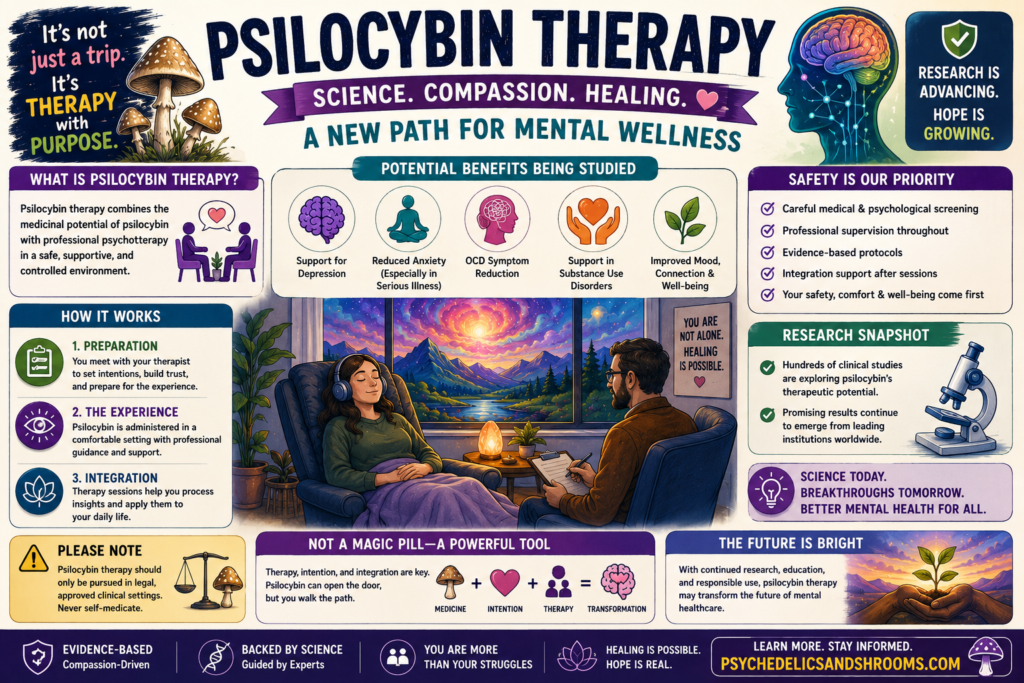
Psilocybin therapy is a structured therapeutic approach that combines psychotherapy with the supervised administration of psilocybin in approved research settings or other legally authorized clinical programs where available.
Psilocybin is a naturally occurring psychedelic compound found in certain mushroom species. Researchers are studying how it interacts with the brain when combined with professional psychological support.
Treatment generally includes three phases:
- Preparation before treatment
- A professionally supervised therapeutic session
- Integration sessions afterward
This structured process distinguishes clinical therapy from unsupervised use.
How Does Psilocybin Affect the Brain?
Scientists believe psilocybin primarily affects serotonin receptors, especially the 5-HT2A receptor. This interaction appears to temporarily change communication between different brain regions involved in emotion, perception, learning, and self-awareness.
Brain imaging studies suggest psilocybin may temporarily influence large-scale brain networks associated with mood and cognitive flexibility.
Researchers continue investigating these mechanisms to better understand how they may contribute to therapeutic outcomes.
Conditions Being Studied
Clinical research continues exploring psilocybin-assisted therapy for several mental health conditions.
Treatment-Resistant Depression
Some clinical trials have reported encouraging results for individuals with treatment-resistant depression when therapy is delivered under carefully supervised conditions.
Researchers continue studying long-term effectiveness, optimal treatment protocols, and patient selection.
Anxiety Associated With Serious Illness
Several studies have examined psilocybin-assisted therapy for anxiety experienced by individuals facing serious medical conditions.
Scientists continue evaluating psychological outcomes while maintaining rigorous safety standards.
Obsessive-Compulsive Disorder (OCD)
Researchers are exploring whether psilocybin-assisted therapy may have potential applications in future OCD treatment research.
Additional clinical studies are necessary before conclusions can be made.
Substance Use Disorders
Researchers are also studying psilocybin-assisted psychotherapy as a potential treatment approach for tobacco dependence, alcohol use disorder, and other substance use disorders.
These investigations remain ongoing and should not be interpreted as established medical treatments.
Why Therapy Is an Essential Part of Treatment
One important aspect of psilocybin therapy is that psychotherapy remains central to the process.
Therapists help participants:
- Prepare emotionally
- Establish treatment goals
- Navigate the therapeutic experience
- Process insights afterward
- Apply lessons to daily life
Researchers believe this therapeutic support contributes significantly to the overall treatment process.
Safety and Clinical Supervision
Clinical research emphasizes participant safety throughout every stage of treatment.
Before enrollment, participants typically undergo comprehensive medical and psychological evaluations.
Healthcare teams may assess:
- Medical history
- Current medications
- Mental health history
- Family psychiatric history
- Physical health
- Psychological readiness
Treatment sessions occur under continuous professional supervision in carefully controlled environments.
Researchers consistently discourage self-treatment or unsupervised use.
Current Scientific Research
Interest in psilocybin therapy has expanded rapidly among leading research institutions worldwide.
Scientists continue studying:
- Brain imaging
- Neuroplasticity
- Emotional processing
- Long-term outcomes
- Optimal treatment protocols
- Safety monitoring
- Patient selection
Although early findings have generated optimism, psilocybin therapy remains under active investigation in many jurisdictions.
Additional large-scale clinical trials are needed to better understand effectiveness, safety, and long-term outcomes.
Legal Status
The legal status of psilocybin therapy varies depending on the country, state, and local regulations.
Some programs operate only within approved clinical trials, while certain jurisdictions have established limited legal therapeutic frameworks.
Individuals interested in treatment should consult qualified healthcare professionals and follow applicable laws where they live.
Educational information should never be interpreted as legal or medical advice.
The Future of Psilocybin Therapy
Researchers expect psilocybin science to remain one of the fastest-growing fields in psychiatry and neuroscience.
Future research will likely focus on:
- Long-term clinical outcomes
- Treatment optimization
- Personalized medicine
- Brain network changes
- Safety improvements
- Clinical guidelines
- Expanded therapeutic applications
As scientific understanding grows, researchers hope to determine which patients may benefit most from carefully supervised treatment while maintaining rigorous safety standards.
Readers interested in psychedelic science and mushroom research can find additional educational resources at https://psychedelicsandshrooms.com/guides/.
Responsible Education Matters
Public interest in psychedelic medicine has grown rapidly, making accurate education increasingly important.
Reliable information helps distinguish evidence-based clinical research from misinformation circulating online.
Understanding how clinical studies are conducted allows readers to better appreciate both the potential opportunities and the current limitations of psychedelic-assisted therapy.
Scientific progress depends upon careful research, transparent reporting, and ongoing evaluation.
Final Thoughts
Psilocybin therapy represents one of the most promising and carefully studied areas of modern mental health research. Early clinical findings have encouraged additional investigation into its potential role for certain mental health conditions when delivered within professionally supervised therapeutic settings.
Although research continues to advance, psilocybin-assisted therapy remains a specialized treatment that should only occur within approved clinical environments where legally authorized. Ongoing research will continue shaping our understanding of its safety, effectiveness, and future role in mental healthcare.
For more educational articles about psychedelic science, mushrooms, neuroscience, and wellness research, visit https://psychedelicsandshrooms.com/.
FAQs
What is psilocybin therapy?
Psilocybin therapy combines psychotherapy with supervised administration of psilocybin in approved clinical research or legally authorized therapeutic settings.
How is psilocybin therapy different from recreational use?
Clinical therapy includes professional screening, preparation, monitored treatment sessions, and integration therapy, making it fundamentally different from unsupervised use.
What conditions are researchers studying?
Current research includes treatment-resistant depression, anxiety associated with serious illness, obsessive-compulsive disorder, and certain substance use disorders.
Is psilocybin therapy considered safe?
Clinical studies prioritize participant safety through careful medical screening, professional supervision, and controlled therapeutic environments.
Is psilocybin therapy legal everywhere?
No. Laws vary by country, state, and jurisdiction, and availability may be limited to clinical research or specific regulated programs.
Where can I learn more about psychedelic science?
Visit https://psychedelicsandshrooms.com/ and https://psychedelicsandshrooms.com/guides/ for educational articles about psychedelic research, mushroom science, and neuroscience.
