mushroom and shrooms
Penis Envy Mushroom Effect: Understanding the Research, Characteristics, and Safety
Jul
The Penis Envy mushroom is one of the most recognized varieties of Psilocybe cubensis. It has attracted attention among mycologists, researchers, and those interested in psychedelic science because of its distinctive appearance and reports that it may contain relatively higher concentrations of naturally occurring psilocybin and psilocin than many other Psilocybe cubensis varieties. Scientists continue to study these compounds to better understand their effects on the brain and their potential therapeutic applications in carefully controlled clinical settings.
As public interest in psychedelic research continues to grow across the United States, many people search for information about the Penis Envy mushroom effect. Reliable education is important because online discussions often mix scientific findings with anecdotal claims. Understanding what current evidence shows—and what remains uncertain—helps readers make informed decisions based on research rather than speculation.
Educational resources at https://psychedelicsandshrooms.com/ provide evidence-based information about mushrooms, mycology, neuroscience, and psychedelic research while clearly distinguishing scientific evidence from myths.
What Is the Penis Envy Mushroom?
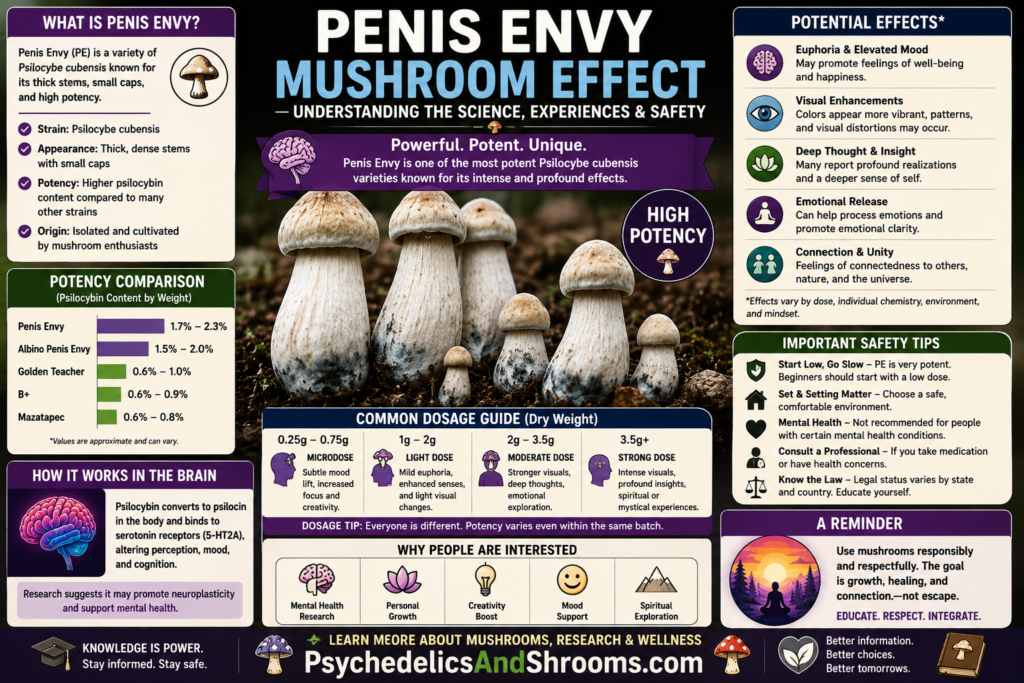
Penis Envy is a well-known variety of Psilocybe cubensis, a species of mushroom that naturally contains the psychedelic compounds psilocybin and psilocin.
This variety is recognized by several distinctive physical features, including:
- Thick stems
- Dense fruiting bodies
- Smaller caps
- A unique appearance that inspired its common name
Like other Psilocybe cubensis varieties, Penis Envy is not an edible culinary mushroom and should not be confused with functional mushrooms such as Lion’s Mane, Reishi, or Shiitake.
Why Is It Well Known?
Researchers and mushroom enthusiasts have long discussed Penis Envy because laboratory analyses and published studies suggest that different Psilocybe varieties can vary in their concentrations of naturally occurring psychedelic compounds.
The exact chemical profile can differ depending on genetics, cultivation conditions, growing environment, storage, and analytical methods.
Scientists continue investigating these differences to better understand mushroom chemistry.
How Psilocybin Affects the Brain
Psilocybin is converted by the body into psilocin, which primarily interacts with serotonin receptors, especially the 5-HT2A receptor.
Researchers believe this interaction temporarily influences communication between brain regions involved in:
- Emotion
- Perception
- Learning
- Memory
- Self-awareness
- Cognitive flexibility
Modern brain imaging studies continue exploring how these temporary changes may contribute to therapeutic outcomes in regulated clinical research.
Reported Effects Being Studied
Researchers continue investigating the psychological and neurological effects of psilocybin under carefully supervised conditions.
Clinical research has examined changes in areas such as:
- Perception
- Emotional processing
- Sense of connectedness
- Cognitive flexibility
- Self-reflection
Individual experiences vary considerably depending on numerous factors, and current scientific understanding continues to evolve.
Current Clinical Research
Universities and medical research centers are studying psilocybin-assisted therapy for several mental health conditions, including:
- Treatment-resistant depression
- Anxiety associated with serious illness
- Post-traumatic stress disorder (PTSD)
- Certain substance use disorders
These studies occur in carefully regulated environments with medical screening, professional supervision, and psychological support.
Researchers emphasize that clinical therapy is fundamentally different from unsupervised use.
Safety Considerations
Safety remains a primary focus of psychedelic research.
Clinical studies typically include:
- Comprehensive medical evaluations
- Psychological assessments
- Medication reviews
- Continuous professional monitoring
- Post-session integration support
Because individual responses vary, researchers strongly discourage self-treatment and emphasize the importance of evidence-based medical care.
Anyone experiencing symptoms of depression, anxiety, or other mental health conditions should consult a qualified healthcare professional.
Legal Status
The legal status of psilocybin-containing mushrooms varies depending on the country, state, and local jurisdiction.
Some regions allow limited research or regulated therapeutic programs, while others continue to prohibit possession or use outside authorized settings.
Readers should consult current official government sources for the latest legal information.
The Importance of Accurate Education
Growing interest in mushrooms has increased demand for trustworthy educational resources.
Understanding the differences between:
- Edible mushrooms
- Functional mushrooms
- Medicinal fungi
- Psilocybin-containing mushrooms
helps reduce misinformation while supporting evidence-based discussions.
Readers interested in mushroom science and psychedelic research can explore additional educational guides at https://psychedelicsandshrooms.com/guides/.
Why Research Continues
Scientists remain interested in psilocybin because early clinical studies suggest it may have therapeutic potential for certain conditions when used under carefully controlled medical supervision.
Future research aims to better understand:
- Long-term outcomes
- Brain mechanisms
- Patient selection
- Safety
- Clinical treatment protocols
- Neuroplasticity
As evidence grows, researchers hope to improve the understanding of how psychedelic compounds interact with the brain while maintaining rigorous safety standards.
Final Thoughts
The Penis Envy mushroom effect remains an important topic in modern psychedelic research because of the variety’s distinctive characteristics and naturally occurring psilocybin content. Although scientific interest continues to grow, much remains under investigation. Reliable education, peer-reviewed research, and professional medical guidance are essential for understanding this evolving field.
For more educational articles about mushrooms, mycology, neuroscience, and psychedelic science, visit https://psychedelicsandshrooms.com/.
FAQs
What is the Penis Envy mushroom?
Penis Envy is a well-known variety of Psilocybe cubensis recognized for its distinctive appearance and naturally occurring psilocybin.
Why is Penis Envy widely discussed?
Researchers and enthusiasts often discuss it because studies suggest different Psilocybe cubensis varieties may differ in their concentrations of naturally occurring compounds.
How does psilocybin affect the brain?
Psilocybin is converted into psilocin, which primarily interacts with serotonin receptors involved in mood, perception, and cognition.
Is research on psilocybin continuing?
Yes. Universities and medical institutions continue conducting regulated clinical studies involving several mental health conditions.
Are Penis Envy mushrooms the same as functional mushrooms?
No. Functional mushrooms such as Lion’s Mane and Reishi are non-psychoactive, whereas Penis Envy belongs to a psilocybin-containing mushroom species.
Where can I learn more about mushroom science?
Visit https://psychedelicsandshrooms.com/ and https://psychedelicsandshrooms.com/guides/ for educational articles about mushrooms, mycology, and current scientific research.
