mushroom and shrooms
Ganoderma Mushroom Benefits: A Complete Guide to Nutrition, Research, and Wellness
Jul
The Ganoderma mushroom, commonly known as Reishi, has been valued for centuries in traditional wellness practices and continues to attract attention in modern scientific research. Today, many people search for Ganoderma mushroom benefits because of growing interest in functional mushrooms, natural nutrition, and healthy lifestyle choices. Researchers continue studying Ganoderma species for their naturally occurring compounds and their potential role in supporting overall wellness.
Unlike culinary mushrooms that are primarily enjoyed as food, Ganoderma mushrooms are more commonly consumed as teas, powders, capsules, tinctures, and standardized extracts. Although research continues to expand, experts recommend viewing Ganoderma as one component of a balanced lifestyle rather than a replacement for medical care or prescribed treatments.
Educational resources available at https://psychedelicsandshrooms.com/ help readers understand mushroom science, fungal biology, nutrition, and the differences between edible, functional, medicinal, and psychedelic mushrooms through evidence-based information.
What Is Ganoderma?
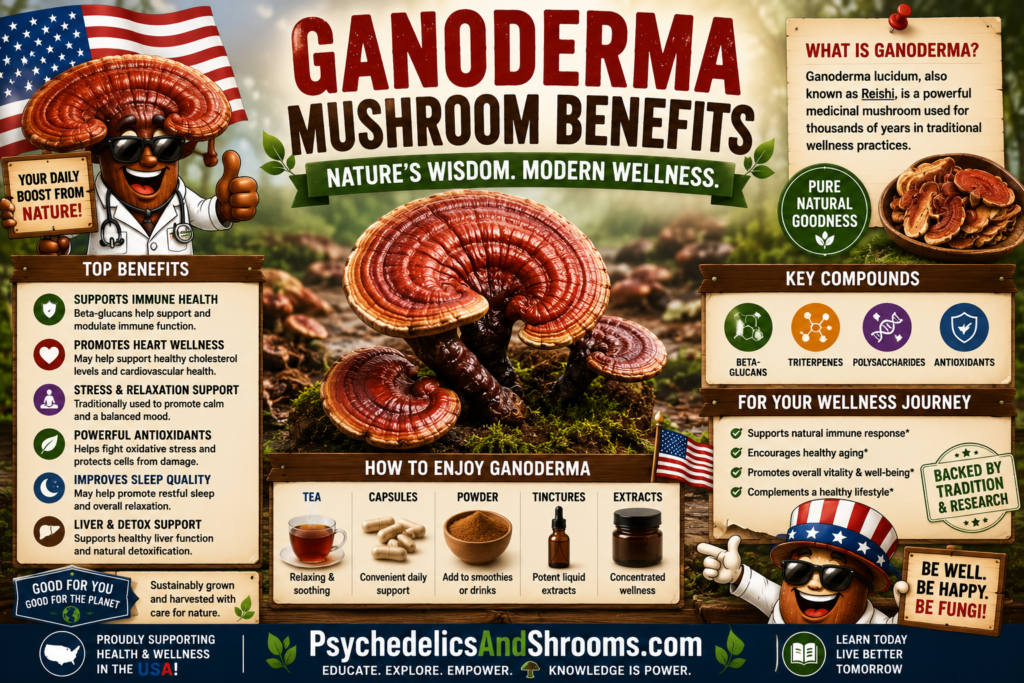
Ganoderma is a genus of fungi that includes several species, with Ganoderma lucidum being one of the best known. It produces a distinctive glossy, reddish-brown fruiting body and naturally grows on hardwood trees in many regions of the world.
Because of its tough texture, Ganoderma is rarely eaten fresh. Instead, it is commonly prepared as:
- Herbal tea
- Powder
- Capsules
- Liquid extract
- Tincture
These products allow consumers to incorporate Ganoderma into their wellness routines.
Nutritional Compounds Found in Ganoderma
Researchers have identified several naturally occurring compounds in Ganoderma mushrooms, including:
- Beta-glucans
- Polysaccharides
- Triterpenes
- Peptides
- Sterols
- Antioxidants
Scientists continue investigating these compounds to better understand their biological activity and nutritional significance.
Potential Ganoderma Mushroom Benefits
Current research is exploring several areas related to Ganoderma.
Rich in Antioxidants
Ganoderma contains naturally occurring antioxidant compounds that help protect cells from oxidative stress during normal metabolism.
Supports Immune System Research
Beta-glucans found in Ganoderma continue to be studied for their interaction with components of the immune system. Research is ongoing, and scientists are working to better understand these mechanisms.
Supports Healthy Aging Research
Researchers are investigating whether the naturally occurring compounds in Ganoderma may contribute to healthy aging when combined with balanced nutrition and healthy lifestyle habits.
May Complement Wellness Routines
Many people choose Ganoderma products as part of an overall wellness plan that includes nutritious foods, physical activity, adequate sleep, and stress management.
Traditional Uses
Ganoderma has a long history of traditional use in several cultures.
Historically, it has been prepared as teas and herbal preparations for general wellness. Modern scientific research seeks to evaluate these traditional uses using contemporary research methods.
Forms of Ganoderma Supplements
Consumers can find Ganoderma in several forms:
- Capsules
- Powders
- Teas
- Liquid extracts
- Tinctures
- Functional beverage blends
Choosing the right format depends on individual preferences and advice from a qualified healthcare professional.
Choosing a Quality Ganoderma Product
When evaluating supplements, look for:
- Clearly identified Ganoderma species
- Transparent ingredient labels
- Standardized extracts when appropriate
- Third-party testing if available
- Good Manufacturing Practices (GMP)
- Reputable manufacturers
Reading labels carefully helps consumers compare products and make informed decisions.
Safety Considerations
Although Ganoderma products are widely available, they may not be appropriate for everyone.
Individuals who are pregnant, breastfeeding, have mushroom allergies, take prescription medications, or have underlying medical conditions should consult a qualified healthcare professional before using dietary supplements.
Always follow the manufacturer’s serving recommendations.
Ganoderma vs. Other Functional Mushrooms
Ganoderma is one of several functional mushrooms commonly studied in nutrition research.
Other popular species include:
- Lion’s Mane
- Turkey Tail
- Chaga
- Cordyceps
- Shiitake
- Maitake
Each mushroom contains its own unique combination of naturally occurring compounds and continues to be studied independently.
Readers interested in learning more about mushroom science and functional fungi can explore additional educational resources at https://psychedelicsandshrooms.com/guides/.
Why Evidence-Based Education Matters
As interest in medicinal and functional mushrooms continues to grow, reliable information becomes increasingly valuable.
Understanding current scientific evidence helps consumers distinguish research-supported information from marketing claims while making informed decisions about mushroom products.
Final Thoughts
The Ganoderma mushroom benefits that attract the greatest scientific interest relate to its naturally occurring beta-glucans, polysaccharides, triterpenes, and antioxidant compounds. While research continues to evolve, Ganoderma remains one of the world’s most recognized functional mushrooms and an important subject in nutrition and wellness research.
For more educational articles about mushrooms, mushroom nutrition, functional fungi, and mushroom science, visit https://psychedelicsandshrooms.com/.
FAQs
What is Ganoderma?
Ganoderma is a genus of fungi, with Ganoderma lucidum (Reishi) being one of the best-known medicinal mushroom species.
What compounds are found in Ganoderma?
Ganoderma naturally contains beta-glucans, polysaccharides, triterpenes, antioxidants, sterols, and peptides.
How is Ganoderma commonly consumed?
It is commonly available as tea, capsules, powders, tinctures, and liquid extracts.
Is Ganoderma the same as Reishi?
Yes. Ganoderma lucidum is commonly referred to as Reishi.
How do I choose a quality Ganoderma supplement?
Look for transparent labeling, clearly identified species, reputable manufacturers, and third-party testing when available.
Where can I learn more about mushroom science?
Visit https://psychedelicsandshrooms.com/ and https://psychedelicsandshrooms.com/guides/ for educational mushroom resources.
