
mushroom and shrooms
Lion’s Mane Coffee: A Complete Guide to Benefits, Ingredients, and Brewing
Jul
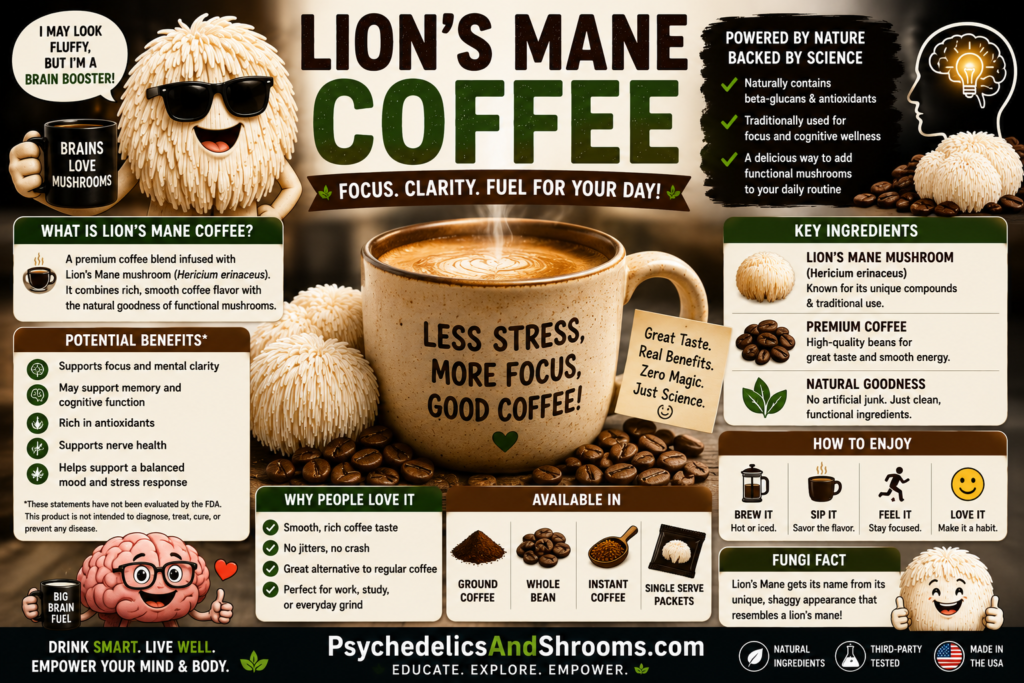
Lions Mane coffee has become one of the fastest-growing functional beverages among coffee enthusiasts and wellness-conscious consumers. By combining premium coffee with Lion’s Mane mushroom (Hericium erinaceus), these blends offer a unique flavor profile while introducing naturally occurring compounds found in one of the world’s most researched functional mushrooms.
Interest in Lion’s Mane coffee continues to increase across the United States as consumers seek new beverage options that fit into healthy lifestyles. Although research into Lion’s Mane is ongoing, experts recommend viewing mushroom coffee as part of a balanced diet rather than a replacement for professional medical care or a healthy lifestyle.
Educational resources available at https://psychedelicsandshrooms.com/ help readers understand mushroom biology, nutrition, functional fungi, and the differences between edible, medicinal, functional, and psychedelic mushrooms through evidence-based information.
What Is Lion’s Mane Coffee?
Lion’s Mane coffee is a beverage made by blending roasted coffee with Lion’s Mane mushroom powder or extract. Many products also include additional functional mushrooms or plant-based ingredients to create distinctive flavor and aroma profiles.
Depending on the manufacturer, Lion’s Mane coffee may be available as:
- Ground coffee
- Instant coffee
- Single-serve packets
- Whole bean blends
- Latte mixes
- Ready-to-drink beverages
What Is Lion’s Mane?
Lion’s Mane (Hericium erinaceus) is an edible mushroom recognized by its distinctive white, cascading appearance. It has been used traditionally as both a culinary ingredient and a functional mushroom and continues to be studied for its naturally occurring compounds.
Researchers are investigating Lion’s Mane for its nutritional composition and bioactive compounds, including beta-glucans, polysaccharides, and antioxidants.
Nutritional Components
Depending on the product, Lion’s Mane coffee may contain:
- Coffee-derived antioxidants
- Beta-glucans
- Polysaccharides
- Naturally occurring mushroom compounds
- B vitamins
- Plant-based nutrients
The nutritional profile varies depending on the ingredients and preparation method.
Potential Benefits
Current scientific research continues to explore Lion’s Mane and coffee independently.
Potential areas of interest include:
- Supporting a balanced daily routine
- Providing antioxidant compounds
- Offering a flavorful alternative to traditional coffee
- Adding functional mushroom ingredients to everyday beverages
Research continues to evolve, and more clinical studies are needed to better understand long-term effects.
How to Brew Lion’s Mane Coffee
Preparation depends on the product type.
Common brewing methods include:
- Drip coffee maker
- French press
- Pour-over
- Espresso machine
- Instant coffee preparation
Always follow the brewing instructions provided by the manufacturer.
Choosing a High-Quality Product
When shopping for Lion’s Mane coffee, consider:
- Clearly identified mushroom species (Hericium erinaceus)
- Transparent ingredient labels
- Third-party testing when available
- Reputable manufacturers
- Good Manufacturing Practices (GMP)
These features help consumers compare products more confidently.
Safety Considerations
Most Lion’s Mane coffee products are made with edible ingredients and are generally well tolerated by healthy adults. However, some individuals may experience allergies, digestive discomfort, or sensitivity to caffeine.
Individuals who are pregnant, breastfeeding, have mushroom allergies, or take prescription medications should consult a qualified healthcare professional before regularly consuming specialty mushroom beverages.
Lion’s Mane Coffee vs. Traditional Coffee
Both beverages contain coffee, but Lion’s Mane coffee also includes functional mushroom ingredients.
Differences may include:
- Ingredient composition
- Flavor profile
- Functional mushroom content
- Product formulation
Personal preference largely determines which beverage is the better fit.
Why Evidence-Based Information Matters
As mushroom coffee products become increasingly popular, understanding the difference between scientific evidence and marketing claims is essential. Learning about ingredient quality, mushroom species, and current research helps consumers make informed choices.
Readers interested in mushroom science and nutrition can explore additional educational resources at https://psychedelicsandshrooms.com/guides/.
Final Thoughts
Lion’s Mane coffee combines traditional coffee with one of the most widely studied functional mushrooms. Whether enjoyed for its flavor, convenience, or unique ingredients, choosing quality products and relying on evidence-based information can help consumers make informed decisions.
For more educational articles about mushrooms, functional fungi, nutrition, and mycology, visit https://psychedelicsandshrooms.com/.
FAQs
What is Lion’s Mane coffee?
Lion’s Mane coffee is a beverage that combines roasted coffee with Lion’s Mane mushroom powder or extract.
Does Lion’s Mane coffee always contain caffeine?
Most products contain coffee and therefore caffeine, although caffeine-free mushroom beverages are also available.
What mushroom is used?
The primary ingredient is Hericium erinaceus, commonly known as Lion’s Mane.
How should I prepare Lion’s Mane coffee?
Preparation depends on the product and may involve a drip coffee maker, French press, pour-over, espresso machine, or instant preparation.
How do I choose a quality Lion’s Mane coffee?
Look for transparent ingredient labels, clearly identified mushroom species, reputable manufacturers, and third-party testing when available.
Where can I learn more about mushroom science?
Visit https://psychedelicsandshrooms.com/ and https://psychedelicsandshrooms.com/guides/ for educational resources about mushrooms, mycology, and functional fungi.
