
Uncategorized
Mushroom Grow Bags: A Complete Guide for Mushroom Cultivation
Jul
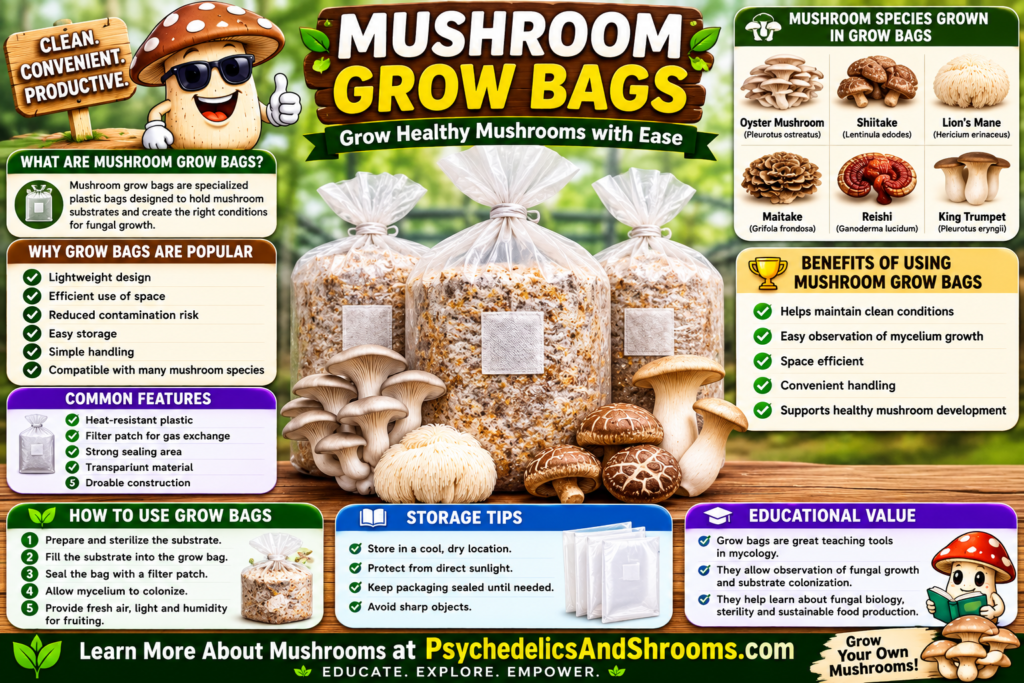
Mushroom grow bags are widely used in mushroom cultivation because they provide a clean, organized, and efficient environment for growing many edible and functional mushroom species. Hobbyists, educators, researchers, and commercial growers use grow bags to help maintain appropriate environmental conditions while supporting healthy mycelium development.
Unlike traditional containers, mushroom grow bags are specifically designed for fungal cultivation. Many feature breathable filter patches that allow gas exchange while helping reduce contamination from unwanted microorganisms. Their convenience, affordability, and versatility have made them an essential tool in modern mushroom cultivation.
Educational resources available at https://psychedelicsandshrooms.com/ help readers understand mushroom biology, mycology, fungal ecology, and the differences between edible, functional, medicinal, and psychedelic mushrooms through evidence-based information.
What Are Mushroom Grow Bags?
Mushroom grow bags are specialized plastic bags designed to hold mushroom growing substrates. They are commonly manufactured from heat-resistant materials that can withstand sterilization and are often equipped with a filter patch to allow fresh air exchange.
Grow bags are available in various sizes for educational, hobby, and commercial applications.
Why Grow Bags Are Popular
Grow bags offer several advantages for mushroom cultivation.
These include:
- Lightweight design
- Efficient use of space
- Reduced contamination risk
- Easy storage
- Simple handling
- Compatibility with many mushroom species
Their enclosed design helps create a cleaner growing environment.
Common Features
Most mushroom grow bags include:
- Heat-resistant plastic
- Filter patch for gas exchange
- Strong sealing area
- Transparent material for observation
- Durable construction
Different manufacturers may offer additional features depending on the intended use.
Mushroom Species Commonly Associated with Grow Bags
Grow bags are often used in educational and cultivation projects involving edible and functional mushrooms such as:
- Oyster Mushroom (Pleurotus ostreatus)
- Shiitake (Lentinula edodes)
- Lion’s Mane (Hericium erinaceus)
- Maitake (Grifola frondosa)
- Reishi (Ganoderma lucidum)
- King Trumpet (Pleurotus eryngii)
Different species may require different environmental conditions.
Benefits of Using Mushroom Grow Bags
Helps Maintain Clean Conditions
The enclosed design helps reduce exposure to dust, airborne particles, and contaminants.
Easy Observation
Transparent bags allow growers to observe mycelium development and substrate colonization.
Space Efficient
Grow bags can be arranged efficiently in grow tents, shelving units, or research environments.
Convenient Handling
Their lightweight construction makes transportation, storage, and organization simple.
Choosing Quality Grow Bags
When purchasing mushroom grow bags, consider:
- Durable construction
- Appropriate size
- Reliable filter patch
- Heat resistance
- Manufacturer reputation
Selecting quality materials can improve durability and usability.
Storage Tips
To help preserve unused grow bags:
- Store in a cool, dry location.
- Protect from direct sunlight.
- Keep packaging sealed until needed.
- Avoid sharp objects that may puncture the material.
Proper storage helps maintain product quality.
Educational Importance
Grow bags are valuable teaching tools in mycology because they allow students to observe fungal growth, substrate colonization, and mushroom biology under controlled conditions.
They also introduce learners to concepts such as:
- Sterility
- Environmental control
- Gas exchange
- Fungal life cycles
- Sustainable food production
Readers interested in mushroom science and cultivation can explore additional educational resources at https://psychedelicsandshrooms.com/guides/.
Why Mushroom Education Matters
Understanding the equipment used in mushroom cultivation helps build knowledge of fungal biology and sustainable agriculture. Educational resources encourage responsible learning while helping readers appreciate the remarkable diversity of fungi.
Final Thoughts
Mushroom grow bags provide a practical and efficient solution for mushroom cultivation and mycology education. Their durable construction, filter patches, and ease of use make them valuable tools for studying edible and functional mushrooms while supporting clean cultivation practices.
For more educational articles about mushrooms, mycology, fungal biology, and mushroom cultivation, visit https://psychedelicsandshrooms.com/.
FAQs
What are mushroom grow bags?
Mushroom grow bags are specialized bags designed to hold mushroom substrates while providing suitable conditions for fungal growth.
Why do grow bags have filter patches?
Filter patches allow gas exchange while helping reduce contamination from airborne microorganisms.
Which mushrooms are commonly grown in grow bags?
Grow bags are commonly associated with edible and functional mushrooms such as Oyster, Shiitake, Lion’s Mane, Maitake, Reishi, and King Trumpet.
Are mushroom grow bags reusable?
Some grow bags are designed for single use, while others may be reused if they remain in good condition and are properly cleaned according to the manufacturer’s recommendations.
How should unused grow bags be stored?
Store them in a cool, dry place away from direct sunlight and sharp objects.
Where can I learn more about mushroom cultivation?
Visit https://psychedelicsandshrooms.com/ and https://psychedelicsandshrooms.com/guides/ for educational resources about mushrooms, mycology, and fungal biology.
