
mushroom and shrooms
MDMA Therapy: What It Is, How It Works, and the Latest Research
Jun
MDMA therapy has become one of the most discussed topics in modern mental health research. Scientists, healthcare professionals, and policymakers continue to explore whether MDMA-assisted therapy may help certain individuals facing mental health challenges. As public interest grows, educational resources such as https://psychedelicsandshrooms.com/ help readers understand the science, history, and ongoing research surrounding psychedelic-assisted therapies while encouraging informed and responsible discussions.
Unlike traditional medications that are often taken regularly over long periods, MDMA-assisted therapy is being studied as a structured therapeutic approach that combines carefully supervised sessions with professional psychological support. Researchers are investigating whether this model may help improve therapeutic outcomes in specific clinical settings.
Understanding how MDMA therapy works, what researchers have discovered so far, and what questions remain unanswered is important for anyone interested in the future of mental health treatment and psychedelic science.
What Is MDMA Therapy?
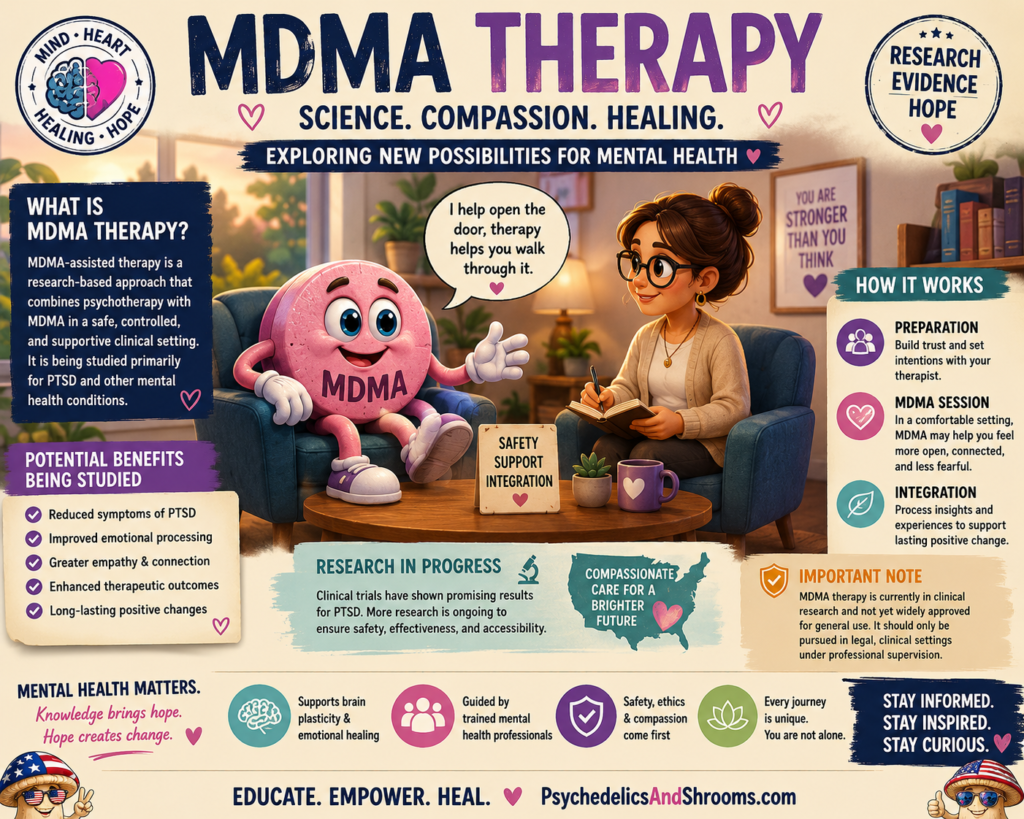
MDMA therapy refers to a therapeutic approach that combines psychotherapy with the controlled administration of MDMA in a clinical environment. MDMA, which stands for 3,4-methylenedioxymethamphetamine, is a synthetic compound that affects several neurotransmitters in the brain, including serotonin, dopamine, and norepinephrine.
Researchers believe that MDMA may temporarily increase feelings of trust, emotional openness, and connection. These effects are being studied to determine whether they may help patients engage more effectively in psychotherapy sessions.
It is important to understand that MDMA therapy differs significantly from recreational use. Clinical studies involve strict protocols, medical screening, professional supervision, and extensive psychological support before, during, and after treatment sessions.
Educational resources available through https://psychedelicsandshrooms.com/guides/ help explain how psychedelic-assisted therapies differ from non-medical use and why clinical settings are central to ongoing research.
The History of MDMA in Therapy
MDMA was first synthesized in the early twentieth century, but researchers did not begin exploring its therapeutic potential until decades later. During the 1970s and early 1980s, some therapists experimented with MDMA in psychotherapy before regulatory changes significantly restricted its use.
Interest in MDMA research largely paused for many years. However, advances in neuroscience, mental health research, and psychedelic science led to renewed investigations into its potential clinical applications.
Today, universities, medical institutions, and research organizations continue to study MDMA-assisted therapy through carefully designed clinical trials. These studies aim to better understand both potential benefits and potential risks.
How Does MDMA Therapy Work?
MDMA therapy generally follows a structured process rather than relying solely on the effects of the substance itself. Researchers emphasize that psychotherapy remains a central component of treatment.
The process often begins with preparation sessions where therapists build rapport with participants and discuss treatment goals. During supervised sessions, participants receive MDMA under clinical observation while therapists provide guidance and support.
Following these sessions, integration meetings help participants process their experiences and discuss insights that emerged during therapy. Researchers believe this combination of preparation, supervised sessions, and integration may play a significant role in therapeutic outcomes.
This structured approach distinguishes clinical research from recreational environments and highlights the importance of professional oversight.
MDMA Therapy and PTSD Research
One of the most widely studied areas of MDMA therapy involves post-traumatic stress disorder (PTSD). PTSD is a mental health condition that may develop after experiencing or witnessing traumatic events.
Researchers have investigated whether MDMA-assisted therapy could help some individuals process traumatic memories in a therapeutic setting. Several clinical studies have reported promising results, leading to increased scientific interest in the field.
However, researchers also emphasize that ongoing studies are needed to better understand long-term outcomes, safety considerations, patient selection criteria, and treatment effectiveness across diverse populations.
Potential Benefits Being Studied
Researchers continue investigating several potential therapeutic effects associated with MDMA-assisted therapy. Areas of interest include emotional processing, therapeutic engagement, and improvements in psychological well-being during structured treatment programs.
Scientists have proposed that MDMA may help reduce fear responses while increasing feelings of emotional safety during psychotherapy sessions. This could potentially support discussions of difficult experiences within controlled therapeutic environments.
Despite encouraging findings, researchers caution that ongoing studies are necessary before broad conclusions can be made. Scientific evaluation remains essential for understanding who may benefit, under what circumstances, and what safeguards should be implemented.
Safety Considerations and Risks
Like any therapeutic intervention, MDMA therapy involves important safety considerations. Researchers carefully monitor participants during clinical trials to identify both short-term and long-term effects.
Potential risks may include increases in heart rate, blood pressure changes, anxiety, or other physiological and psychological responses. This is one reason why medical screening and professional supervision are central components of clinical research protocols.
Experts emphasize that self-treatment is not equivalent to medically supervised therapy. Individuals interested in learning about psychedelic-assisted therapies should rely on reputable scientific sources and qualified healthcare professionals rather than unverified information online.
Responsible education helps the public distinguish between clinical research and non-medical use while promoting informed decision-making.
The Future of MDMA Therapy
The future of MDMA therapy will likely depend on ongoing scientific research, regulatory review, and continued evaluation of safety and effectiveness. Mental health researchers remain interested in understanding how psychedelic-assisted therapies may fit into broader treatment approaches.
Advances in neuroscience and psychotherapy continue to shape discussions about innovative mental health interventions. As research expands, scientists hope to gain a clearer understanding of how MDMA-assisted therapy may contribute to evidence-based care.
Public interest in psychedelic science is also encouraging greater awareness of mental health research and the importance of rigorous clinical investigation.
At Psychedelics and Shrooms, educational content focuses on helping readers better understand mushrooms, psychedelics, mental health research, and emerging developments in psychedelic science through an educational and informational lens.
Final Thoughts on MDMA Therapy
MDMA therapy represents an evolving area of scientific research that continues to attract attention from mental health professionals, researchers, and the general public. While studies have produced encouraging findings in certain areas, significant questions remain regarding long-term outcomes, accessibility, regulation, and best practices.
Understanding the science behind MDMA-assisted therapy requires a balanced perspective that recognizes both potential opportunities and important limitations. As research continues, educational resources will play a vital role in helping the public navigate emerging developments responsibly.
For more educational articles about psychedelics, mushroom science, mental health research, and wellness topics, visit https://psychedelicsandshrooms.com/.
FAQs
What is MDMA therapy?
MDMA therapy is a research-based therapeutic approach that combines psychotherapy with professionally supervised MDMA sessions in clinical settings. Learn more about psychedelic education at https://psychedelicsandshrooms.com/.
Is MDMA therapy the same as recreational MDMA use?
No. Clinical MDMA-assisted therapy involves medical screening, professional supervision, psychotherapy, and structured treatment protocols that differ significantly from recreational use.
Why is MDMA therapy being researched?
Researchers are studying MDMA therapy for its potential role in helping certain mental health conditions, particularly PTSD, within carefully controlled clinical environments.
Is MDMA therapy approved everywhere in the United States?
Regulations continue to evolve, and approval status may vary depending on regulatory decisions and ongoing research developments. Readers can follow educational updates through https://psychedelicsandshrooms.com/.
What are the risks of MDMA therapy?
Potential risks may include cardiovascular effects, psychological reactions, and other health concerns, which is why clinical studies emphasize screening and professional supervision.
Where can I learn more about psychedelic-assisted therapy?
You can explore educational resources, research discussions, and psychedelic science articles at https://psychedelicsandshrooms.com/ and related guides covering emerging developments in mental health research.
