
mushroom and shrooms
Effects of Methamphetamine: Understanding the Impact on the Brain and Body
Jun
Methamphetamine is a powerful synthetic stimulant that affects the central nervous system. It has been the subject of extensive medical, psychological, and public health research due to its significant effects on the brain and body. Understanding the effects of methamphetamine is important for education, prevention, and public awareness.
Researchers continue to study how stimulant drugs influence brain chemistry, behavior, mental health, and physical well-being. Educational resources such as https://psychedelicsandshrooms.com/ help readers learn about psychoactive substances, neuroscience, mental health, and evidence-based health information.
While some stimulant medications are prescribed under medical supervision for specific conditions, methamphetamine misuse can pose serious health risks. Learning about its effects can help individuals better understand why healthcare professionals and public health organizations consider it a significant concern.
What Is Methamphetamine?
Methamphetamine is a synthetic stimulant that increases activity within the central nervous system. It belongs to a class of substances known as amphetamine-type stimulants.
The drug affects several neurotransmitters in the brain, particularly dopamine, norepinephrine, and serotonin. These chemical messengers play important roles in motivation, reward, attention, mood, and movement.
Because methamphetamine can produce intense stimulation, researchers have spent decades studying its effects on neurological and physical health.
How Methamphetamine Affects the Brain
One of the most significant effects involves changes in dopamine activity. Dopamine is a neurotransmitter associated with motivation, reward, learning, and pleasure.
Methamphetamine can cause large increases in dopamine release while also affecting the brain’s ability to regulate dopamine normally. These changes contribute to many of the psychological and behavioral effects associated with stimulant use.
Scientists continue investigating how repeated exposure may influence brain structure, neural pathways, and cognitive functioning over time.
Brain imaging studies have helped researchers better understand the relationship between stimulant exposure and neurological health.
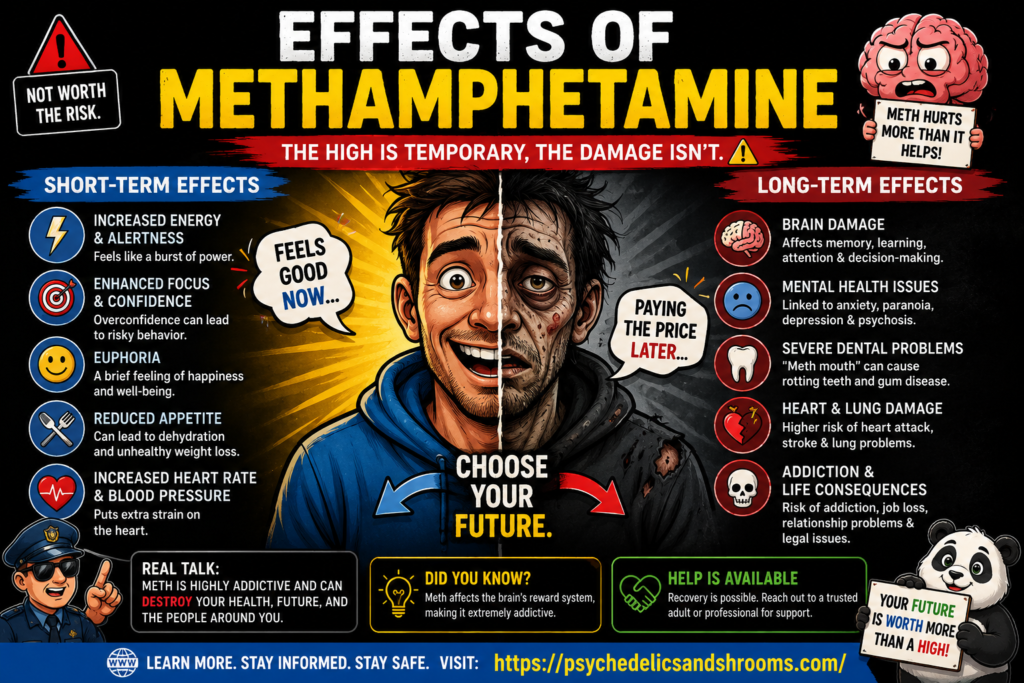
Short-Term Effects
The immediate effects of methamphetamine can vary depending on factors such as dosage, individual physiology, frequency of use, and overall health.
Researchers have documented several common short-term effects, including:
- Increased alertness
- Elevated energy levels
- Increased wakefulness
- Reduced appetite
- Faster heart rate
- Increased blood pressure
- Increased body temperature
- Restlessness
- Agitation
Some individuals may also experience anxiety, irritability, confusion, or changes in mood and behavior.
The intensity and duration of these effects can vary considerably among individuals.
Impact on Mental Health
Methamphetamine can significantly affect mental and emotional well-being. Researchers have observed associations between stimulant misuse and a variety of psychological symptoms.
These may include:
- Anxiety
- Mood disturbances
- Irritability
- Sleep disruption
- Paranoia
- Cognitive difficulties
Scientists continue studying the relationship between stimulant exposure and mental health outcomes. Understanding these connections remains an important area of public health research.
Mental health professionals emphasize the importance of early intervention and evidence-based treatment for individuals experiencing substance-related challenges.
Effects on Sleep
Sleep disruption is one of the most commonly reported effects associated with stimulant use.
Because methamphetamine increases wakefulness and alertness, individuals may remain awake for extended periods. Poor sleep quality can affect concentration, mood regulation, memory, decision-making, and overall health.
Researchers have shown that chronic sleep deprivation can contribute to additional physical and psychological challenges over time.
Maintaining healthy sleep patterns is essential for overall well-being and brain function.
Cardiovascular Effects
Methamphetamine can place significant stress on the cardiovascular system.
Researchers have documented effects such as:
- Increased heart rate
- Elevated blood pressure
- Increased workload on the heart
- Changes in blood vessel function
These effects have contributed to concerns regarding cardiovascular health among individuals who misuse stimulant substances.
Healthcare professionals continue emphasizing the importance of cardiovascular monitoring and prevention efforts.
Long-Term Health Effects
Long-term exposure may affect multiple organ systems throughout the body.
Researchers continue investigating potential impacts involving:
Brain Function
Studies suggest that prolonged stimulant exposure may influence attention, memory, decision-making, and cognitive performance.
Scientists are working to better understand the extent to which these changes may improve following sustained recovery and treatment.
Physical Health
Long-term misuse has been associated with various health complications involving multiple body systems.
Maintaining overall physical health becomes increasingly challenging when chronic stimulant misuse affects nutrition, sleep, and healthcare access.
Emotional Well-Being
Researchers continue examining how long-term stimulant exposure influences emotional regulation, stress responses, and psychological health.
Understanding these effects helps improve prevention and treatment strategies.
Public Health Concerns
Methamphetamine remains an important public health issue in many parts of the United States. Healthcare professionals, researchers, educators, and policymakers continue working to improve prevention, education, and treatment efforts.
Public health initiatives often focus on:
- Education
- Prevention
- Early intervention
- Access to treatment
- Mental health support
- Community outreach
Increasing awareness can help reduce stigma and encourage individuals to seek assistance when needed.
Treatment and Recovery
Recovery from stimulant use disorder often involves a combination of professional support, behavioral therapies, counseling, healthcare services, and community resources.
Researchers continue exploring new treatment approaches while evaluating existing evidence-based interventions.
Recovery experiences vary among individuals, and treatment plans are often tailored to specific needs and circumstances.
Healthcare professionals emphasize that seeking help is an important step toward improved health and well-being.
Why Education Matters
Accurate information helps individuals make informed decisions about their health. Understanding how substances affect the brain and body can support prevention efforts and encourage healthier choices.
Educational discussions also help address misconceptions and promote evidence-based understanding of substance use and mental health.
Final Thoughts
Methamphetamine is a powerful stimulant that can significantly affect the brain, body, behavior, and overall health. Researchers continue studying both the short-term and long-term effects associated with stimulant exposure to improve prevention, treatment, and public health outcomes.
Understanding these effects is essential for promoting informed decision-making, supporting public health education, and encouraging access to evidence-based care when needed.
For more educational articles about neuroscience, mental health, psychoactive substances, and wellness research, visit https://psychedelicsandshrooms.com/.
FAQs
What is methamphetamine?
Methamphetamine is a synthetic stimulant that affects the central nervous system and influences neurotransmitters such as dopamine and norepinephrine.
How does methamphetamine affect the brain?
It alters neurotransmitter activity, particularly dopamine pathways involved in reward, motivation, and behavior.
What are some short-term effects?
Short-term effects may include increased alertness, elevated energy, reduced appetite, increased heart rate, and sleep disruption.
Can methamphetamine affect mental health?
Researchers have documented associations between stimulant misuse and symptoms such as anxiety, mood disturbances, irritability, and paranoia.
Does methamphetamine affect the heart?
Yes. It can increase heart rate, blood pressure, and overall cardiovascular stress.
Where can I learn more about psychoactive substances and brain health?
You can find educational articles and research-based guides at https://psychedelicsandshrooms.com/ and https://psychedelicsandshrooms.com/guides/.
