mushroom and shrooms
Reishi Mushroom Supplements: A Complete Guide to Benefits, Ingredients, and Choosing the Right Product
Jun
Reishi mushroom supplements have become one of the fastest-growing categories in the functional mushroom industry. Often referred to as the “mushroom of longevity,” Reishi has been used in traditional wellness practices for centuries and is now widely studied for its naturally occurring bioactive compounds. As more consumers in the United States look for natural wellness products, Reishi supplements continue gaining popularity among individuals interested in healthy lifestyles and functional nutrition.
Modern Reishi supplements are available in numerous forms, including capsules, powders, liquid extracts, teas, and gummies. While product formulations vary, they generally contain extracts derived from Ganoderma lucidum, one of the most extensively researched functional mushroom species.
Unlike psychedelic mushrooms, Reishi is a non-psychoactive mushroom commonly used in dietary supplements. Educational resources available at https://psychedelicsandshrooms.com/ help readers better understand functional mushrooms, mushroom science, and evidence-based wellness information.
What Are Reishi Mushroom Supplements?
Reishi mushroom supplements are dietary products made from extracts of the Reishi mushroom (Ganoderma lucidum). Manufacturers process the mushroom using various extraction methods to concentrate naturally occurring compounds before incorporating them into capsules, powders, tinctures, gummies, or beverages.
These supplements are designed to provide consumers with a convenient way to incorporate Reishi into their wellness routines without preparing fresh or dried mushrooms.
Depending on the manufacturer, formulations may include fruiting body extracts, mycelium, or blends of both.
Understanding the ingredients used in a specific product helps consumers make informed purchasing decisions.
Naturally Occurring Compounds in Reishi
Researchers continue studying the wide range of naturally occurring compounds found in Reishi mushrooms.
Some of the most well-known include:
- Beta-glucans
- Polysaccharides
- Triterpenes
- Antioxidants
- Dietary fiber
- Naturally occurring sterols
- Amino acids
- Minerals
These compounds have contributed to decades of scientific research involving nutrition, immunity, and functional foods.
Scientists continue investigating how these naturally occurring components interact with biological systems.
Potential Wellness Benefits Under Investigation
Reishi mushrooms have attracted scientific interest because of their unique chemical composition.
Current research is exploring several areas, including:
Immune System Support
Beta-glucans and polysaccharides naturally present in Reishi remain among the most studied compounds related to immune function.
Researchers continue examining how these compounds interact with normal immune-related biological processes.
Antioxidant Activity
Reishi contains naturally occurring antioxidants that help protect cells from oxidative stress.
Oxidative stress occurs when free radicals accumulate faster than the body’s antioxidant defenses can neutralize them.
Scientists continue studying the mushroom’s antioxidant profile within broader nutritional research.
Stress and Overall Wellness Research
Traditional wellness practices have long associated Reishi with relaxation and general well-being.
Modern researchers continue exploring these historical uses through controlled scientific investigations while emphasizing the need for additional high-quality clinical research.
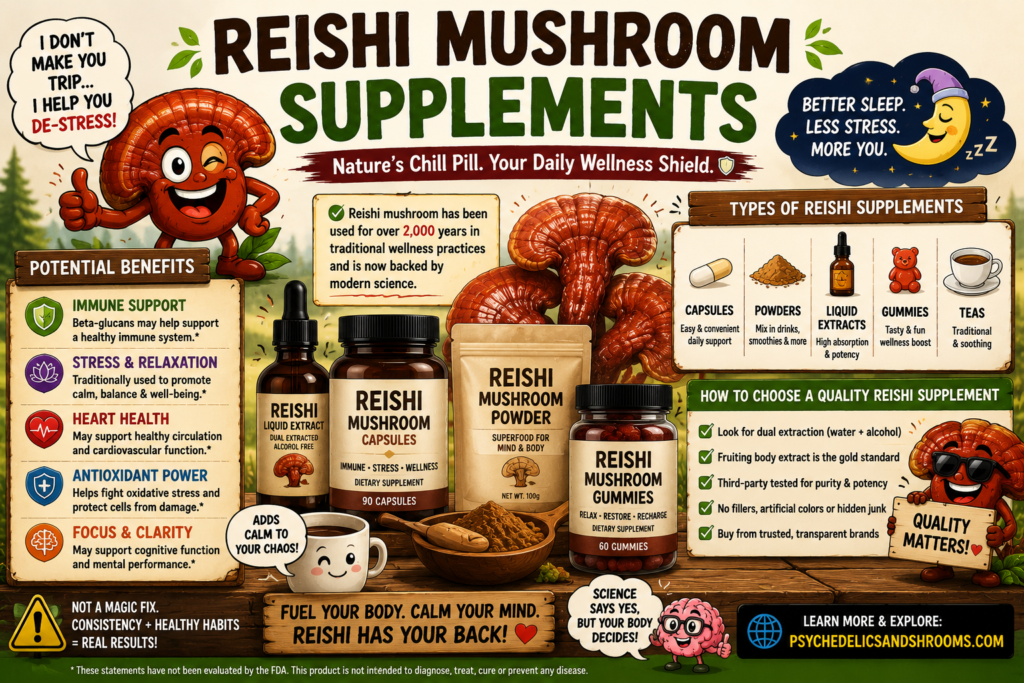
Types of Reishi Mushroom Supplements
Consumers can choose from several supplement formats depending on personal preference.
Capsules
Capsules remain one of the most popular options because they provide convenient and consistent serving sizes.
Powders
Reishi powder can be added to smoothies, coffee, tea, soups, or other foods and beverages.
Liquid Extracts
Liquid extracts offer flexible serving options and are commonly used by consumers who prefer tincture-style supplements.
Gummies
Reishi gummies provide a convenient and flavorful alternative for individuals who dislike swallowing capsules.
Tea
Traditional Reishi tea remains popular among consumers who appreciate a more traditional preparation method.
Each format offers unique advantages depending on individual preferences and lifestyle.
Choosing a High-Quality Supplement
Product quality can vary significantly throughout the supplement industry.
When comparing Reishi mushroom supplements, consumers should consider:
- Transparent ingredient lists
- Fruiting body versus mycelium content
- Extraction methods
- Third-party testing when available
- Good Manufacturing Practices (GMP)
- Company reputation
- Clearly labeled serving information
Carefully reviewing product labels helps consumers compare supplements more effectively.
Understanding Product Labels
Reading supplement labels carefully is essential before making a purchase.
Consumers should review:
- Supplement Facts
- Serving size
- Active ingredients
- Other ingredients
- Suggested use
- Allergen information
- Expiration date
Understanding label information helps buyers select products that align with their preferences and wellness goals.
Safety Considerations
Although Reishi has a long history of traditional use, dietary supplements are not appropriate for everyone.
Individuals who are pregnant, breastfeeding, have medical conditions, take prescription medications, or have known mushroom allergies should consult qualified healthcare professionals before beginning any new supplement.
Consumers should also follow manufacturer serving recommendations and purchase products from reputable retailers.
Responsible supplement use begins with informed decision-making.
Why Reishi Continues to Grow in Popularity
Growing public interest in functional mushrooms has contributed to the increasing popularity of Reishi supplements.
Scientific research, educational resources, documentaries, podcasts, and consumer interest in natural wellness have all helped introduce Reishi to a wider audience.
As researchers continue investigating mushroom-derived compounds, Reishi remains one of the most recognized functional mushrooms in nutritional science.
Final Thoughts
Reishi mushroom supplements have become an important part of the rapidly expanding functional mushroom market. Their naturally occurring beta-glucans, polysaccharides, triterpenes, and antioxidants continue attracting attention from researchers studying nutrition and wellness.
Whether choosing capsules, powders, teas, gummies, or extracts, consumers benefit from understanding ingredient quality, manufacturing standards, and product transparency before making a purchase. Education remains one of the most valuable tools for navigating the growing supplement marketplace.
For more educational articles about mushrooms, wellness, functional fungi, and nutrition research, visit https://psychedelicsandshrooms.com/.
FAQs
What are Reishi mushroom supplements?
Reishi mushroom supplements are dietary products made from extracts of Ganoderma lucidum, a functional mushroom widely studied for its naturally occurring compounds.
What forms do Reishi supplements come in?
Common forms include capsules, powders, teas, liquid extracts, tinctures, and gummies.
What compounds are found in Reishi?
Researchers have identified beta-glucans, polysaccharides, triterpenes, antioxidants, dietary fiber, minerals, and other naturally occurring compounds.
How can I choose a quality Reishi supplement?
Look for transparent ingredient labeling, reputable manufacturers, extraction information, quality testing, and clear serving recommendations.
Are Reishi mushrooms psychedelic?
No. Reishi mushrooms are non-psychoactive functional mushrooms and do not contain psychedelic compounds.
Where can I learn more about functional mushrooms?
You can explore educational articles and mushroom guides at https://psychedelicsandshrooms.com/ and https://psychedelicsandshrooms.com/guides/.
