mushroom and shrooms
Benefits of Portobello Mushroom: A Complete Guide to Nutrition and Wellness
Jul
The Portobello mushroom is one of the most popular edible mushrooms in the United States and around the world. Known for its large cap, rich flavor, and meaty texture, it has become a favorite ingredient in home kitchens and restaurants alike. Beyond its culinary appeal, the Portobello mushroom offers an impressive nutritional profile that makes it a valuable addition to a balanced diet.
As more people explore healthy eating habits, interest in the benefits of Portobello mushroom continues to grow. Researchers have studied edible mushrooms for their vitamins, minerals, antioxidants, and other naturally occurring compounds that support overall wellness. Educational resources available at https://psychedelicsandshrooms.com/ help readers understand mushroom nutrition, fungal biology, and the differences between edible, functional, and psychedelic mushrooms through evidence-based information.
What Is a Portobello Mushroom?
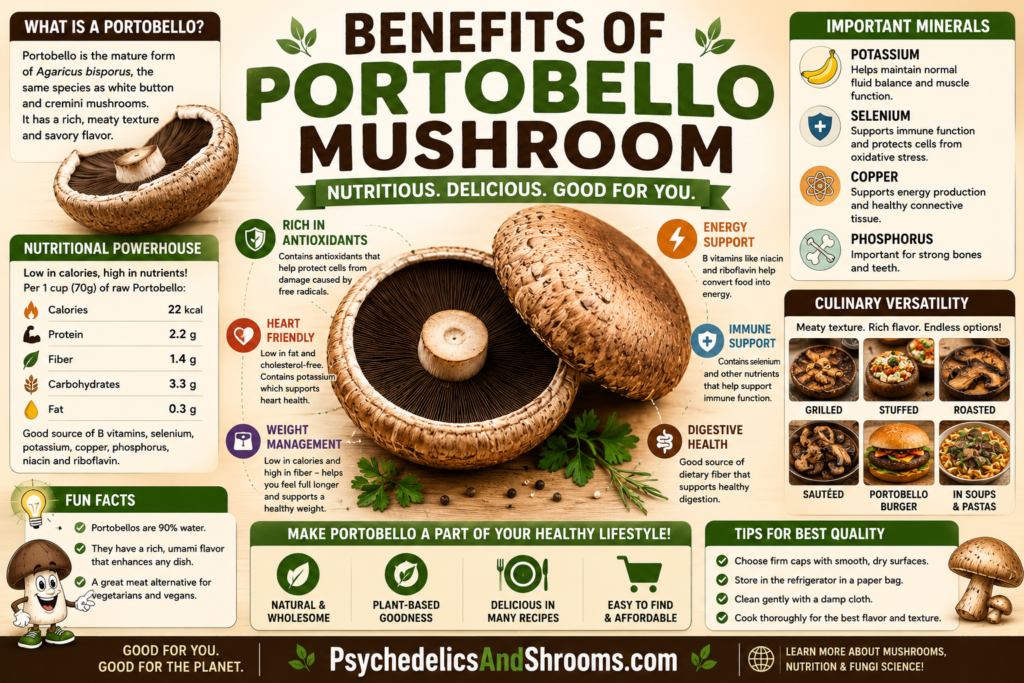
The Portobello mushroom is the mature form of Agaricus bisporus, the same species that includes white button mushrooms and cremini mushrooms. As the mushroom matures, its cap expands, developing the large, firm structure that gives Portobellos their distinctive appearance.
Because of their hearty texture, Portobello mushrooms are often used as a plant-based alternative in burgers, sandwiches, grilled dishes, and stuffed recipes.
Excellent Source of Nutrients
Portobello mushrooms provide a variety of essential nutrients while remaining naturally low in calories.
They contain:
- B vitamins
- Selenium
- Copper
- Potassium
- Phosphorus
- Niacin
- Riboflavin
These nutrients contribute to many normal body functions, including energy metabolism, immune function, and cellular health.
Rich in Antioxidants
Like many edible mushrooms, Portobellos contain naturally occurring antioxidant compounds.
Antioxidants help protect cells from damage caused by oxidative stress, an everyday process that occurs during normal metabolism and exposure to environmental factors.
Researchers continue studying mushroom antioxidants to better understand their role in supporting long-term health.
Supports a Healthy Diet
Portobello mushrooms are naturally:
- Low in calories
- Low in fat
- Cholesterol-free
- Sodium-free when prepared without added salt
They also provide dietary fiber, which supports digestive health and contributes to feelings of fullness after meals.
Because of these qualities, Portobellos fit well into many healthy eating patterns.
Provides Plant-Based Nutrition
Many people choose Portobello mushrooms because of their dense texture and savory flavor.
Although mushrooms are not a direct replacement for all nutrients found in meat, Portobellos can contribute valuable nutrients while adding variety to plant-forward meals.
Their firm texture makes them popular for grilling, roasting, baking, and stuffing.
Contains Important Minerals
Several minerals found in Portobello mushrooms support normal body function.
Potassium
Potassium helps regulate fluid balance and supports normal muscle and nerve function.
Selenium
Selenium contributes to normal immune function and helps protect cells from oxidative stress.
Copper
Copper plays a role in energy production, connective tissue formation, and normal iron metabolism.
Including a variety of nutrient-rich foods helps ensure adequate intake of these essential minerals.
Naturally Contains Dietary Fiber
Dietary fiber supports digestive health and contributes to healthy eating patterns.
When included as part of a balanced diet, fiber-rich foods may help support digestive regularity and overall wellness.
Pairing mushrooms with vegetables, whole grains, and legumes can further increase fiber intake.
Culinary Versatility
One reason Portobello mushrooms remain popular is their versatility in the kitchen.
Common preparation methods include:
- Grilling
- Baking
- Roasting
- Stuffing
- Sautéing
- Broiling
Their rich, umami flavor complements a wide range of herbs, vegetables, whole grains, and lean protein sources.
Food Safety Tips
Like all fresh produce, Portobello mushrooms should be handled properly.
Helpful food safety practices include:
- Refrigerate promptly.
- Clean gently before cooking.
- Cook thoroughly according to recipe recommendations.
- Store in breathable packaging.
Proper storage helps maintain freshness and quality.
Why Mushroom Education Matters
Learning about edible mushrooms helps consumers better understand nutrition while distinguishing edible species from functional mushrooms and mushrooms that naturally contain psychedelic compounds.
Evidence-based education supports informed food choices and encourages appreciation for fungal diversity.
Readers interested in mushroom nutrition and fungal biology can explore additional educational guides at https://psychedelicsandshrooms.com/guides/.
Final Thoughts
The benefits of Portobello mushroom extend beyond its delicious flavor. Rich in vitamins, minerals, antioxidants, and dietary fiber, this versatile edible mushroom supports healthy eating while offering countless culinary possibilities. Whether grilled, roasted, stuffed, or added to everyday meals, Portobello mushrooms provide an enjoyable way to increase the variety of nutrient-rich foods in your diet.
For more educational articles about edible mushrooms, mushroom nutrition, fungal biology, and mushroom science, visit https://psychedelicsandshrooms.com/.
FAQs
What is a Portobello mushroom?
A Portobello mushroom is the mature form of Agaricus bisporus, the same species that includes white button and cremini mushrooms.
Are Portobello mushrooms nutritious?
Yes. They provide B vitamins, potassium, selenium, copper, phosphorus, dietary fiber, and other valuable nutrients while remaining naturally low in calories.
Can Portobello mushrooms replace meat?
Their firm texture makes them a popular plant-based ingredient, although they do not provide the same nutrient profile as meat.
What is the best way to cook Portobello mushrooms?
Popular methods include grilling, roasting, baking, sautéing, broiling, and stuffing.
Are Portobello mushrooms low in calories?
Yes. They are naturally low in calories and fit well into many healthy eating patterns.
Where can I learn more about mushroom nutrition?
Visit https://psychedelicsandshrooms.com/ and https://psychedelicsandshrooms.com/guides/ for educational resources about edible mushrooms, nutrition, and mushroom science.
