mushroom and shrooms
Mushroom Tea Benefits: A Complete Guide to Nutrition and Wellness
Jul
Mushroom tea has become increasingly popular among people looking for warm, flavorful beverages that can fit into a healthy lifestyle. Whether prepared with culinary mushrooms or functional mushroom extracts, mushroom tea offers a convenient way to enjoy naturally occurring compounds found in fungi while staying hydrated. As interest in mushrooms continues to grow across the United States, many people are searching for reliable information about mushroom tea benefits and how these beverages may fit into a balanced diet.
Scientific research continues exploring the nutritional properties of edible and functional mushrooms, including the vitamins, minerals, polysaccharides, and antioxidants they naturally contain. While mushroom tea is not a substitute for medical treatment, it can be part of a varied diet when prepared from reputable ingredients.
Educational resources available at https://psychedelicsandshrooms.com/ help readers understand mushroom nutrition, functional fungi, and the differences between edible, functional, and psychedelic mushrooms through evidence-based information.
What Is Mushroom Tea?
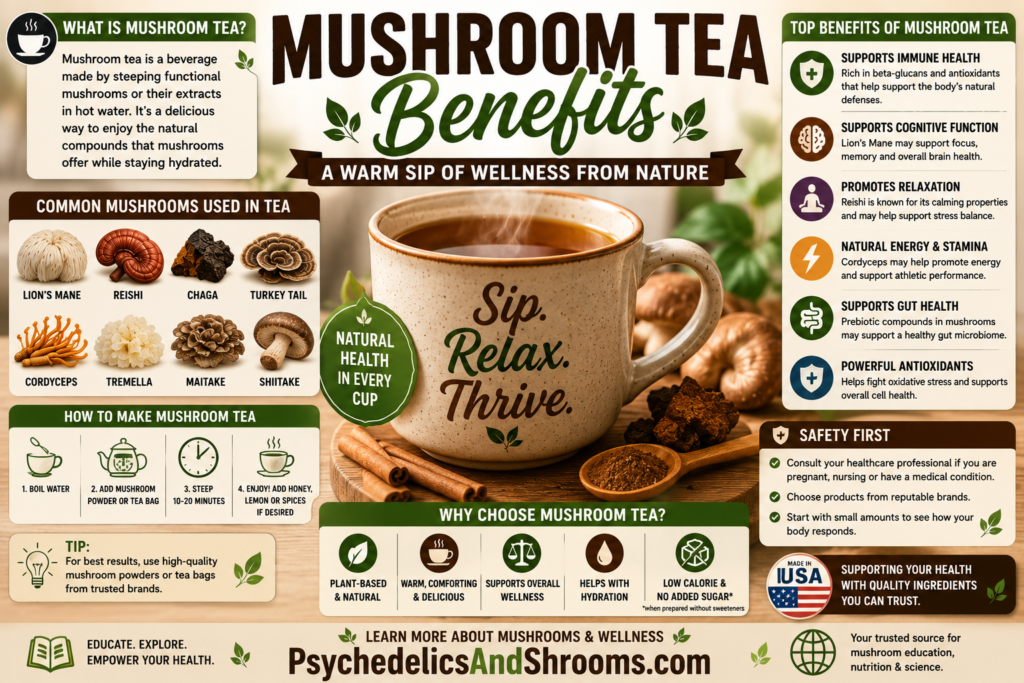
Mushroom tea is a beverage made by steeping mushrooms, mushroom powders, or mushroom extracts in hot water. Some recipes use a single mushroom species, while others combine several functional mushrooms with herbs, spices, or natural flavorings.
Depending on the ingredients, mushroom tea may have earthy, mild, or slightly nutty flavors. Popular additions include ginger, cinnamon, lemon, peppermint, and honey.
Common Mushrooms Used in Tea
Several functional mushrooms are commonly used in tea blends.
These include:
- Lion’s Mane
- Reishi
- Chaga
- Turkey Tail
- Cordyceps
- Tremella
- Maitake
- Shiitake
Each species contains unique naturally occurring compounds that continue to be studied in nutrition and wellness research.
Rich in Naturally Occurring Compounds
Functional mushrooms naturally contain a variety of bioactive compounds, including:
- Beta-glucans
- Polyphenols
- Ergothioneine
- Minerals
- B vitamins
Researchers continue investigating how these compounds contribute to overall wellness when consumed as part of a balanced diet.
Supports Hydration
Like other herbal beverages, mushroom tea contributes to daily fluid intake.
Adequate hydration supports many normal body functions, including temperature regulation, digestion, and circulation.
For individuals looking for a warm beverage without added sugars, mushroom tea may be a satisfying option.
Provides Antioxidants
Many mushrooms naturally contain antioxidant compounds.
Antioxidants help protect cells from oxidative stress, which occurs during normal metabolism and exposure to environmental factors.
Although research is ongoing, diets rich in antioxidant-containing foods may support overall health.
May Complement a Balanced Diet
Mushroom tea can be enjoyed alongside a healthy eating pattern that includes:
- Fruits
- Vegetables
- Whole grains
- Lean proteins
- Healthy fats
Rather than viewing mushroom tea as a cure-all, experts recommend considering it one component of a balanced lifestyle.
Popular Functional Mushroom Teas
Different mushroom species are associated with different areas of scientific interest.
Lion’s Mane Tea
Lion’s Mane is widely researched for its naturally occurring compounds and its role in ongoing studies involving cognitive health.
Reishi Tea
Reishi has a long history of traditional use and continues to attract scientific attention in wellness research.
Chaga Tea
Chaga contains naturally occurring antioxidant compounds that researchers continue studying.
Turkey Tail Tea
Turkey Tail is well known for its unique polysaccharides and its importance in mushroom science.
Choosing a Quality Mushroom Tea
When shopping for mushroom tea, look for products that provide:
- Clearly identified mushroom species
- Transparent ingredient lists
- Reputable manufacturers
- Third-party testing when available
- Storage recommendations
Reading labels carefully helps consumers make informed purchasing decisions.
Safety Considerations
Although mushroom tea is generally enjoyed as a beverage, it may not be suitable for everyone.
Individuals who are pregnant, breastfeeding, have mushroom allergies, take prescription medications, or have underlying medical conditions should consult a qualified healthcare professional before introducing mushroom supplements or concentrated mushroom beverages into their routine.
Always follow the manufacturer’s preparation instructions.
Functional Mushrooms vs. Psychedelic Mushrooms
Functional mushroom teas are different from mushrooms that naturally contain psilocybin.
Popular functional mushrooms such as Lion’s Mane, Reishi, Chaga, and Turkey Tail are commonly used in teas and dietary supplements.
Psilocybin-containing mushrooms belong to a separate category currently being studied in regulated clinical research involving neuroscience and mental health.
Understanding this distinction helps consumers make informed decisions.
Readers interested in learning more about mushroom science can explore additional educational guides at https://psychedelicsandshrooms.com/guides/.
Final Thoughts
The mushroom tea benefits people appreciate most include convenience, hydration, and the opportunity to enjoy functional mushrooms as part of a balanced lifestyle. Whether you prefer Lion’s Mane, Reishi, Chaga, or a blended tea, choosing quality ingredients and relying on evidence-based information are the best ways to explore these beverages.
For more educational articles about mushrooms, mushroom nutrition, functional fungi, and mushroom science, visit https://psychedelicsandshrooms.com/.
FAQs
What is mushroom tea?
Mushroom tea is a beverage prepared by steeping mushrooms, mushroom powders, or mushroom extracts in hot water.
Which mushrooms are commonly used in mushroom tea?
Popular varieties include Lion’s Mane, Reishi, Chaga, Turkey Tail, Cordyceps, Tremella, Shiitake, and Maitake.
Does mushroom tea contain nutrients?
Depending on the ingredients, mushroom tea may contain naturally occurring compounds such as beta-glucans, antioxidants, minerals, and B vitamins.
Can mushroom tea replace a healthy diet?
No. Mushroom tea is best enjoyed as part of a balanced diet and healthy lifestyle rather than as a substitute for nutritious foods.
How should mushroom tea be stored?
Store tea bags or powders in a cool, dry place according to the manufacturer’s recommendations.
Where can I learn more about mushroom nutrition?
Visit https://psychedelicsandshrooms.com/ and https://psychedelicsandshrooms.com/guides/ for educational resources about mushrooms, nutrition, and mushroom science.
