mushroom and shrooms
What Are Magic Mushrooms? A Complete Educational Guide
Jul
Magic mushrooms are a group of fungi that naturally contain the psychoactive compounds psilocybin and psilocin. These mushrooms have been studied for decades because of their unique chemistry, cultural history, and potential role in modern medical research. Today, scientists continue investigating psilocybin in carefully controlled clinical settings to better understand how it interacts with the brain and whether it may have therapeutic applications for certain mental health conditions.
As public interest continues to grow in the United States, many people ask, “What are magic mushrooms?” Reliable, evidence-based information is essential because online discussions often combine scientific findings with myths or personal anecdotes. Educational resources available at https://psychedelicsandshrooms.com/ help readers explore mushroom biology, mycology, neuroscience, and psychedelic research while distinguishing edible, functional, medicinal, and psilocybin-containing mushrooms.
What Are Magic Mushrooms?
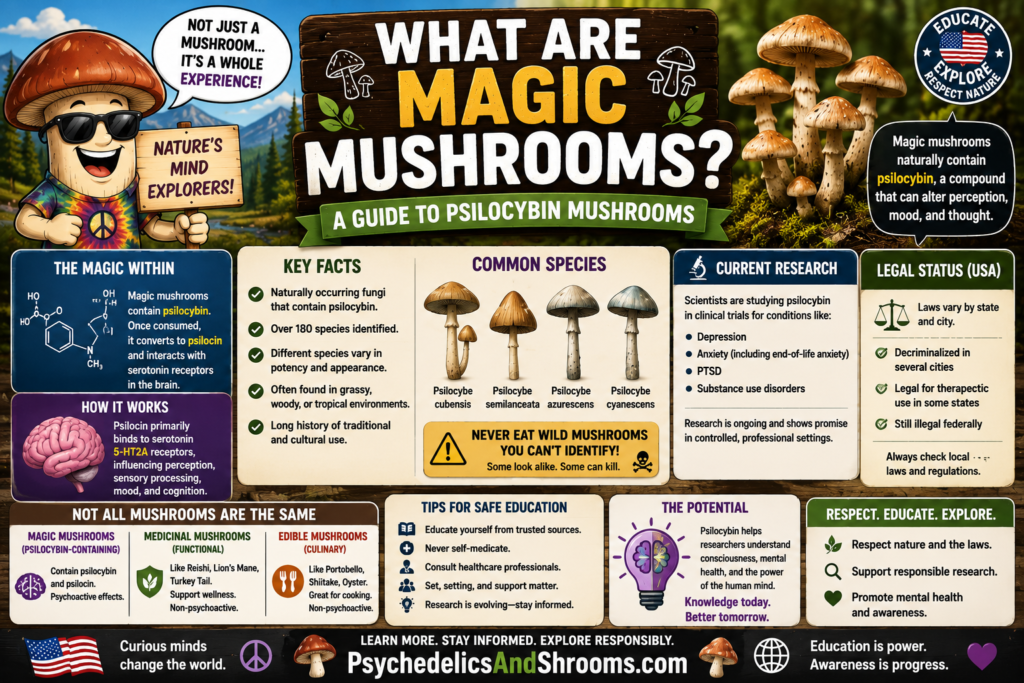
Magic mushrooms are fungi that naturally produce psilocybin, a compound that the body converts into psilocin after ingestion. Psilocin primarily interacts with serotonin receptors in the brain, especially the 5-HT2A receptor, which researchers believe plays an important role in perception, cognition, mood, and consciousness.
More than 180 mushroom species are known to contain psilocybin. They belong to several genera, including:
- Psilocybe
- Panaeolus
- Gymnopilus
- Pluteus
Among these, Psilocybe cubensis is one of the most widely recognized species in scientific literature and public discussions.
Naturally Occurring Compounds
Magic mushrooms contain several naturally occurring compounds, including:
- Psilocybin
- Psilocin
- Baeocystin
- Norbaeocystin
Scientists continue studying these compounds to understand their biological activity and possible therapeutic significance.
How Psilocybin Works
After psilocybin is metabolized into psilocin, it binds primarily to serotonin receptors throughout the brain.
Researchers are studying how this interaction may temporarily influence:
- Sensory perception
- Emotional processing
- Memory
- Learning
- Cognitive flexibility
- Brain network communication
Modern neuroimaging has helped scientists observe changes in brain activity during controlled clinical research.
Current Scientific Research
Over the past decade, research into psilocybin has expanded significantly.
Universities and medical research centers are investigating psilocybin-assisted therapy for conditions such as:
- Treatment-resistant depression
- Anxiety associated with serious illness
- Post-traumatic stress disorder (PTSD)
- Certain substance use disorders
These studies take place under strict ethical oversight with medical screening, trained professionals, and psychological support. Researchers emphasize that clinical studies differ greatly from unsupervised use.
Magic Mushrooms vs. Edible Mushrooms
It is important to distinguish magic mushrooms from edible culinary mushrooms.
Edible mushrooms include:
- Portobello
- Shiitake
- Oyster
- White Button
- Cremini
These mushrooms are valued for nutrition and cooking.
Magic mushrooms naturally contain psilocybin and belong to a different category. They should never be confused with edible or functional mushrooms.
Magic Mushrooms vs. Medicinal Mushrooms
Functional or medicinal mushrooms such as:
- Lion’s Mane
- Reishi
- Turkey Tail
- Chaga
- Cordyceps
are commonly used in foods and dietary supplements because they do not contain psilocybin.
Understanding these distinctions helps reduce misinformation and supports informed discussions about mushroom science.
Safety Considerations
Many wild mushrooms closely resemble one another, including species that are poisonous.
For this reason:
- Never identify mushrooms based only on photographs.
- Mushroom identification requires expert knowledge.
- Misidentification can result in serious poisoning.
People experiencing mental health concerns should seek guidance from qualified healthcare professionals rather than attempting self-treatment.
Legal Status
The legal status of psilocybin-containing mushrooms varies by country, state, and local jurisdiction.
Some regions permit regulated clinical research or limited therapeutic programs, while others prohibit possession or use outside authorized settings. Laws continue to evolve, so readers should consult official government resources for current legal information.
Why Mushroom Education Matters
Accurate education helps readers distinguish scientific evidence from misinformation while promoting responsible discussions about fungi and neuroscience.
Readers interested in learning more about mushroom biology, nutrition, and current research can explore additional educational resources at https://psychedelicsandshrooms.com/guides/.
Final Thoughts
Understanding what magic mushrooms are begins with recognizing that they are naturally occurring fungi containing psilocybin and related compounds. While these mushrooms have a long cultural history and remain an important area of scientific investigation, much research is still ongoing. Reliable education, evidence-based information, and professional medical guidance remain the best sources for learning about this evolving field.
For more educational articles about mushrooms, mycology, neuroscience, and mushroom science, visit https://psychedelicsandshrooms.com/.
FAQs
What are magic mushrooms?
Magic mushrooms are fungi that naturally contain the psychoactive compounds psilocybin and psilocin.
How many species of magic mushrooms exist?
Scientists have identified more than 180 species that naturally contain psilocybin.
Are magic mushrooms the same as medicinal mushrooms?
No. Functional mushrooms such as Lion’s Mane and Reishi do not naturally contain psilocybin and are different from psilocybin-containing species.
Why are researchers studying psilocybin?
Researchers are investigating its potential role in regulated clinical studies involving mental health and brain function.
Can wild mushrooms be identified by appearance alone?
No. Many poisonous mushrooms resemble edible or psilocybin-containing species, making expert identification essential.
Where can I learn more about mushroom science?
Visit https://psychedelicsandshrooms.com/ and https://psychedelicsandshrooms.com/guides/ for educational resources about mushrooms, mycology, and current scientific research.
