
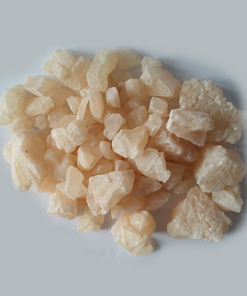

MDMA Crystals: Hallucinogen Definition, Psychedelic Drug Types, Effects and Addiction Risks
Introduction
MDMA Crystals is a common term for crystalline material represented as MDMA, or 3,4-methylenedioxymethamphetamine. MDMA acts as both a stimulant and hallucinogen, producing changes in energy, perception, mood and tactile experience. DEA currently describes MDMA/Ecstasy as having both stimulant and hallucinogenic properties.
Searches around MDMA Crystals also include what is a hallucinogen, what are hallucinogens, hallucinogens examples, what is hallucinogenic drugs, what are psychedelics, definition of hallucinogenic drugs, list of psychedelic drugs, what does hallucinogens make the user do, list of psychedelics, effects of hallucinogens, what does psychedelic mean, are psychedelics addictive, doses of a certain hallucinogen, and types of hallucinogenic.
These terms overlap but are not identical. “Hallucinogen” is a broad category; “psychedelic” usually refers more specifically to substances that profoundly alter perception, thought and consciousness, often through serotonergic mechanisms. MDMA is somewhat different from classic psychedelics such as LSD or psilocybin because its pharmacology strongly involves serotonin, dopamine and norepinephrine release.
What Are MDMA Crystals?
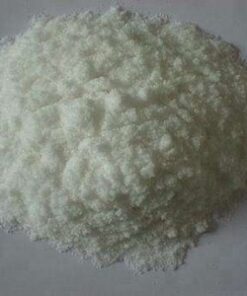
MDMA Crystals refers to crystalline material sold or described as MDMA rather than tablets or capsules.
The appearance of a crystal does not prove:
- chemical identity;
- purity;
- concentration;
- absence of adulterants;
- dose consistency.
Illicit products sold as MDMA or Molly can contain substances other than MDMA. This is one reason visual identification is unreliable. DEA characterizes Ecstasy/MDMA as a controlled psychoactive drug rather than a standardized consumer product.
What Is a Hallucinogen?
A hallucinogen is a psychoactive substance that can significantly alter perception, thought, mood or the way a person experiences reality.
Hallucinogens can produce experiences such as:
- distorted visual perception;
- altered time perception;
- changes in sound or touch;
- unusual thoughts;
- altered sense of self;
- emotional changes.
NIDA notes that psychedelic and dissociative drugs can temporarily alter mood, thoughts and perceptions.
The term “hallucinogen” is broad and includes several pharmacologically different drug families.
What Are Hallucinogens?
Hallucinogens are not one single class with one mechanism.
Broadly, they can include:
Classic psychedelics, such as LSD, psilocybin, DMT and mescaline.
Dissociative drugs, such as ketamine or PCP.
Other drugs with hallucinogenic properties, including MDMA, which DEA describes as both a stimulant and hallucinogen.
This matters because the effects, risks, duration and addiction potential can differ substantially between categories.
What Are Psychedelics?
Psychedelics are psychoactive substances capable of producing marked changes in perception, consciousness, emotion and cognition.
Classic examples include:
- LSD;
- psilocybin;
- DMT;
- mescaline.
NIDA distinguishes psychedelic drugs from dissociative drugs while grouping both under substances that can produce major perceptual and consciousness changes.
MDMA is often discussed alongside psychedelics in modern research, but it is more accurately described as an entactogen/empathogen with stimulant and hallucinogenic properties rather than a classic psychedelic.
What Does Psychedelic Mean?
The word psychedelic refers to substances or experiences associated with profound changes in consciousness, perception, thought and emotion.
In pharmacology, classic psychedelics usually act strongly through serotonin-related pathways, particularly 5-HT2A receptors.
The term is also used culturally in music, visual art and design, but its medical meaning concerns psychoactive effects.
Definition of Hallucinogenic Drugs
A practical definition of hallucinogenic drugs is:
psychoactive substances capable of producing substantial alterations in perception, cognition and sensory processing.
Different hallucinogens can act through different receptor systems.
For example, classic psychedelics are mainly serotonergic, while ketamine is primarily a dissociative NMDA-receptor antagonist. MDMA strongly alters monoamine signaling and is not pharmacologically identical to either category.
Hallucinogens Examples
Examples of hallucinogenic or psychedelic drugs include:
- LSD;
- psilocybin;
- DMT;
- mescaline;
- MDMA;
- ketamine;
- PCP.
However, this list combines drugs with different pharmacological mechanisms.
A scientifically precise article should therefore distinguish classic psychedelics from dissociatives and from drugs such as MDMA that have mixed stimulant and hallucinogenic properties.
List of Psychedelic Drugs
A practical list of psychedelics includes:
- LSD;
- psilocybin;
- psilocin;
- DMT;
- mescaline;
- 5-MeO-DMT.
MDMA is often included in broader psychedelic-assisted therapy discussions, but it is not a classic serotonergic psychedelic in the same way as LSD or psilocybin. Recent reviews of psychedelic therapeutics commonly discuss MDMA alongside psilocybin, LSD and ketamine while still recognizing mechanistic differences.
Sources and Further Reading
For official drug information, DEA — Ecstasy or MDMA explains that MDMA acts as both a stimulant and hallucinogen and can alter time perception, energy and tactile experience.
For broader psychedelic information, NIDA — Psychedelic and Dissociative Drugs explains how psychedelic and dissociative drugs affect mood, thought and perception.
For MDMA-specific health information, NIDA — MDMA (Ecstasy/Molly) discusses acute and long-term health effects and MDMA’s effects on brain chemistry.
For peer-reviewed research, PubMed — Overview of Psilocybin, LSD, MDMA and Ketamine reviews the mechanisms, clinical research and safety considerations surrounding several major psychoactive compounds.
Readers can also explore Psychedelics and Shrooms for broader educational material.
What Does Hallucinogens Make the User Do?
The phrase what does hallucinogens make the user do is too broad because hallucinogens do not force everyone into the same behavior.
Possible effects can include:
- altered perception;
- unusual emotional responses;
- confusion;
- impaired judgment;
- changes in social behavior;
- anxiety or panic;
- dissociation;
- sensory distortions.
Set, environment, individual psychology, dose, purity and other substances all influence behavior.
Someone under the influence of a hallucinogen may make decisions differently because perception and judgment are altered, but the exact behavior cannot be predicted.
Effects of Hallucinogens
The effects of hallucinogens depend on the drug.
Common categories of effects can include:
Perceptual effects
Visual distortions, altered colors, sound changes and altered time perception.
Psychological effects
Euphoria, introspection, anxiety, fear, confusion or unusual thinking.
Physiological effects
Changes in heart rate, blood pressure, body temperature or coordination.
Behavioral effects
Impaired judgment, unusual communication or difficulty interpreting surroundings accurately.
Modern research finds that classic psychedelics are often tolerated reasonably well in controlled clinical settings, but serious adverse events can still occur, and nonclinical use carries different risks.
MDMA Effects
MDMA specifically can produce:
- increased energy;
- emotional closeness;
- empathy;
- sensory enhancement;
- altered time perception.
DEA identifies these characteristic effects while also classifying MDMA as both stimulant and hallucinogen.
NIDA also notes that MDMA can cause health problems involving body temperature, cardiovascular function, mood and brain function.
Is MDMA a Classic Hallucinogen?
Not exactly.
MDMA can cause perceptual alterations and is classified by DEA as having hallucinogenic properties, but its pharmacology differs from LSD or psilocybin.
MDMA strongly increases monoamine signaling, especially serotonin, dopamine and norepinephrine. NIDA describes MDMA as a synthetic psychoactive drug chemically related to both stimulants and hallucinogens.
This is why some researchers refer to MDMA as an entactogen or empathogen.
Types of Hallucinogenic Drugs
One useful classification is:
Classic psychedelics
LSD, psilocybin, DMT and mescaline.
Dissociatives
Ketamine, PCP and related compounds.
Mixed-profile drugs
MDMA has stimulant and hallucinogenic properties.
These categories are useful because they highlight differences in mechanisms, acute effects and risk profiles rather than placing all perception-altering drugs into one simplistic group.
Are Psychedelics Addictive?
Classic psychedelics generally do not show the same addiction pattern as opioids, nicotine or stimulants.
However, “not typically addictive” does not mean “risk-free.”
Risks can include:
- acute panic;
- impaired judgment;
- persistent perceptual symptoms;
- psychiatric complications in vulnerable individuals;
- accidents;
- dangerous interactions with other substances.
MDMA also differs from classic psychedelics because its stimulant-like reinforcement profile can contribute to repeated use. NIDA documents both acute and long-term harms associated with MDMA exposure.
Can MDMA Become Addictive?
Some users can develop problematic MDMA use.
MDMA affects dopamine and reward pathways in addition to serotonin, which can reinforce repeated use.
The degree of addiction risk is generally discussed differently from high-dependence drugs such as opioids or nicotine, but repeated compulsive use can still become clinically significant.
It is therefore inaccurate to say that MDMA has “zero addiction potential.”
Does MDMA Cause Hallucinations?
MDMA can produce perceptual distortions, but classic visual hallucinations are not necessarily its defining effect.
DEA describes distortions in time and perception among MDMA’s effects.
At higher exposure or in adverse reactions, perceptual changes may become more pronounced, but products sold as MDMA can also contain other substances, which makes attribution difficult.
What Does MDMA Do to Serotonin?
MDMA strongly increases serotonin activity.
NIDA explains that MDMA increases the activity of serotonin, dopamine and norepinephrine.
Serotonin contributes to mood, social behavior, sleep and sensory processing, helping explain MDMA’s characteristic emotional and perceptual effects.
Research has also investigated whether repeated recreational exposure may have longer-term serotonergic consequences, although human neurotoxicity findings remain methodologically complex.
MDMA Crystals vs Ecstasy Tablets
MDMA can be represented in multiple illicit forms.
“Ecstasy” traditionally refers to tablets, while “Molly” or MDMA crystals may be marketed as powder or crystalline MDMA.
The assumption that crystals are automatically purer than tablets is unreliable.
Illicit material can contain:
- caffeine;
- methamphetamine;
- synthetic cathinones;
- ketamine;
- other unidentified substances.
A crystal appearance cannot authenticate the drug.
What Does Hallucinogens Look Like?
Hallucinogens do not have one universal appearance.
Depending on the drug, they can appear as:
- crystals;
- powders;
- tablets;
- plant material;
- mushrooms;
- blotter paper;
- liquids.
Appearance therefore cannot establish pharmacology.
Two substances that look similar may have completely different chemical identities.
Doses of a Certain Hallucinogen
The keyword doses of a certain hallucinogen is best handled through clinical context rather than recreational dosing instructions.
Dose-response relationships differ dramatically among hallucinogens. A dose appropriate for one compound could be dangerous or meaningless for another.
Clinical trials use characterized compounds, carefully measured doses, screening and monitoring.
Unregulated products do not provide those safeguards, so giving generalized “hallucinogen dose” advice would be scientifically misleading and unsafe.
Why Dose Comparisons Are Misleading
Milligram numbers cannot be compared directly between psychedelics.
For example:
LSD is active at extremely small quantities.
Psilocybin clinical research uses milligram-scale dosing.
Ketamine uses completely different medical dose ranges.
MDMA has another distinct therapeutic and recreational exposure range.
A statement such as “X mg is a strong hallucinogen dose” without naming the compound is therefore meaningless.
Are Hallucinogens Illegal?
U.S. legal status depends on the exact drug.
Several classic psychedelics and MDMA remain Schedule I federally. DEA’s scheduling framework classifies drugs according to accepted medical use and abuse/dependence potential.
Research authorization does not mean general legal availability.
State and local rules can also differ.
Hallucinogens and Mental Health
Hallucinogens can produce both positive and negative psychological experiences.
Some people report meaningful emotional or introspective experiences. Others experience anxiety, panic, paranoia or confusion.
Controlled research settings reduce some risks by screening participants and using structured monitoring.
A 2024 systematic review of classic psychedelics found that they were generally well tolerated in contemporary research settings, but serious adverse events did occur.
That finding should not be generalized to unknown recreational substances.
Psychedelic Research and Medical Treatment
Modern psychedelic research has investigated possible applications in:
- depression;
- PTSD;
- alcohol use disorder;
- tobacco use disorder;
- other psychiatric conditions.
Recent reviews conclude that some psychedelic-assisted treatments show promise, but evidence varies greatly by drug and condition.
Clinical research does not mean every psychedelic product is an approved medicine.
Frequently Asked Questions
1. What are MDMA Crystals?
MDMA Crystals refers to crystalline material represented as MDMA. Appearance alone cannot verify chemical identity, purity or potency.
2. What is a hallucinogen?
A hallucinogen is a psychoactive substance that can significantly alter perception, cognition, mood or sensory processing.
3. What are hallucinogens?
They are a broad group including classic psychedelics, dissociatives and other drugs with hallucinogenic properties.
4. What are examples of hallucinogens?
Examples include LSD, psilocybin, DMT, mescaline, ketamine, PCP and MDMA, although these substances have different mechanisms.
5. What are psychedelics?
Psychedelics are psychoactive drugs capable of producing profound changes in perception, consciousness and thought.
6. What does psychedelic mean?
It describes substances or experiences involving major changes in perception, cognition, emotion or consciousness.
7. Is MDMA a hallucinogen?
DEA describes MDMA as both a stimulant and hallucinogen.
8. Is MDMA a classic psychedelic?
No. MDMA has a different pharmacological profile and is commonly described as an entactogen/empathogen with stimulant and hallucinogenic properties.
9. Are psychedelics addictive?
Classic psychedelics generally have lower addiction potential than many opioids or stimulants, but they still carry psychological and behavioral risks.
10. Can MDMA be addictive?
Problematic repeated MDMA use can occur, and MDMA affects brain reward systems in addition to serotonin.
11. What are the effects of hallucinogens?
Effects can include altered perception, mood and thought, along with anxiety, confusion and impaired judgment.
12. What are the types of hallucinogenic drugs?
Major categories include classic psychedelics, dissociatives and mixed-profile substances such as MDMA.
13. What does MDMA do to serotonin?
MDMA substantially increases serotonin activity and also affects dopamine and norepinephrine.
14. Are MDMA crystals purer than tablets?
Not necessarily. Physical appearance does not reliably establish purity.
15. Is there one safe dose for hallucinogens?
No. Different drugs have radically different potency and dose-response relationships, so generalized dosing advice would be unsafe and inaccurate.
Responsible MDMA and Hallucinogen Education
MDMA Crystals should be discussed as an illicit physical form of MDMA rather than assumed to be a chemically pure product. DEA identifies MDMA as a drug with both stimulant and hallucinogenic properties, while NIDA describes its major effects on serotonin, dopamine and norepinephrine.
The supporting searches about what is a hallucinogen, what are hallucinogens, hallucinogens examples, what are psychedelics, and list of psychedelic drugs are best answered through pharmacology rather than treating every perception-altering substance as the same.
Classic psychedelics such as LSD, psilocybin, DMT and mescaline differ from dissociatives such as ketamine and from MDMA’s mixed stimulant-entactogenic profile. NIDA explicitly distinguishes psychedelic and dissociative drugs as overlapping but different categories.
Questions about are psychedelics addictive also require nuance. Classic psychedelics generally show lower addiction potential than many other drug classes, while MDMA can still be used compulsively and carries important acute and long-term risks.
Finally, doses of a certain hallucinogen should not be treated as a universal concept. Psychedelic compounds differ enormously in potency, and clinical research uses precise, substance-specific dosing under controlled conditions rather than generalized recreational dose tables.
| Quantity | 10 Grams, 20 Grams, 50 Grams, 100 Grams |
|---|
Be the first to review “MDMA Crystals”
Related products

Pharmaceuticals

Psyschedelics


Microdose Shrooms

Psyschedelics
Pharmaceuticals

Microdose Shrooms
Psyschedelics


Mushrooms
Reviews
There are no reviews yet.