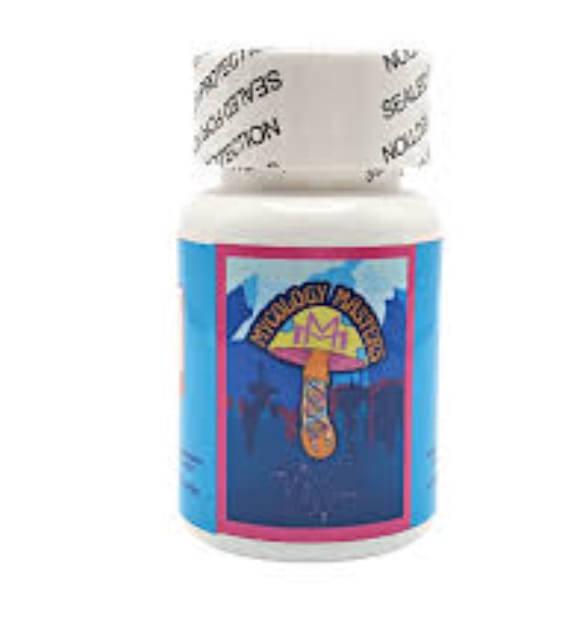
Mycology Masters: Functional Mushrooms, Coffee, Gummies & Supplement Guide
What Is Mycology Masters?
Mycology Masters is a useful starting point for exploring the rapidly expanding world of functional mushrooms, mushroom coffee, gummies, extracts, powders, and dietary supplements.
Today, consumers can find mushroom ingredients in almost every supplement format imaginable. Companies add them to coffee, capsules, gummies, drink powders, chocolate, teas, and wellness blends.
However, format doesn’t determine effectiveness.
Instead, the actual mushroom species, fungal material, extraction method, formulation, dose used in research, manufacturing quality, and available human evidence matter far more.
For example, a gummy containing a small proprietary blend shouldn’t automatically receive the same health claims as a standardized mushroom extract investigated in a clinical study.
Therefore, consumers should learn how to separate mushroom marketing from mushroom science.
For additional educational mushroom resources, explore PsychedelicsAndShrooms.com.
What Are Functional Mushrooms?
Functional mushrooms generally refers to non-psychedelic fungi marketed for nutritional or wellness purposes.
Common examples include:
- lion’s mane;
- Cordyceps;
- reishi;
- turkey tail;
- chaga;
- maitake;
- shiitake; and
- tremella.
Each mushroom contains a different mixture of biological compounds.
Consequently, consumers shouldn’t treat “mushroom extract” as one universal ingredient.
Lion’s mane research, for example, differs considerably from Cordyceps research. Likewise, turkey tail studies don’t automatically support claims made for reishi gummies.
Therefore, species-specific evidence matters.
Functional Mushrooms Aren’t Psychedelic Mushrooms
Consumers sometimes confuse functional mushrooms with psilocybin-containing species.
However, these categories differ substantially.
Lion’s mane, Cordyceps, reishi, turkey tail, maitake, and similar functional mushrooms don’t produce the classic psychedelic effects associated with psilocybin.
Instead, researchers study them for different biological properties.
Consequently, a functional mushroom gummy shouldn’t automatically be described as a psychedelic gummy.
Always check the actual ingredients.
What Are Mushroom Gummies Used For?
Companies market mushroom gummies for several purposes.
Common claims involve:
- energy;
- focus;
- cognitive support;
- stress management;
- immune support;
- sleep;
- exercise performance; and
- general wellness.
However, the strength of scientific evidence differs by mushroom and health claim.
Furthermore, ingredient-level research doesn’t automatically prove that a finished gummy produces the same effect.
Therefore, consumers should ask two separate questions:
What does research say about the mushroom?
Has anyone clinically tested this particular gummy?
That distinction prevents exaggerated conclusions.
Best Mushroom Gummies
Finding the best mushroom gummies requires more than reading star ratings.
First, identify the mushroom species.
Next, check how much mushroom-derived material the manufacturer declares.
Then, determine whether the formulation uses fruiting-body material, mycelium, extract, powder, or a combination.
Consumers should also consider:
- transparent labeling;
- clearly stated serving information;
- batch numbers;
- contaminant testing;
- manufacturer identity;
- sugar content;
- allergens; and
- realistic health claims.
Ultimately, the best product isn’t necessarily the one with the most aggressive marketing.
Transparency provides a much better starting point.
Best Mushroom Gummies on the Market
Searches for the best mushroom gummies on the market often produce large lists of commercial products.
However, rankings can become outdated quickly.
Additionally, affiliate commissions can influence online recommendations.
Therefore, consumers should compare objective characteristics rather than accepting a “number one” product without investigation.
A useful comparison looks like this:
| Factor | What to examine |
|---|---|
| Species | Exact mushroom species |
| Fungal material | Fruiting body, mycelium or combination |
| Preparation | Powder or extract |
| Quantity | Clearly disclosed amount |
| Testing | Batch-specific quality documentation |
| Added ingredients | Sugar, caffeine, herbs and vitamins |
| Claims | Realistic rather than disease-curing |
| Manufacturer | Traceable company information |
This framework works better than relying exclusively on popularity.
Top Rated Mushroom Gummies
A top rated mushroom gummies label can mean several different things.
Sometimes it reflects customer reviews.
Elsewhere, an affiliate website assigns the rating.
In other cases, a marketplace generates the score from user feedback.
None of those systems automatically establishes clinical effectiveness.
A product can taste excellent and receive thousands of positive reviews while still lacking strong evidence for its advertised health benefit.
Therefore, ratings can help evaluate customer satisfaction, but they shouldn’t replace scientific evidence.
Mushroom Gummy Brands
The number of mushroom gummy brands has grown considerably.
As competition increases, manufacturers often differentiate products using terms such as:
“premium,” “advanced,” “super mushroom,” “nootropic,” “adaptogenic,” “maximum strength,” or “clinically inspired.”
However, these marketing phrases don’t necessarily have standardized scientific meanings.
Instead, consumers should focus on the ingredient panel.
Species identification and transparent formulation matter far more than dramatic wording.
Mushroom Gummies Review
A useful mushroom gummies review should evaluate several categories.
Taste certainly matters because consumers need to tolerate the product.
However, a serious review should also examine composition.
For example:
Ingredient transparency
Does the manufacturer identify each mushroom?
Mushroom material
Does the label explain whether the product uses fruiting body, mycelium, powder, or extract?
Testing
Does the company provide meaningful quality documentation?
Added ingredients
Does the gummy contain caffeine, herbal stimulants, vitamins, sweeteners, or other compounds?
Evidence
Do clinical studies support the finished product, or does the company rely exclusively on ingredient-level research?
Together, these questions produce a much stronger review.
Norvia Mushroom Gummies Reviews
Searches for Norvia mushroom gummies reviews illustrate why consumers should evaluate specific brands carefully.
Online reviews can provide useful information about flavor, packaging, texture, delivery experience, and general customer satisfaction.
However, testimonials can’t establish chemical composition or medical effectiveness.
Therefore, anyone evaluating Norvia or another mushroom gummy brand should examine current manufacturer information, ingredients, batch documentation, and independent testing when available.
Additionally, consumers should verify that a review discusses the exact product currently being sold.
Manufacturers can change formulations over time.
Best Mushroom Gummies for Energy
Many people search for the best mushroom gummies for energy.
Cordyceps commonly appears in products marketed for this purpose.
Researchers have investigated Cordyceps species in relation to exercise performance, fatigue, metabolism, and oxygen utilization.
Nevertheless, results vary across studies.
Furthermore, Cordyceps doesn’t work like caffeine.
Therefore, consumers shouldn’t assume that a Cordyceps gummy will create the rapid stimulant sensation associated with coffee or an energy drink.
If a gummy produces a strong immediate stimulant effect, check whether the formulation also contains caffeine or another stimulating ingredient.
Mushroom Energy Gummies
Mushroom energy gummies frequently combine fungi with additional ingredients.
For example, a manufacturer may include:
- Cordyceps;
- lion’s mane;
- B vitamins;
- caffeine;
- green tea extract;
- herbal ingredients; or
- other compounds.
Consequently, any perceived energy effect may not come from the mushroom alone.
This issue matters when interpreting reviews.
A consumer might report that a mushroom gummy provides substantial energy while the formulation actually contains caffeine.
Therefore, read the complete ingredient panel.
Do Mushroom Gummies Give You Energy?
Do mushroom gummies give you energy?
Possibly, depending on what the gummy contains.
However, the answer isn’t as straightforward as supplement advertising sometimes suggests.
A Cordyceps-containing product may draw on research exploring exercise and fatigue. Meanwhile, a caffeine-containing mushroom gummy can produce stimulant effects primarily because of caffeine.
Additionally, placebo effects and expectations can influence perceived energy.
Therefore, consumers shouldn’t assume that every mushroom gummy acts like an energy supplement.
Best Mushroom Gummies for Energy and Focus
Products marketed as the best mushroom gummies for energy and focus often combine Cordyceps with lion’s mane.
The marketing logic is straightforward.
Cordyceps commonly appears in energy and exercise products, while lion’s mane frequently appears in cognitive-support supplements.
However, combining two researched ingredients doesn’t automatically create a clinically proven finished product.
Researchers would need to study the actual formulation to establish its effects reliably.
Therefore, consumers should distinguish ingredient rationale from finished-product evidence.
Lion’s Mane and Focus
Lion’s mane, scientifically associated with Hericium erinaceus, has attracted substantial attention in cognitive research.
Researchers have investigated compounds found in lion’s mane in relation to nerve biology, cognition, mood, and neurological mechanisms.
Some small human studies have produced encouraging findings.
Nevertheless, research remains developing.
Therefore, companies shouldn’t describe lion’s mane gummies as proven treatments for dementia, ADHD, depression, or other medical conditions.
Promising research doesn’t equal an approved treatment.
Cordyceps and Energy
Cordyceps represents another major functional mushroom category.
Historically, Ophiocordyceps sinensis attracted considerable interest. Today, cultivated Cordyceps militaris also appears frequently in commercial supplements.
Researchers have investigated Cordyceps in relation to:
- exercise;
- fatigue;
- energy metabolism;
- antioxidant activity;
- immune signaling; and
- respiratory physiology.
However, evidence varies according to preparation and study design.
Therefore, consumers should avoid assuming that every Cordyceps gummy produces the same result.
Mushroom Coffee for Sleep
The phrase mushroom coffee for sleep sounds contradictory because coffee often contains caffeine.
Caffeine can interfere with sleep, particularly when someone consumes it later in the day or has high caffeine sensitivity.
Therefore, consumers looking for a nighttime mushroom beverage should first check whether the product contains coffee-derived caffeine.
Some mushroom beverages contain less caffeine than ordinary coffee.
Others contain no coffee beans at all and instead use roasted plant ingredients with mushroom extracts.
Consequently, “mushroom coffee” doesn’t always describe the same beverage.
Can Mushroom Coffee Improve Sleep?
Certain mushroom ingredients, particularly reishi, appear in products marketed for relaxation and sleep.
However, that doesn’t mean ordinary caffeinated mushroom coffee functions as a proven sleep treatment.
Instead, the overall formulation matters.
A beverage containing substantial caffeine may work against someone’s sleep goals even if it also contains reishi.
Therefore, consumers should examine caffeine content before relying on marketing terms such as “calm,” “night,” or “relax.”
Mushroom Coffee 30 Servings
Mushroom coffee 30 servings generally describes package quantity rather than effectiveness.
A package containing 30 servings might provide a month’s supply when used once daily.
However, the number of servings doesn’t tell consumers:
- mushroom species;
- extract concentration;
- caffeine amount;
- sugar content;
- clinical evidence; or
- manufacturing quality.
Therefore, don’t confuse package size with product strength.
Read the nutrition and supplement information instead.
Best Mushroom Coffee for Diabetes
Searches for the best mushroom coffee for diabetes require particular caution.
No mushroom coffee should replace evidence-based diabetes treatment.
Blood-glucose management can involve diet, physical activity, monitoring, medication, insulin, and professional medical care depending on the individual.
Some functional mushrooms have attracted metabolic research.
Nevertheless, ingredient research doesn’t establish mushroom coffee as a diabetes treatment.
Furthermore, commercial coffee products may contain added sugar or sweeteners.
Therefore, people managing diabetes should examine the complete nutrition panel rather than focusing solely on mushroom ingredients.
Mushroom Coffee and Blood Sugar
Several mushrooms contain compounds researchers have studied in metabolic contexts.
For example, scientists have explored maitake, reishi, Cordyceps, and other fungi for potential effects involving glucose metabolism.
However, laboratory or animal findings don’t automatically establish human clinical benefits.
Additionally, supplement interactions may matter for people taking glucose-lowering medication.
Consequently, consumers with diabetes should discuss concentrated supplements with an appropriate healthcare professional.
Best Mushroom for Lungs
The phrase best mushroom for lungs appears frequently in supplement searches.
Cordyceps receives considerable attention because researchers have historically investigated it in respiratory and exercise-related contexts.
Other mushrooms also appear in traditional wellness systems.
However, no functional mushroom should replace medical evaluation for persistent respiratory symptoms.
For example, shortness of breath can result from asthma, infection, cardiovascular disease, chronic lung disease, anemia, or numerous other conditions.
Therefore, supplement use shouldn’t delay diagnosis.
Mushrooms for Lung Health
Research into mushrooms for lung health remains an interesting scientific field.
Researchers have investigated fungal compounds for immune, inflammatory, antioxidant, and respiratory mechanisms.
Nevertheless, consumers should distinguish mechanism research from proven treatment.
A mushroom extract showing anti-inflammatory activity in laboratory experiments doesn’t automatically treat asthma or chronic obstructive pulmonary disease in humans.
Likewise, a supplement shouldn’t be marketed as a cure for lung cancer or respiratory infections without strong clinical evidence.
Reishi and Respiratory Wellness
Reishi, commonly associated with Ganoderma species, has a long history in traditional wellness practices.
Researchers continue to investigate its polysaccharides, triterpenes, and other compounds.
However, human evidence varies by condition.
Therefore, consumers should treat reishi as a research-active functional mushroom rather than a proven respiratory medication.
Best Mushroom Supplement
Choosing the best mushroom supplement starts with identifying the intended purpose.
Someone interested in cognition might investigate lion’s mane.
Meanwhile, another consumer interested in exercise research may encounter Cordyceps.
Turkey tail frequently appears in immune-related research, while reishi appears in wellness and immune discussions.
However, no single mushroom qualifies as universally “best.”
Instead, evaluate the product according to its formulation and evidence.
Fruiting Body vs. Mycelium
Mushroom supplement labels frequently use the terms fruiting body and mycelium.
They describe different fungal structures.
The fruiting body is the familiar mushroom structure.
By contrast, mycelium consists of networks of fungal hyphae that grow through suitable material.
Both can contain biologically interesting compounds.
However, their chemical profiles can differ.
Therefore, transparent manufacturers should identify which material they use.
Mushroom Powder vs. Mushroom Extract
Powder and extract aren’t interchangeable.
A powder generally contains dried and ground fungal material.
An extract, meanwhile, uses a processing method intended to concentrate selected soluble compounds.
Therefore, equal weights don’t necessarily provide equal chemical compositions.
For example, 500mg of powder shouldn’t automatically be considered equivalent to 500mg of concentrated extract.
Processing details matter.
Beta-Glucans and Mushroom Supplements
Beta-glucans represent an important group of polysaccharides found in fungi.
Consequently, some mushroom manufacturers report beta-glucan content.
This information can provide more useful context than simply advertising a large total “mushroom blend” number.
However, beta-glucan content doesn’t prove every claimed health effect.
Clinical relevance still depends on the species, preparation, study population, and outcome.
Mushroom Supplements Gummies
Mushroom supplements gummies offer convenience and flavor.
However, gummy formulation introduces additional ingredients.
Manufacturers may add:
- sugar;
- glucose syrup;
- pectin;
- gelatin;
- acids;
- flavorings;
- coloring; and
- preservatives.
Therefore, consumers should evaluate both the mushroom ingredients and the gummy base.
A supplement doesn’t become nutritionally ideal simply because it contains mushrooms.
Gummies vs. Capsules vs. Powders
| Feature | Gummies | Capsules | Powders |
|---|---|---|---|
| Convenient | High | High | Moderate |
| Added sweeteners | Common | Less common | Variable |
| Easy to mix into drinks | No | No | Yes |
| Can contain extracts | Yes | Yes | Yes |
| Quality varies | Yes | Yes | Yes |
| Testing matters | Yes | Yes | Yes |
No format automatically wins.
Instead, choose based on formulation quality, personal preference, and intended use.
How to Evaluate a Mushroom Supplement
Consumers can use a straightforward checklist.
First, identify the exact mushroom species.
Next, determine which fungal material the manufacturer uses.
Then, examine whether the product contains powder or extract.
Afterward, review testing information.
Finally, compare health claims with available evidence.
Avoid products that promise to cure serious diseases.
Such claims should immediately trigger additional scrutiny.
Third-Party Testing
Testing can help evaluate supplement quality.
However, the phrase third-party tested requires context.
Consumers should determine whether testing covers:
- identity;
- microorganisms;
- heavy metals;
- pesticides;
- residual solvents; and
- relevant active or marker compounds.
Furthermore, the report should ideally correspond to the actual product batch.
A generic laboratory logo isn’t the same as transparent batch documentation.
Mushroom Gummies Side Effects
Functional mushroom gummies can still cause unwanted reactions.
Potential problems may include:
- digestive discomfort;
- nausea;
- allergic reactions;
- sensitivity to additional ingredients; and
- medication interactions.
Furthermore, gummies containing caffeine can create caffeine-related effects.
Therefore, consumers should evaluate the entire formulation rather than blaming or crediting the mushroom alone.
Mushroom Supplements and Medications
People taking prescription medication should consider potential interactions.
This becomes especially important for individuals using medicines that influence:
- blood glucose;
- blood pressure;
- blood clotting; or
- immune function.
Different mushroom species contain different compounds.
Consequently, interaction risk isn’t identical across all products.
People with significant medical conditions should discuss concentrated mushroom supplements with a qualified healthcare professional.
Reviews vs. Scientific Evidence
Customer reviews answer useful questions.
For example:
Does the product taste good?
Is the packaging convenient?
Did it arrive intact?
However, reviews can’t reliably answer:
Does this product prevent diabetes?
Does it treat lung disease?
Does it clinically improve cognition?
Those questions require stronger scientific evidence.
Therefore, consumers should use reviews and research for different purposes.
Mycology Masters and Smarter Mushroom Shopping
The Mycology Masters topic ultimately highlights a broader lesson about the modern functional-mushroom market.
Consumers now face thousands of products and health claims.
Therefore, product literacy matters.
A strong mushroom supplement should clearly explain what it contains rather than forcing consumers to decode vague proprietary blends.
Likewise, responsible companies should distinguish preliminary research from established clinical benefits.
That transparency benefits everyone.
Frequently Asked Questions
1. What are mushroom gummies used for?
Companies commonly market mushroom gummies for energy, focus, immune support, stress management, cognition, and general wellness. However, scientific evidence differs considerably by mushroom species and finished product.
2. Do mushroom gummies give you energy?
Some formulations contain Cordyceps, while others add caffeine, vitamins, or stimulating herbs. Therefore, any perceived energy effect may come from several ingredients rather than mushrooms alone.
3. What are the best mushroom gummies?
No single gummy is best for everyone. Look for clearly identified species, transparent quantities, fungal material disclosure, sensible health claims, and credible quality testing.
4. Can mushroom coffee help with sleep?
A caffeine-free mushroom beverage may fit a nighttime routine better than ordinary coffee. However, caffeinated mushroom coffee can still interfere with sleep, particularly in caffeine-sensitive people.
5. What is the best mushroom for lung health?
Cordyceps frequently appears in respiratory and exercise research, while other functional mushrooms have also attracted scientific interest. Nevertheless, no mushroom supplement should replace medical treatment for lung disease.
6. What is the best mushroom supplement?
The answer depends on the goal and available evidence. Consumers should prioritize species identification, transparent formulation, appropriate testing, realistic claims, and relevant human research.
Educational Resources
For additional educational information about functional mushrooms, mushroom coffee, supplements, gummies, and fungal science, explore PsychedelicsAndShrooms.com.
Readers can also search peer-reviewed functional-mushroom research through PubMed and review dietary-supplement information through the U.S. Food and Drug Administration..
| Quantity | 3 bottles, 6 bottles, 12 bottles |
|---|
Be the first to review “Mycology Masters”
Related products
Mushroom Capsule
Mushroom Capsule
Mushroom Capsule
Mushroom Capsule
Mushrooms
Mushroom Capsule
Mushroom Capsule
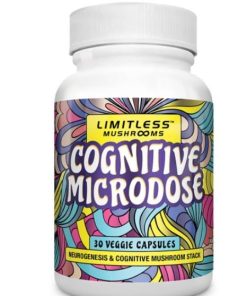
Mushroom Capsule
Reviews
There are no reviews yet.