mushroom and shrooms
Calories for Mushrooms: Understanding the Nutritional Value of Different Mushroom Types
Jun
Mushrooms are among the lowest-calorie foods available, making them a popular choice for people seeking nutritious and satisfying ingredients without excessive calories. Whether added to salads, soups, stir-fries, or plant-based meals, mushrooms provide flavor, texture, vitamins, and minerals while contributing very few calories to the overall diet. Educational resources such as https://psychedelicsandshrooms.com/ help readers better understand mushroom nutrition, fungal biology, and the differences between edible mushrooms and other mushroom species through science-based information.
As healthy eating continues to gain popularity across the United States, many consumers are paying closer attention to calorie intake and nutrient density. Mushrooms stand out because they offer both nutritional value and culinary versatility while remaining naturally low in calories. This combination has helped mushrooms become a staple ingredient in many weight-conscious and wellness-focused diets.
Understanding the calorie content of mushrooms can help individuals make informed dietary choices while appreciating the broader nutritional benefits that mushrooms provide.
How Many Calories Are in Mushrooms?
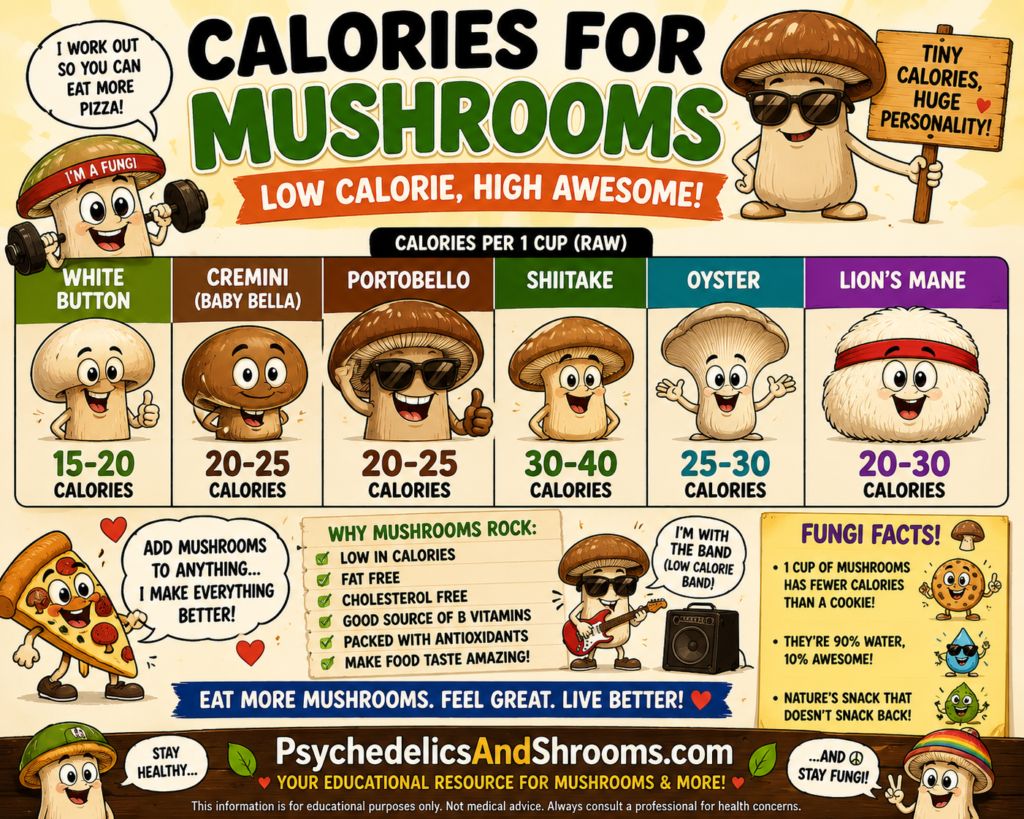
Most edible mushrooms contain remarkably few calories. According to nutritional data from the United States Department of Agriculture (USDA), one cup of raw white button mushrooms contains approximately 15 to 20 calories.
This low-calorie profile is largely due to the fact that mushrooms are composed of more than 90 percent water. Despite their low calorie count, mushrooms still provide valuable nutrients including B vitamins, selenium, potassium, copper, antioxidants, and dietary fiber.
Because mushrooms contain relatively few calories compared to many other foods, they are often included in calorie-conscious meal plans and healthy eating programs. Their ability to add volume and flavor without significantly increasing calorie intake makes them attractive to individuals pursuing balanced nutrition.
For readers interested in learning more about mushroom nutrition and wellness topics, educational guides are available at https://psychedelicsandshrooms.com/.
Calories in Popular Mushroom Varieties
Different mushroom species contain slightly different calorie amounts, although most edible mushrooms remain relatively low in calories.
White button mushrooms, the most commonly consumed mushroom in the United States, contain approximately 15 to 20 calories per cup when raw. These mushrooms are widely available and commonly used in salads, pizzas, pasta dishes, and soups.
Portobello mushrooms contain roughly 20 to 25 calories per cup. Their larger size and meat-like texture make them popular as plant-based alternatives in burgers and grilled dishes.
Shiitake mushrooms generally contain around 30 to 40 calories per cup depending on preparation methods. These mushrooms are prized for their rich flavor and culinary versatility.
Oyster mushrooms typically provide approximately 25 to 30 calories per cup while offering important nutrients and beneficial compounds that continue to attract scientific interest.
Lion’s mane mushrooms also remain relatively low in calories while gaining attention for their unique appearance and culinary uses.
Why Mushrooms Are Low in Calories
Several factors contribute to the low calorie content of mushrooms. Their high water content is one of the primary reasons. Water adds volume without contributing calories, allowing mushrooms to provide satisfying portions while maintaining a low energy density.
Mushrooms are also naturally low in fat. Unlike many processed foods, mushrooms contain very small amounts of fat and virtually no cholesterol. They are similarly low in sugar and contain modest carbohydrate levels.
This nutritional composition allows mushrooms to support a wide variety of dietary patterns, including Mediterranean diets, plant-based diets, vegetarian eating plans, and calorie-controlled nutrition programs.
Their savory umami flavor can also help create satisfying meals without relying heavily on high-calorie ingredients.
Nutritional Value Beyond Calories
While calorie content is important, mushrooms offer much more than simply low-calorie nutrition. They contain a range of vitamins and minerals that support overall health and wellness.
Mushrooms are particularly valued for their B vitamin content, including riboflavin, niacin, and pantothenic acid. These vitamins help support energy metabolism and normal cellular function.
Minerals such as selenium, copper, phosphorus, and potassium are also found in many edible mushroom varieties. Potassium contributes to fluid balance and muscle function, while selenium supports antioxidant activity within the body.
Certain mushrooms exposed to ultraviolet light may also contain vitamin D, making them one of the few plant-based dietary sources of this important nutrient.
Readers can explore more educational mushroom resources and nutrition guides through https://psychedelicsandshrooms.com/guides/.
Are Mushrooms Good for Weight Management?
Many nutrition experts consider mushrooms a useful food for weight-conscious meal planning because they provide flavor and volume while remaining low in calories.
Substituting mushrooms for higher-calorie ingredients may help reduce overall calorie intake without sacrificing meal satisfaction. For example, mushrooms are often used alongside or in place of meat in certain recipes due to their texture and umami flavor.
The fiber content found in mushrooms may also contribute to feelings of fullness, which can support healthy eating habits when combined with a balanced diet.
However, mushrooms are not a magic solution for weight loss. Long-term health outcomes depend on overall dietary patterns, physical activity, and lifestyle factors rather than any single food.
Cooked Mushrooms vs Raw Mushrooms
Cooking methods can influence the calorie content of mushroom dishes. Raw mushrooms naturally contain very few calories, but additional ingredients may increase calorie totals during preparation.
For example, mushrooms sautéed in butter or oil may contain significantly more calories than raw mushrooms because cooking fats contribute additional energy.
Grilled, roasted, steamed, or lightly sautéed mushrooms can remain relatively low in calories while enhancing flavor and texture. Consumers interested in maintaining lower-calorie meals often choose cooking methods that minimize added fats.
Understanding how preparation methods affect nutritional content can help individuals make more informed food choices.
Edible Mushrooms and Mushroom Education
Educational discussions about mushrooms often include topics beyond nutrition, such as fungal biology, mushroom ecology, and species identification. Responsible educational platforms like Psychedelics and Shrooms help readers better understand mushrooms while distinguishing edible culinary species from medicinal and psychedelic fungi.
Public interest in mushrooms continues to grow as researchers investigate their nutritional properties, ecological importance, and potential applications in sustainability and biotechnology.
Increasing awareness about fungi helps promote scientific literacy while encouraging safe and informed learning about mushroom diversity.
Final Thoughts on Calories for Mushrooms
Mushrooms are among the most calorie-efficient foods available, providing valuable nutrients while contributing relatively few calories to meals. Their combination of low calorie density, essential vitamins, minerals, antioxidants, and culinary versatility makes them a valuable addition to many healthy eating patterns.
Whether enjoyed raw, grilled, roasted, or incorporated into favorite recipes, mushrooms offer an excellent way to add flavor and nutrition without dramatically increasing calorie intake.
For more educational articles about mushrooms, nutrition, wellness, and fungal science, visit https://psychedelicsandshrooms.com/.
FAQs
How many calories are in mushrooms?
Most edible mushrooms contain approximately 15 to 40 calories per cup depending on the species. Learn more about mushroom nutrition at https://psychedelicsandshrooms.com/.
Are mushrooms good for weight loss?
Mushrooms may support weight-conscious eating because they are low in calories while providing nutrients and dietary fiber that can contribute to meal satisfaction.
Which mushroom has the fewest calories?
White button mushrooms are among the lowest-calorie mushroom varieties commonly available in grocery stores.
Do cooked mushrooms have more calories than raw mushrooms?
The mushrooms themselves remain relatively low in calories, but added oils, butter, sauces, or other ingredients can increase total calorie content.
Are mushrooms nutritious despite being low in calories?
Yes. Mushrooms provide vitamins, minerals, antioxidants, and dietary fiber while remaining naturally low in calories. Additional nutrition guides can be found at https://psychedelicsandshrooms.com/guides/.
Why are mushrooms considered healthy foods?
Mushrooms are considered healthy because they combine low calorie content with important nutrients, making them a nutrient-dense addition to balanced diets. More mushroom education resources are available at https://psychedelicsandshrooms.com/.
