mushroom and shrooms
Mushroom Substrate: A Complete Guide to Growing Mediums for Mushrooms
Jul
A healthy mushroom begins with the right growing environment, and one of the most important components is the mushroom substrate. Whether mushrooms are cultivated commercially or for educational purposes, the substrate provides the nutrients, moisture, and structure needed for fungal growth. Understanding how substrates work helps explain why different mushroom species thrive on different materials.
Unlike green plants, mushrooms do not produce energy through photosynthesis. Instead, fungi obtain nutrients by breaking down organic matter. This makes the substrate a vital part of the mushroom life cycle. Educational resources available at https://psychedelicsandshrooms.com/ help readers learn about mushroom biology, fungal ecology, cultivation science, and the differences between edible, functional, and psychedelic mushrooms through evidence-based information.
What Is Mushroom Substrate?
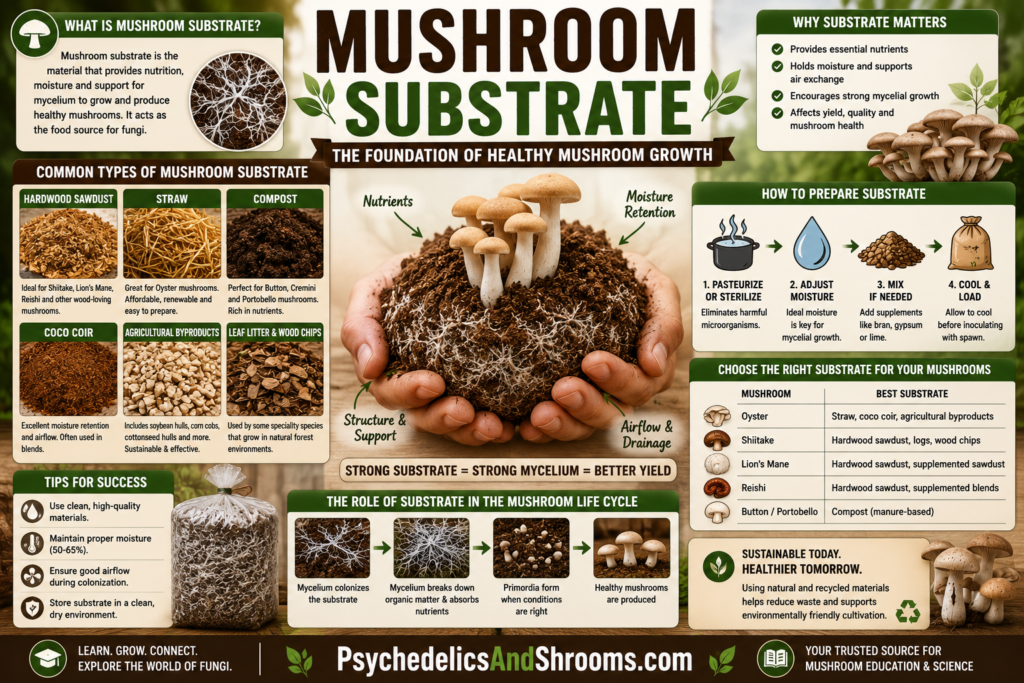
A mushroom substrate is the material that provides nutrients and physical support for mushroom mycelium to grow. Mycelium is the underground network of microscopic fungal threads that absorbs nutrients from the substrate before producing mushrooms under suitable environmental conditions.
Different mushroom species naturally grow on different materials in the wild. Some prefer hardwood, while others grow on straw, compost, or decaying plant matter. Choosing an appropriate substrate supports healthy mycelial development and successful mushroom production.
Why Is Mushroom Substrate Important?
The substrate performs several essential functions during the mushroom life cycle.
It provides:
- Nutrients for fungal growth
- Moisture retention
- Structural support
- Air spaces for gas exchange
- A stable environment for mycelium development
Without a suitable substrate, mushrooms cannot develop efficiently.
Common Types of Mushroom Substrate
Several substrate materials are commonly used for edible and functional mushroom cultivation.
Hardwood Sawdust
Hardwood sawdust is widely used for species such as Shiitake, Lion’s Mane, and Reishi because it closely resembles the wood these mushrooms naturally colonize.
Straw
Pasteurized straw is a popular substrate for Oyster mushrooms due to its availability, moisture retention, and ease of preparation.
Compost
Compost-based substrates are commonly associated with the cultivation of Button, Cremini, and Portobello mushrooms. Properly prepared compost supplies nutrients while supporting consistent growth.
Coco Coir
Coconut coir is valued for its ability to retain moisture while maintaining good airflow. It is often combined with other materials in cultivation projects.
Agricultural Byproducts
Materials such as soybean hulls, corn cobs, cottonseed hulls, and other agricultural residues may be incorporated into substrate blends to improve nutrition and sustainability.
Characteristics of a Good Mushroom Substrate
An effective substrate generally provides the right balance of moisture, nutrients, and structure.
Quality substrates typically have:
- Good water-holding capacity
- Adequate airflow
- Stable texture
- Appropriate nutrient content
- Low contamination risk after proper preparation
These characteristics help support healthy mycelial growth.
Preparing Mushroom Substrate
Before use, many substrates undergo preparation to reduce unwanted microorganisms.
Common preparation methods include:
- Pasteurization
- Sterilization
- Moisture adjustment
- Mixing supplemental ingredients when appropriate
The preparation method depends on the substrate type and the mushroom species being cultivated.
Choosing the Right Substrate
Different mushrooms thrive on different growing media.
For example:
- Shiitake often performs well on hardwood-based substrates.
- Oyster mushrooms commonly grow on straw or agricultural fibers.
- Button mushrooms typically grow on composted substrates.
Understanding each species’ natural habitat helps explain why substrate selection matters.
Sustainability and Mushroom Cultivation
One of the most interesting aspects of mushroom cultivation is the ability to recycle agricultural and forestry byproducts into productive growing media.
Using materials that might otherwise become waste can help reduce environmental impact while supporting sustainable food production and fungal research.
This efficient use of natural resources highlights the ecological importance of fungi.
Mushroom Substrate and Mycelium
The visible mushroom is only the fruiting body of a much larger fungal organism.
The mycelium grows throughout the substrate, absorbing nutrients and storing energy before conditions become favorable for mushroom production.
Healthy mycelium is essential for successful cultivation, making substrate quality a key factor in fungal development.
Readers interested in learning more about mushroom biology and fungal ecology can explore additional educational resources at https://psychedelicsandshrooms.com/guides/.
Why Mushroom Education Matters
Learning about mushroom substrates provides valuable insight into fungal biology and sustainable agriculture. It also helps readers understand how different mushroom species interact with their environment and why successful cultivation depends on matching each species with an appropriate growing medium.
Whether studying edible mushrooms, functional fungi, or mushroom ecology, understanding substrates builds a strong foundation in mycology.
Final Thoughts
A mushroom substrate is much more than a growing medium. It supplies nutrients, moisture, and structural support that allow mycelium to develop and produce healthy mushrooms. From hardwood sawdust and straw to compost and coconut coir, each substrate offers unique advantages for different mushroom species.
Understanding how substrates function helps gardeners, students, researchers, and mushroom enthusiasts appreciate the remarkable biology of fungi and the sustainable role mushrooms play in modern agriculture.
For more educational articles about mushroom cultivation, mushroom biology, mycology, and fungal science, visit https://psychedelicsandshrooms.com/.
FAQs
What is a mushroom substrate?
A mushroom substrate is the material that supplies nutrients, moisture, and support for mushroom mycelium to grow and produce mushrooms.
What materials are commonly used as mushroom substrates?
Common substrates include hardwood sawdust, straw, compost, coconut coir, and agricultural byproducts.
Why is substrate important for mushrooms?
The substrate provides nutrients, moisture, airflow, and physical support that allow mycelium to develop successfully.
Do all mushroom species grow on the same substrate?
No. Different mushroom species naturally prefer different materials depending on their ecological adaptations.
Can agricultural waste be used as mushroom substrate?
Yes. Many agricultural byproducts can be repurposed into sustainable mushroom-growing media when properly prepared.
Where can I learn more about mushroom cultivation and biology?
Visit https://psychedelicsandshrooms.com/ and https://psychedelicsandshrooms.com/guides/ for educational resources about mushrooms, cultivation, and fungal science.
