
mushroom and shrooms
Lion’s Mane Benefits: What Science Says About This Remarkable Mushroom
Jun
Lion’s Mane mushroom has become one of the most popular functional mushrooms in the United States, attracting attention from researchers, nutrition experts, wellness enthusiasts, and curious consumers. Recognized by its distinctive white, cascading appearance that resembles a lion’s mane, this unique mushroom has a long history of use in traditional practices and is now the subject of growing scientific interest. Educational resources such as https://psychedelicsandshrooms.com/ help readers understand the differences between edible mushrooms, medicinal mushrooms, and psychedelic fungi while providing science-based information about the mushroom kingdom.
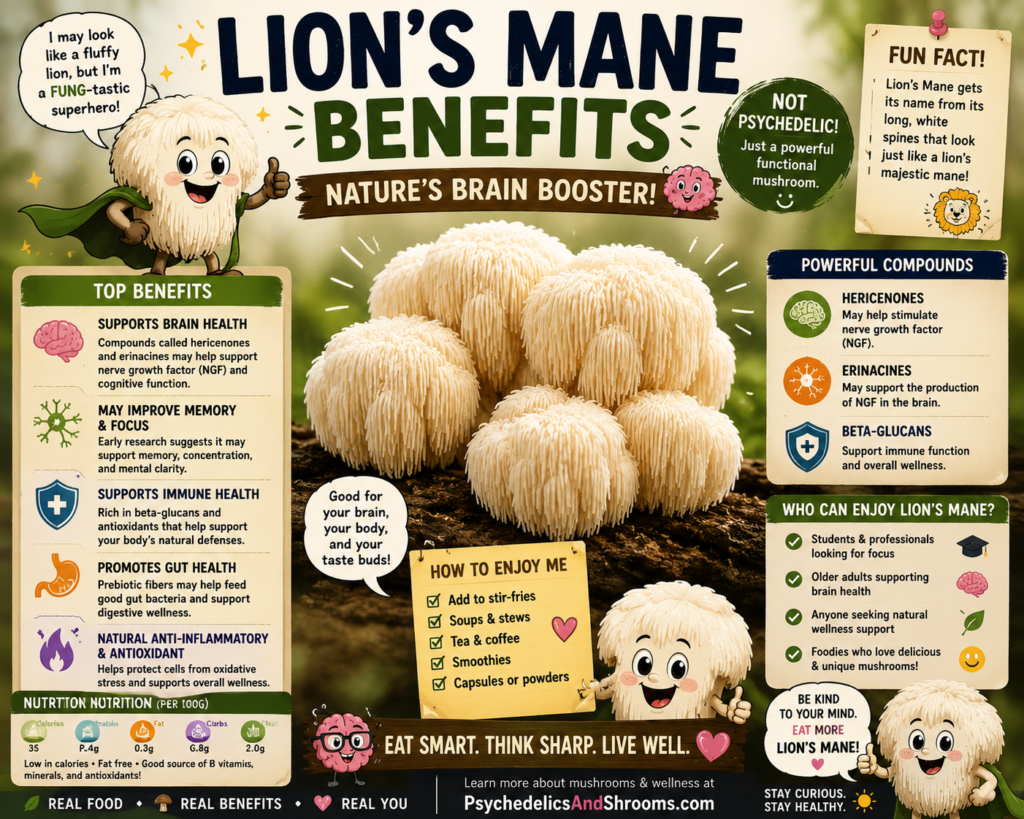
Known scientifically as Hericium erinaceus, Lion’s Mane is both an edible and functional mushroom. Unlike psychedelic mushrooms, Lion’s Mane does not contain psilocybin or produce hallucinogenic effects. Instead, researchers are studying its nutritional compounds and potential wellness applications, particularly in areas related to cognitive function, nervous system health, and overall well-being.
As public interest in mushrooms continues to grow, Lion’s Mane has become one of the most widely discussed species due to its unique nutritional profile and promising research findings.
What Is Lion’s Mane Mushroom?
Lion’s Mane is a naturally occurring mushroom found in parts of North America, Europe, and Asia. It typically grows on hardwood trees and is easily recognized by its long, white, shaggy spines that resemble a lion’s mane.
For centuries, Lion’s Mane has been valued as both a culinary mushroom and a subject of traditional wellness practices. Today, it is commonly available in fresh, dried, powdered, and supplement forms throughout the United States.
The mushroom contains a variety of naturally occurring compounds, including polysaccharides, beta-glucans, antioxidants, and unique substances known as hericenones and erinacines. These compounds have attracted attention from researchers investigating the relationship between mushrooms and human health.
Lion’s Mane and Brain Health Research
One of the primary reasons Lion’s Mane has gained popularity is its connection to cognitive health research. Scientists are investigating how certain compounds found in Lion’s Mane may interact with nerve growth factor (NGF), a protein involved in the growth, maintenance, and survival of nerve cells.
Researchers continue exploring whether Lion’s Mane may support healthy cognitive function and nervous system processes. While findings remain an active area of study, the mushroom has become one of the most researched functional fungi in relation to brain health.
It is important to note that research is ongoing, and Lion’s Mane should not be viewed as a treatment or cure for any medical condition. Educational discussions should focus on current scientific evidence while recognizing the need for further investigation.
For readers interested in mushroom science and wellness research, additional educational content is available through https://psychedelicsandshrooms.com/guides/.
Nutritional Benefits of Lion’s Mane
Beyond its growing reputation in wellness circles, Lion’s Mane is also a nutritious edible mushroom. Like many mushrooms, it is naturally low in calories while providing beneficial nutrients.
Lion’s Mane contains dietary fiber, antioxidants, and various micronutrients that support a balanced diet. Mushrooms in general are valued for their nutrient density because they offer vitamins and minerals without excessive calories.
Many consumers incorporate Lion’s Mane into soups, stir-fries, teas, and other recipes as part of a healthy eating plan. Its mild flavor and seafood-like texture have made it increasingly popular among chefs and home cooks alike.
According to nutritional research, mushrooms can contribute valuable nutrients while supporting dietary variety and overall wellness.
Antioxidant Properties of Lion’s Mane
Lion’s Mane contains naturally occurring antioxidants that help protect cells from oxidative stress. Oxidative stress occurs when free radicals accumulate within the body and may contribute to cellular damage over time.
Antioxidants help neutralize these unstable molecules and are commonly associated with healthy dietary patterns. Researchers continue studying the antioxidant compounds present in mushrooms and their broader implications for health and nutrition.
A diet rich in fruits, vegetables, and nutrient-dense foods such as mushrooms can help support overall wellness and balanced nutrition.
Lion’s Mane and Immune System Research
Another area of interest involves the relationship between mushrooms and immune function. Lion’s Mane contains beta-glucans, naturally occurring compounds found in many mushroom species.
Scientists have investigated beta-glucans for their potential role in supporting normal immune system processes. Research in this area continues to expand as interest in functional mushrooms grows worldwide.
While the findings are promising, experts emphasize that maintaining immune health involves many factors, including sleep, exercise, nutrition, stress management, and overall lifestyle habits.
Educational platforms like Psychedelics and Shrooms encourage readers to understand the broader context of wellness rather than relying on any single food or supplement.
Lion’s Mane Compared to Other Functional Mushrooms
Lion’s Mane is often discussed alongside other well-known functional mushrooms such as reishi, turkey tail, chaga, cordyceps, and maitake.
While each mushroom contains unique compounds and has been studied for different purposes, Lion’s Mane is particularly associated with research involving cognitive wellness and nervous system function.
Its growing popularity reflects a broader trend toward increased interest in fungi, mushroom nutrition, and the role mushrooms may play within healthy lifestyles.
The expanding field of mycology continues revealing new information about fungal biology, ecology, nutrition, and potential applications in science and medicine.
Is Lion’s Mane Safe?
Lion’s Mane is generally recognized as an edible mushroom and has a long history of culinary use. Most healthy adults can consume Lion’s Mane as food as part of a balanced diet.
However, individuals with allergies, underlying health conditions, or questions about supplements should consult qualified healthcare professionals before making significant dietary changes.
As with any food or supplement, moderation and informed decision-making are important. Consumers should purchase products from reputable sources and follow manufacturer recommendations.
Educational discussions about Lion’s Mane should always prioritize evidence-based information and responsible learning.
Why Lion’s Mane Continues to Grow in Popularity
The popularity of Lion’s Mane reflects growing public interest in mushrooms, wellness, nutrition, and scientific research. Social media, podcasts, documentaries, and academic studies have all contributed to increased awareness of functional mushrooms.
Many consumers appreciate that Lion’s Mane is both a culinary mushroom and a subject of ongoing scientific investigation. This combination of traditional use, modern research, and nutritional value has helped establish Lion’s Mane as one of the most talked-about mushrooms today.
At Psychedelics and Shrooms, educational content aims to help readers better understand mushroom science, fungi research, wellness topics, and the diverse roles mushrooms play in nature and human culture.
Final Thoughts on Lion’s Mane Benefits
Lion’s Mane mushroom continues to attract attention for its nutritional value, unique appearance, and promising areas of scientific research. While studies examining cognitive health, nervous system function, antioxidants, and immune support remain ongoing, the mushroom has already earned a strong reputation among those interested in functional foods and wellness.
Understanding the science behind Lion’s Mane allows consumers to make informed decisions while appreciating the broader significance of fungi in nutrition and health research.
For more educational articles about mushrooms, wellness, nutrition, and fungal science, visit https://psychedelicsandshrooms.com/.
FAQs
What is Lion’s Mane mushroom?
Lion’s Mane (Hericium erinaceus) is an edible functional mushroom known for its distinctive appearance and growing popularity in nutrition and wellness discussions. Learn more at https://psychedelicsandshrooms.com/.
What are the main benefits of Lion’s Mane?
Researchers are studying Lion’s Mane for its potential role in cognitive health, antioxidant activity, immune support, and overall wellness.
Is Lion’s Mane psychedelic?
No. Lion’s Mane is not a psychedelic mushroom and does not contain psilocybin. Educational mushroom guides can be found at https://psychedelicsandshrooms.com/guides/.
Is Lion’s Mane nutritious?
Yes. Lion’s Mane is low in calories and contains dietary fiber, antioxidants, and other beneficial nutrients that contribute to a healthy diet.
Why is Lion’s Mane popular in the United States?
Its growing popularity is linked to increased interest in functional mushrooms, wellness research, brain health studies, and natural nutrition.
Where can I learn more about Lion’s Mane and mushrooms?
You can explore educational mushroom resources, wellness articles, and fungal science content at https://psychedelicsandshrooms.com/.
